Key performance
Technical specifications
Engine
- Displacement
- 1078 cc
- Power
- 190.0 ch @ 11900 tr/min (139.7 kW)
- Torque
- 129.4 Nm @ 10000 tr/min
- Engine type
- 4 cylindres en ligne, 4 temps
- Cooling
- liquide
- Compression ratio
- 13.3 : 1
- Bore × stroke
- 79 x 55 mm
- Valves/cylinder
- 4
- Camshafts
- 2 ACT
- Fuel system
- Injection
Chassis
- Frame
- treillis en tubes d\'acier au chrome molybdène
- Gearbox
- boîte à 6 rapports
- Final drive
- Chaîne
- Front suspension
- Fourche téléhydraulique inversée Ø 50 mm
- Rear suspension
- Mono-amortisseur Öhlins
Brakes
- Front brakes
- Freinage 2 disques Ø 310 mm, fixation radiale, étrier 4 pistons
- Rear brakes
- Freinage 1 disque Ø 210 mm, étrier 4 pistons
- Front tyre
- 120/70-17
- Rear tyre
- 190/50-17
Dimensions
- Seat height
- 810.00 mm
- Fuel capacity
- 21.00 L
- Weight
- 220.00 kg
- Dry weight
- 175.00 kg
- New price
- 45 000 €
Overview
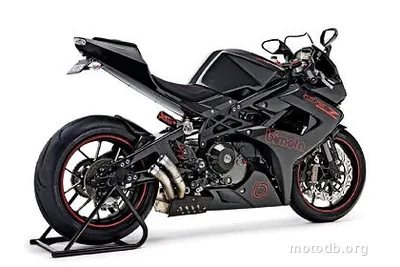
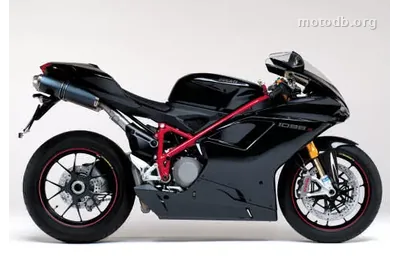
At a time when sportbikes were beginning to all look alike, when the quest for the stopwatch was stifling the soul a bit, what remained for those who wanted an exceptional machine, an object of passion more than a simple track tool? Some went to knock on the doors of Motocorse workshops, and they came out with this: the F4 1080 CR Platino. It’s not just a motorcycle; it’s a statement. A refusal of standardization, carried by a four-cylinder engine boosted to 1078 cm³ that howls 190 horsepower at 11900 rpm, with a massive torque of 129.4 Nm that arrives early and hits hard. You are far from the coldness of a Japanese bike; here, every number smells of hot gasoline and hand-worked metal.
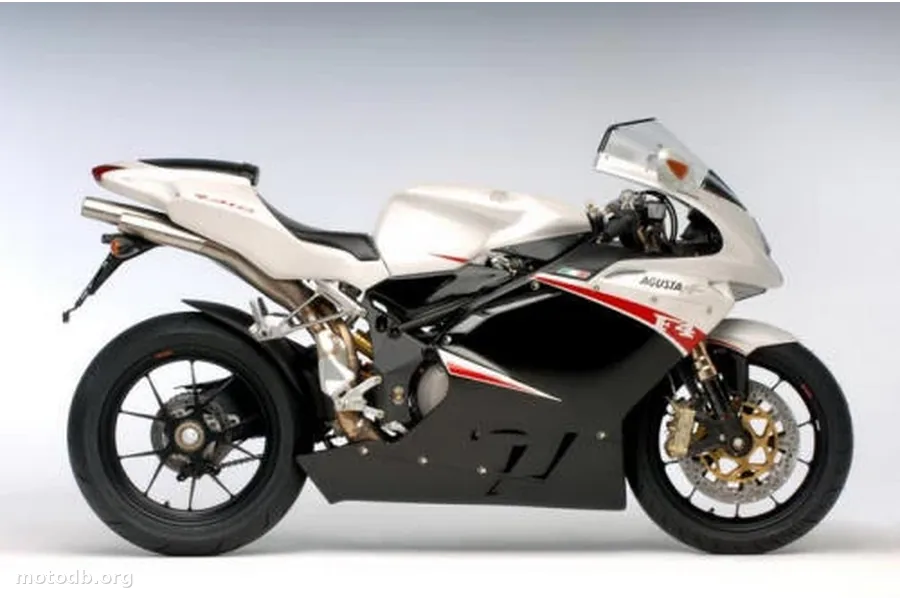
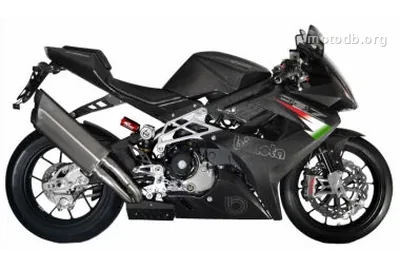
The philosophy is simple: everything must serve pure sensation. The chrome-molybdenum steel trellis frame, a signature of engineer Tamburini, is the backbone of this beast. But what strikes you is the obsession with detail and weight. The dry weight announced is 175 kg, a figure that makes you dream for a machine with such an engine. This weight reduction is not an empty word; it is seen and felt. There’s carbon fiber as much as you want, forged magnesium Marchesini rims, a full titanium exhaust system that snakes under the fairing. Even the seat is in Alcantara. It’s a mechanical jewel, almost too beautiful to be mistreated.
And to mistreat it, just so, the equipment is up to its pretensions. The 50 mm inverted fork and the Öhlins monoshock offer a frank dialogue with the asphalt. The braking system, for its part, is a pure masterpiece signed Brembo, with four-piston radial calipers biting 310 mm discs at the front. You can feel that this motorcycle is designed to absorb the madness of its rider, to transform its 190 horsepower into lightning acceleration and late braking without a tremor. It doesn’t aim for the circuit lap record; it aims for sensory ecstasy.
Who is this for? Clearly not for the beginner, nor even for the Sunday rider. The Platino is aimed at the demanding collector, at the enthusiast for whom a motorcycle is a kinetic sculpture. The riding position, with a seat at 810 mm, is committed, and the 21-liter fuel tank reminds you that it can also swallow up asphalt. But its element is the mountain road or the deserted straight where you can hear its unique inline four-cylinder sing, up to speeds approaching 310 km/h.
The price, however, is a knockout blow: 45,000 euros at the time. A fortune. You could buy two new sportbikes for that price. But that’s precisely why you don’t buy a Platino to get a bargain or to have the fastest. You buy it to own a fragment of history, an ultimate and artisanal interpretation of the F4 myth. Faced with series production, even high-end, it presents itself as a work of art. It has no direct competitor; it lives in its own league. It is both its genius and its paradox: a terribly effective machine, designed for those who can afford not to look at the expense. A sublime whim.
Practical info
- La moto est accessible aux permis : A
Reviews & comments
No reviews yet. Be the first to share your opinion!