Key performance
Technical specifications
Engine
- Displacement
- 798 cc
- Power
- 147.0 ch @ 13000 tr/min (108.1 kW)
- Torque
- 88.1 Nm @ 10100 tr/min
- Cooling
- liquide
- Compression ratio
- 13.3 : 1
- Bore × stroke
- 79 x 54.3 mm
- Valves/cylinder
- 4
- Camshafts
- 2 ACT
- Fuel system
- injection Ø 50 mm
Chassis
- Frame
- Treillis tubulaire en acier relié à 2 platines en alu
- Gearbox
- boîte à 6 rapports
- Final drive
- Chaîne
- Front suspension
- Fourche téléhydraulique inversée Ø 43 mm, déb : 125 mm
- Rear suspension
- Mono-amortisseur, déb : 130 mm
Brakes
- Front brakes
- Freinage 2 disques Brembo Ø 320 mm, fixation radiale, étrier 4 pistons
- Rear brakes
- Freinage 1 disque Ø 220 mm, étrier 2 pistons
- Front tyre
- 120/70-17
- Front tyre pressure
- 2.30 bar
- Rear tyre
- 180/55-17
- Rear tyre pressure
- 2.30 bar
Dimensions
- Seat height
- 830.00 mm
- Fuel capacity
- 16.50 L
- Dry weight
- 173.00 kg
- New price
- 19 000 €
Overview
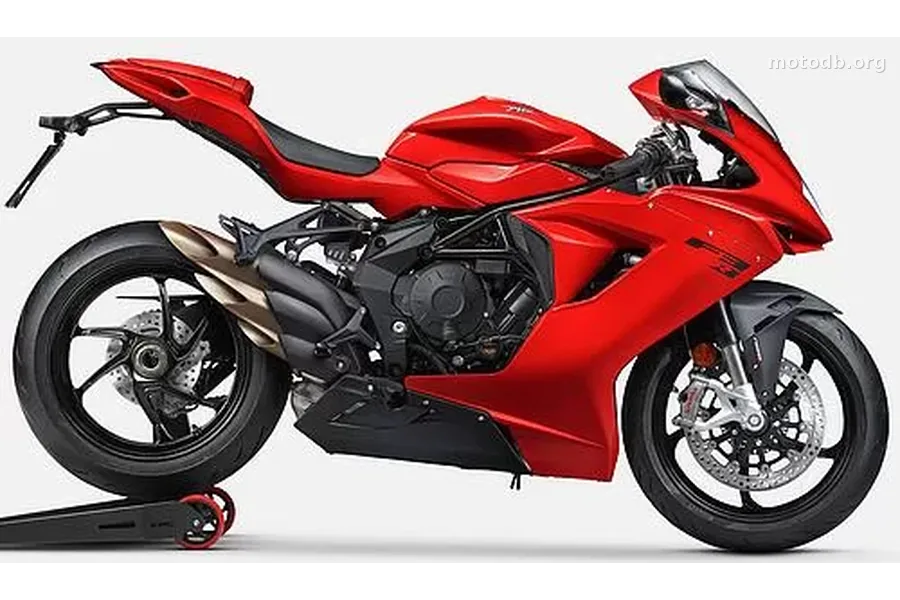
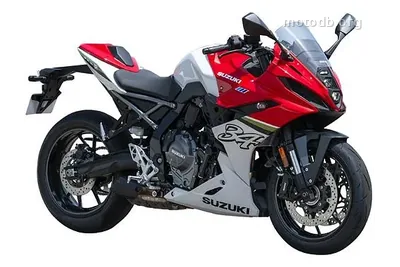
What sets an Italian sportbike apart from a high-performing Japanese rival sold at half the price? The soul of the engine, the sculpted lines, and the way the Varese triple sings through the revs like no Japanese four-cylinder ever could. The 2023 MV Agusta F3 800 R picks up where the former Rosso left off with a shortened name, a handful of targeted updates, and a blood-red-over-black livery more evocative of Maranello than Borgo Panigale. Make no mistake: the R suffix here does not denote a radical variant but rather the entry ticket into the F3 family. Fewer cosmetic flourishes, the same mechanical potential. It is the formula MV applies across all its ranges to keep pricing in check, even though at 19,000 euros you remain in an entirely different galaxy compared to a Yamaha R7 or even a Kawasaki ZX-6R.
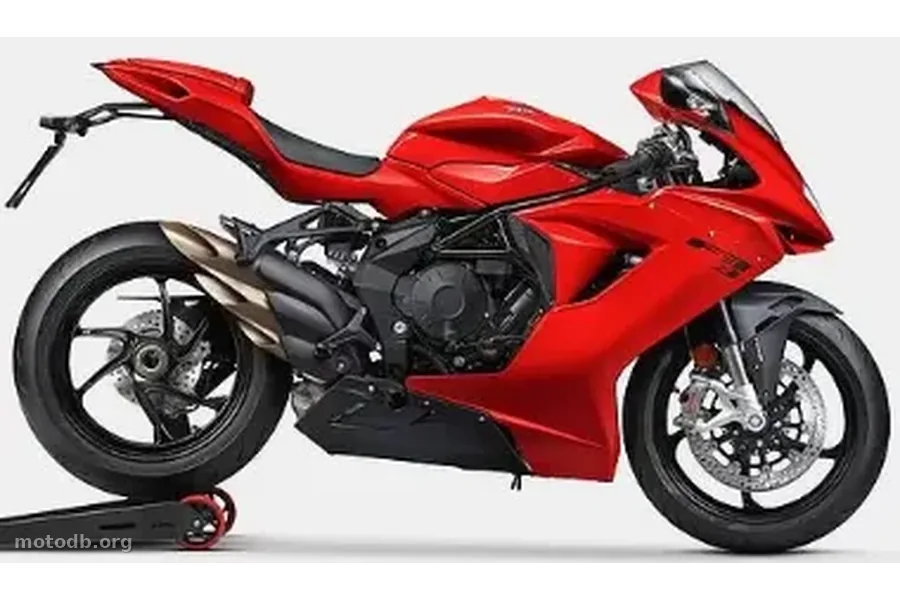
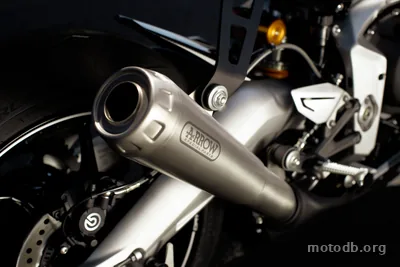
Beneath the sculptural bodywork that hasn't aged a day since the F3 675 was born over a decade ago, the 798 cc triple delivers 147 horsepower at 13,000 rpm and 88 Nm of torque at 10,100 rpm. The move to Euro 5 cost it one horsepower, a minimal sacrifice offset by deep work on the internals. DLC coating on the valves, connecting rods and bearings swapped to reduce friction, higher-performance injectors, a recalibrated ECU, and a radiator that gained 5% in efficiency. The exhaust system was entirely redesigned, its three outlets chiseled like flint to sharpen visual aggression while cleaning up emissions. Peak torque arrives 500 rpm earlier than before, making the midrange more usable on the road. Against the Ducati Panigale V2, the F3 800 R offers a different temperament: less raw low-end torque, but an engine that loves to climb through the revs with unmatched ferocity and a one-of-a-kind sound.
The real progress on this model year is at your fingertips. Radially mounted Brembo Stylema calipers replace the previous units on both 320 mm discs. This is benchmark-grade hardware, the same found on far more expensive superbikes. Braking gains in power, feel, and endurance. The chassis retains its fundamentals: a steel trellis frame with stiffened aluminum side plates, a 43 mm fully adjustable inverted fork, and a single rear shock. The whole package holds dry weight at 173 kg, placing this Italian among the lightest middleweight sportbikes on the market. The seat perched at 830 mm and the 16.5-liter tank create an ergonomic layout clearly aimed at the track, even though the 240 km/h top speed remains a theoretical figure few will ever verify on the open road.
On the electronics front, the MV Agusta F3 800 R finally closes the gap. A 5.5-inch color TFT display replaces the old LCD screen and communicates with the MV Ride app to configure rider aids from your phone. An inertial measurement unit now feeds a Continental Cornering ABS system, refined traction control, and a genuine wheelie control, all overseen by four riding modes. The third-generation bi-directional quickshifter gains precision thanks to a new sensor. Cruise control also makes an appearance—a welcome gimmick on a machine hard to picture in highway cruising mode.
This F3 800 R is aimed at an experienced rider, a connoisseur of refined sensations and noble engineering, willing to accept the premium of Italian artisanal production to ride a machine nobody else in the parking lot owns. It does not compete on the same playing field as Japanese sportbikes in terms of raw price-to-performance ratio. It competes on emotion, character, and a triple-cylinder engine that turns every climb through the rev range into a private concert. The price tag remains steep, but that is the cost of Italian exclusivity.
Standard equipment
- Assistance au freinage : ABS en curvas MK100
Practical info
- La moto est accessible aux permis : A
Reviews & comments
No reviews yet. Be the first to share your opinion!