Key performance
Technical specifications
- Cooling
- Air → par air
- Fuel system
- Injection. Weber-Marelli electronic fuel injection. → Injection. Weber-Marelli
- Valve timing
- Pushrods → —
- Clutch
- — → Dry single plate with flexible couplings
- Front wheel travel
- 130 mm (5.1 inches) → —
- Rear wheel travel
- 93 mm (3.7 inches) → —
- Front brakes
- Single disc. ABS. Brembo caliper with 4 differentiated pistons → Single disc. Brembo caliper with 4 differentiated pistons
- Rear brakes
- Single disc. ABS. Floating disc. Two-piston calipers. → Single disc. Floating disc. Two-piston calipers.
- Wheelbase
- 1449.00 mm → 1463.00 mm
- Height
- 1113.00 mm → 1110.00 mm
- Weight
- 209.00 kg → 189.00 kg
- New price
- 8 549 € → 8 599 €
Engine
- Displacement
- 744 cc
- Power
- 52.0 ch @ 6200 tr/min (38.0 kW)
- Torque
- 60.0 Nm @ 4900 tr/min
- Engine type
- V2, four-stroke
- Cooling
- par air
- Compression ratio
- 10.2 : 1
- Bore × stroke
- 80.0 x 74.0 mm (3.1 x 2.9 inches)
- Valves/cylinder
- 2
- Fuel system
- Injection. Weber-Marelli
- Lubrication
- Forced circulation with lobe pump - circuit capacity: 1.78 Kg
- Starter
- Electric
Chassis
- Frame
- Double cradle tubular frame in ALS steel with detachable rear subframe
- Gearbox
- 5-speed
- Final drive
- Shaft drive (cardan) (final drive)
- Clutch
- Dry single plate with flexible couplings
- Front suspension
- Telescopic hydraulic fork with 40 mm stanchions
- Rear suspension
- Die cast light alloy swing arm with 2 spring preload adjustable shock absorbers
Brakes
- Front brakes
- Single disc. Brembo caliper with 4 differentiated pistons
- Rear brakes
- Single disc. Floating disc. Two-piston calipers.
- Front tyre
- 100/90-18
- Rear tyre
- 130/80-17
Dimensions
- Seat height
- 770.00 mm
- Wheelbase
- 1463.00 mm
- Ground clearance
- 150.00 mm
- Length
- 2185.00 mm
- Width
- 800.00 mm
- Height
- 1110.00 mm
- Fuel capacity
- 21.00 L
- Weight
- 189.00 kg
- Dry weight
- 189.00 kg
- New price
- 8 599 €
Overview
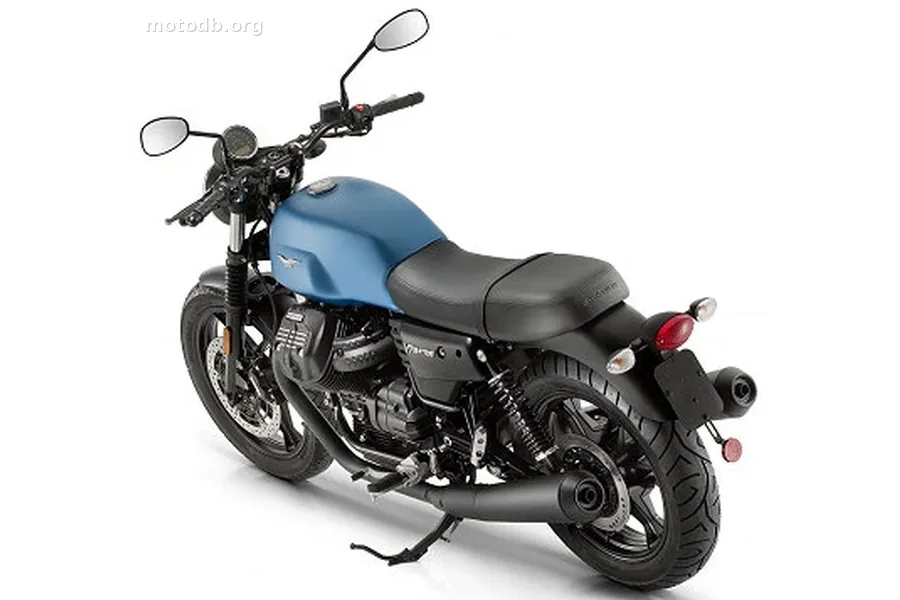
When I talk about Italy, you think of the aromatic scents of Tuscany, the wines enjoyed under olive trees, the antipasti savored in the setting sun, the fullness of Lake Como, and the sea spray of the Adriatic as it embraces the Mediterranean. It is within this bubble that the retouched and improved version of Guzzi’s little retro roadster is revealed. Benefiting from numerous improvements, the V7 III plays more than ever on its charm, and hides many surprises. An eaglet that disregards time yet strikes with smartphones.
You immediately recognize a V7: this small stature, this face from the past, these cylinder heads poised to take flight, this seeming moderno-canonical appearance. A motorcycle living in today's past. And as usual, proud and exuberant of its engine. For this second evolution, the V7 boasts much more generous anatomical shapes. The displacement of the twin-cylinder hasn’t changed; but by adopting the cylinder heads from the V9 block, the 744 cm3 here present has gained undeniable presence. You would swear that the V7 III has a more powerful engine, a bigger one, almost more virile. And that’s the case. With 5 extra horsepower, the twin benefits from a wide range of improvements. The V7 phase II had already significantly improved the engine. The Italian manufacturer continues on this path with technology at every level. Cylinders, pistons, aluminum cylinder head, valves, and exhaust system are new. Lower down, the aluminum crankcase has been reinforced, the oil pump, crankshaft, and clutch are modified. And the ratios of the 1st and 6th gears are lengthened. Let’s also mention a new alternator cover and the introduction of piston cooling by oil injection. Guzzi has worked on the reliability and optimization of its smallest engine and the result is there. 10% more watts. Let’s not get carried away either. Concretely, this translates to a power of 52 horsepower at 6,200 rpm. Torque progresses slightly, to 6.2 mkg; but it peaks higher, at 4,900 rpm instead of 3,000 rpm on the V7 II. Yesterday and today, a V7 engine is not meant to chase a chronograph or a redline; but to enjoy a particular charm, at the "pulse" of a very visual mechanical system.
The V7 III stands out through its engine, more demonstrative in appearance and technology. Around it, the brand from Mandello has chosen sobriety and continuity. One will just notice the new design of the airbox side covers, the relocated turn signal mounting point, the front brake reservoir, and the revised rear disc. More visible, the loss of the tachometer (which is found on the Special and Racer), the modification of its fuel cap fixing, and in terms of looks, the V7 III has completely blackened its exhaust line. A more refined appearance, very trendy these days. But that doesn’t mean that the little Italian neo-retro is lacking in equipment. Since always, the V7 has been distinguished by its shaft drive, and it’s the only motorcycle of this displacement to be fitted with such a transmission. Now, the gears are forgotten under the digital trend. At the heart of the V7 III are injection, ABS, and a two-level traction control, which can be disengaged. Really useful for a machine that only produces fifty horsepower? A broad debate... More attention will be paid to the MG-MP multimedia platform, available as an option. Combined with the mobile app, the interface can interact between the motorcycle and a smartphone. Therefore, the rider becomes a digital actor of the V7 III: five parameters can be displayed on the screen, selectable from a wide choice. Speed, engine speed, instantaneous power, torque, consumption, average speed, battery voltage, longitudinal acceleration, on-board computer… Plenty of data to visualize, and that’s not all. The app records where you parked and allows you to find the machine. It also memorizes the route taken, gives you information about traction control, and allows you to parameterize some alerts. There is also an eco-driving mode and a system to locate service stations when the fuel tank attacks the reserve.
Equipped with digital technology, the Guzzi has also evolved in a more fundamental area, albeit less eye-catching. A motorcycle is first and foremost an engine and a chassis. From V7 II to V7 III, some data have changed. The steel double cradle frame is reinforced in its front section, while the geometry has been revised for a little more dynamism – The steering head angle goes from 27.5° to 26.4°, and the rake decreased by 11 mm. The rider is also involved with footpegs (now in aluminum) advanced and a seat raised by a few mm. The Kayaba shocks, more inclined, are supposed to offer a more progressive action. As for the passenger, their higher and more advanced footpegs should bring them a touch of extra comfort.
Following new technologies while being perfectly in the spirit of its time, the Moto-Guzzi V7 III marks a welcome and discreet evolution of the lineage. Without pretension, comfortable in its own skin and ready for Sunday rides, the machine distills a scent of yesteryear that must be sensed.
M.B - Photos manufacturer
Standard equipment
- Assistance au freinage : ABS
Practical info
- Véhicule accessible au permis A2 ou bridable à 47.5ch / 35 Kw
- La moto est accessible aux permis : A, A2
Indicators & positioning
Similar bikes
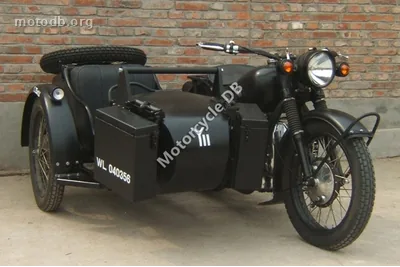
750 J-1 (with sidecar)
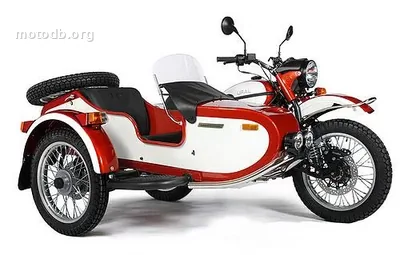
750 FY (with sidecar)
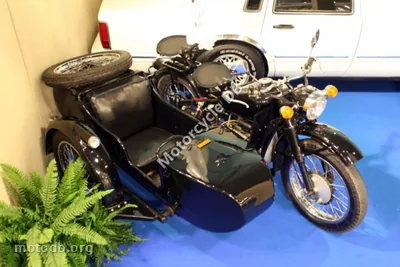
750 BG (with sidecar)
Reviews & comments
No reviews yet. Be the first to share your opinion!