Key performance
Technical specifications
Engine
- Displacement
- 124 cc
- Power
- 15.0 ch @ 9000 tr/min (11.0 kW)
- Engine type
- Monocylindre, 4 temps
- Cooling
- par air
- Valves/cylinder
- 4
- Camshafts
- 2 ACT
- Fuel system
- Injection
Chassis
- Frame
- Cadre tubulaire en acier
- Gearbox
- boîte à 6 rapports
- Final drive
- Chaîne
- Front suspension
- Fourche téléhydraulique Ø 37 mm
- Rear suspension
- 2 amortisseurs latéraux
Brakes
- Front brakes
- Freinage
- Rear brakes
- Freinage 1 disque
- Front tyre
- 110/70-17
- Front tyre pressure
- 1.60 bar
- Rear tyre
- 130/70-17
- Rear tyre pressure
- 2.00 bar
Dimensions
- Fuel capacity
- 14.00 L
- Weight
- 137.00 kg
- New price
- 2 999 €
Overview
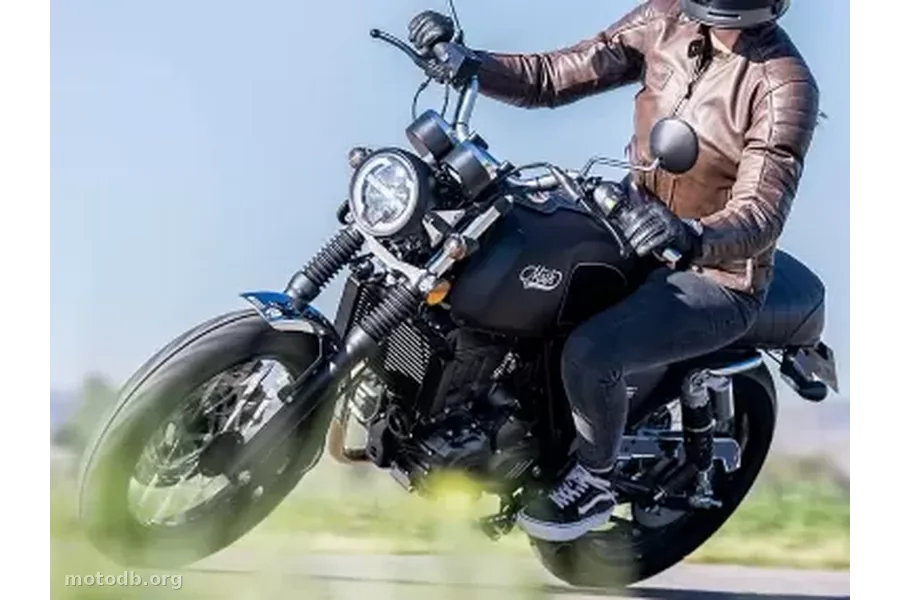
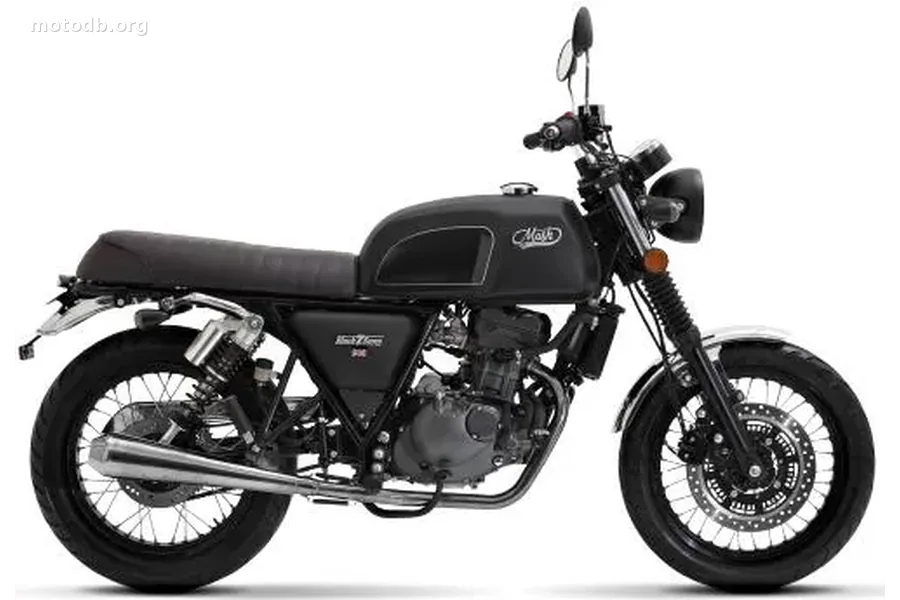
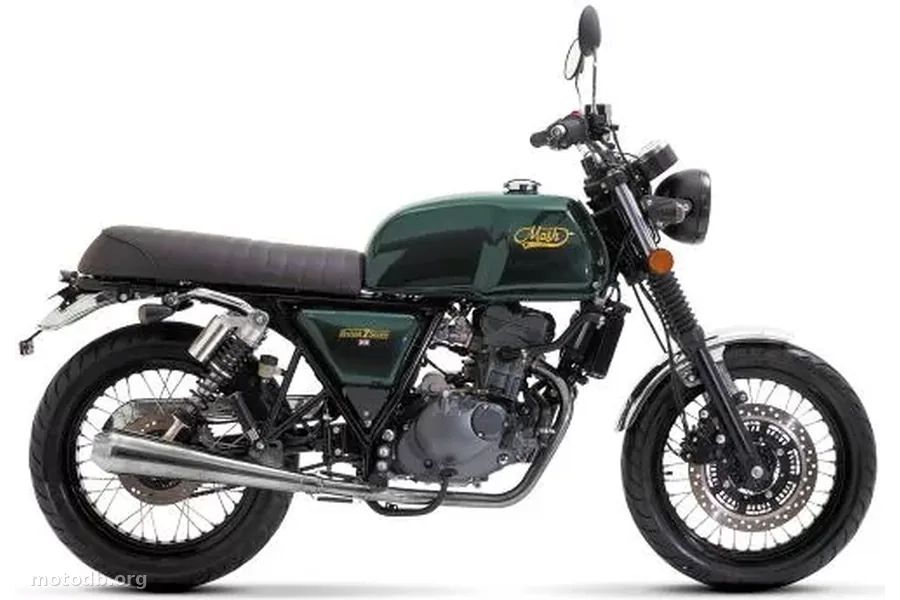
Taking a motorcycle, sticking a Union Jack flag on the airbox, painting it black, and renaming it "British Seven" when it was the "Black Seven" in dark green — that's a marketing strategy that would elicit a smile. Except that at Mash, this kind of role-playing works. The French brand, assembled in China, has built its reputation on accessible retro styling, and the Seven embodies this ambition perfectly: an assumed British posture, a contained price of €2,999, and now an engine that finally delivers.
Because that’s really where the chapter changes. The Seven was previously separated from the same aging engine block as its cousin the Seventy, the latter continuing its career with its 11 horsepower and 5-speed gearbox. Mash chose a different path for the Seven, sourcing its engine from the Korean engine manufacturer Hyosung. The result is unambiguous: liquid cooling, 4 valves, 6 gears, and a power output increased to 15 horsepower at 9,000 rpm for a displacement of 124 cc. The Seven laughs in its big sister’s face. In return, the physical bill is paid: 137 kilograms all full, which positions it at the top of the retro 125 class. Lightness is not its register, but consistency is beginning to be.
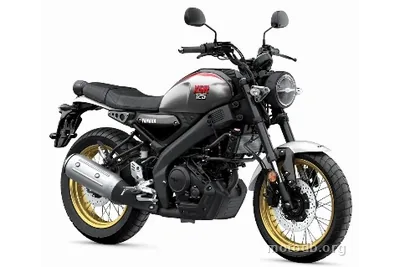
The Seven does not seek to mimic a sport roadster. It embraces its classic geometry, its 37 mm non-inverted telescopic fork, its two lateral shock absorbers, and its steel tubular frame. The all-black finish — fork sleeves, caliper, rim, fork stem — structures a coherent silhouette, reinforced by the spoked wheels, the front metal fender, the removable stainless steel conical exhaust, and the long club seat. In this niche, the Orcal Astor plays in the same stylistic register, and other competitors have joined the race since. But the Seven holds its own without denying itself.
The Euro5 regulatory upgrade was accompanied by a real technical enrichment. ABS makes its appearance to control the two-piston front caliper on a 300 mm disc and the 220 mm rear disc, where the previous version was content with a simple coupling. The instrument cluster has also been revised: double needle dial, digital window, gear indicator. It is understated, legible, and frankly more refined than what previous generations offered. The center stand, the Fat Bar handlebar, and the Monza-style cap complete equipment that exceeds what is generally expected in this price range.
At €2,999, the Seven is aimed at a specific audience: the A1 license holder who wants a characterful machine without getting into debt, or the car driver who approaches motorcycling from the lower displacement with a pronounced taste for retro aesthetics. It is not made for long journeys; its 14-liter tank and maximum speed of 110 km/h naturally confine it to urban and suburban uses. But in this space, it does its job with a consistency that few 125s at this price can claim. Mash has produced a mature machine, without trying to do more than it is.
Standard equipment
- Assistance au freinage : Frenado combinado
Practical info
- La moto est accessible aux permis : A
Reviews & comments
No reviews yet. Be the first to share your opinion!