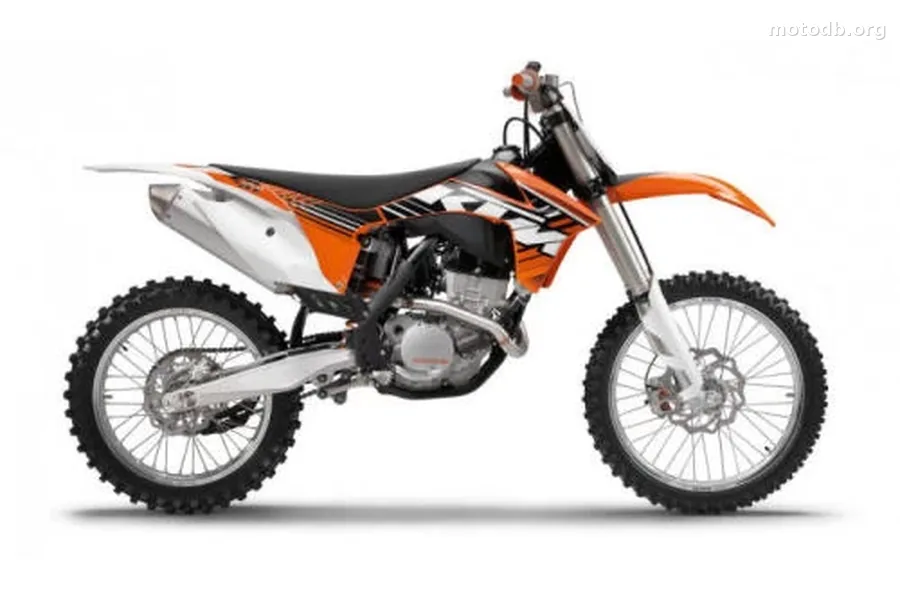
Key performance
Technical specifications
Engine
- Displacement
- 250 cc
- Power
- 40.0 ch (29.4 kW)
- Engine type
- Single cylinder, four-stroke
- Cooling
- Liquid
- Compression ratio
- 13.9 : 1
- Bore × stroke
- 78.0 x 52.3 mm (3.1 x 2.1 inches)
- Valves/cylinder
- 4
- Camshafts
- 2 ACT
- Fuel system
- Injection Ø 44 mm
- Lubrication
- Forced oil lubrication with 2 Eaton pumps
- Ignition
- Contactless, controlled, fully electronic ignition system with digital ignition timing adjustment
- Starter
- Electric
Chassis
- Frame
- Central tube frame made of chrome molybdenum steel tubing
- Gearbox
- 5-speed
- Final drive
- Chain (final drive)
- Clutch
- Wet multi-disc clutch / hydraulically operated
- Front suspension
- WP Suspension Up Side Down 4860 MXMA CC
- Rear suspension
- WP Suspension 5018 BAVP DCC
- Front wheel travel
- 300 mm (11.8 inches)
- Rear wheel travel
- 317 mm (12.5 inches)
Brakes
- Front brakes
- Single disc. Brake calipers on floating bearings
- Rear brakes
- Single disc. Brake calipers on floating bearings
- Front tyre
- 80/100-21
- Rear tyre
- 100/90-19
Dimensions
- Seat height
- 992.00 mm
- Wheelbase
- 1495.00 mm
- Ground clearance
- 376.00 mm
- Fuel capacity
- 7.50 L
- Dry weight
- 102.80 kg
- New price
- 8 450 €
Overview
Five consecutive MX2 World Championship titles don't happen by chance. When Jeffrey Herlings clinched the 2012 title on a KTM 250 SX-F, he merely confirmed what paddocks had been whispering for several seasons: Mattighofen had built the most refined motocross bike in its class. For 2014, the Austrian engineers didn't reinvent everything — they refined it. And at the highest level of motocross, every gram saved, every millisecond of improved throttle response makes the difference between the top step of the podium and the second.
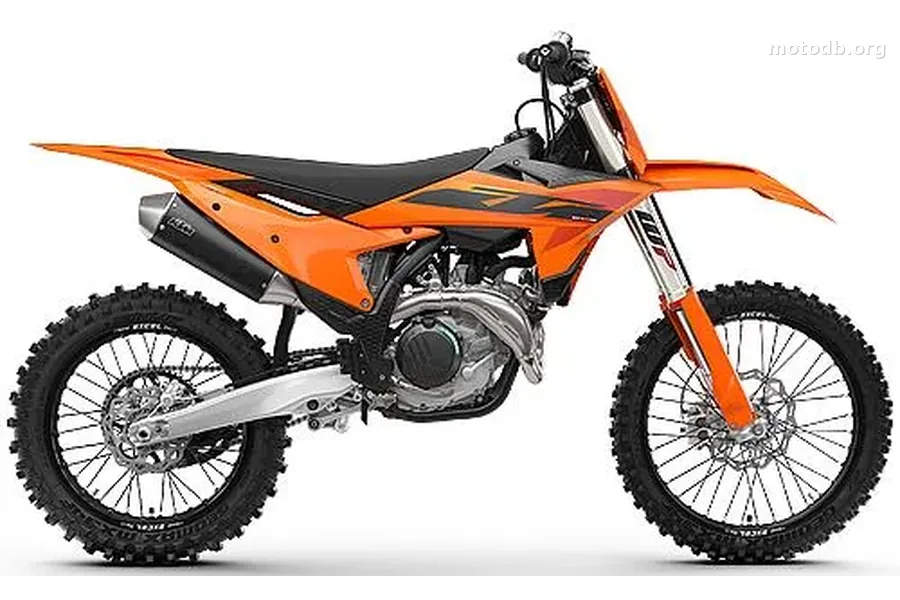
The chromoly steel frame remains the machine's backbone. This is no trivial choice against Japanese competitors multiplying their aluminum perimeter frames. KTM stands by it: the longitudinal rigidity of these profiled tubes, combined with precisely calibrated torsional flex, delivers a direct steering feel that competition riders appreciate from the very first corners. The cast aluminum swingarm, developed through numerical simulation, follows the same logic: minimal weight, maximum robustness, precisely defined flex characteristics. For 2014, the chain guide and its mounts were revised — a seemingly minor detail that reflects an obsession with reliability under extreme stress.
The WP suspension deserves a closer look. The 48 mm inverted fork receives optimized settings and increased travel to better absorb the hard impacts of competition jumps. Rebound and compression are quickly adjustable without complex tooling. The rear shock offers both High-Speed and Low-Speed compression adjustment, allowing the bike to be tuned for radically different track profiles. This is the kind of equipment that was once found exclusively on factory-prepared machines.
The 249.9 cc single-cylinder engine is the real story. The DACT cylinder head with DLC-coated rocker arms, titanium valves measuring 32.5 mm on the intake side and 26.5 mm on the exhaust, a compression ratio of 13.9:1 — everything is oriented toward high revs, up to 14,000 rpm. The claimed 40 horsepower from a machine weighing 102.8 kg dry puts the power-to-weight ratio at a level few competitors can match. The gearbox moves from six to five speeds for the 2014 model year, saving 250 grams and delivering more precise shifts in the heat of battle. The Keihin fuel injection with 44 mm throttle bodies ensures crisp throttle response without the lag that sometimes betrays less finely calibrated systems. Mapping remains accessible via a computer tool, allowing fine-tuning to suit specific track conditions.
For anyone riding a used KTM 250 SX-F today — particularly model years ranging from 2018 to 2022 — this 2014 technical foundation has never been fundamentally questioned, only refined. More recent versions, from the KTM 250 SX-F 2020 through the KTM 250 SX-F 2023, including the 2021 KTM 250 SX-F Factory Edition with its premium finish, are built on the same principles. Priced at €8,450 at launch, the 2014 machine targeted exclusively competition riders or experienced practitioners ready to exploit its capabilities. This is not a beginner's bike: a seat height of 992 mm and an engine character tuned for raw performance reserve it for those who already know where they're putting their wheels. Beginners should look elsewhere. Everyone else will find a machine with a single ambition — and the means to back it up.
Indicators & positioning
Similar bikes
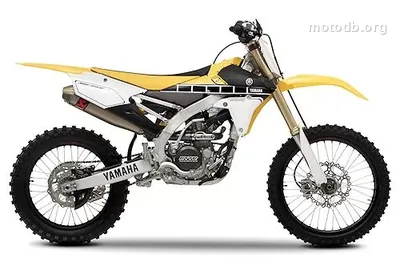
YZ250F 50th Anniversary Edition
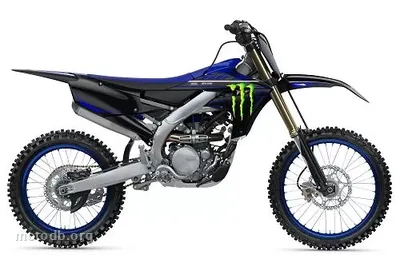
YZ250F Monster Energy
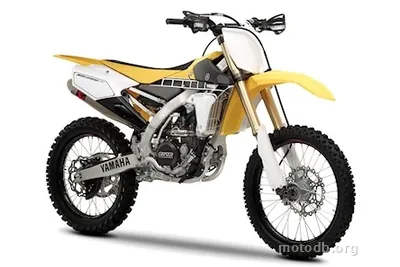
YZ 250 F 50eme anniversaire
Reviews & comments
No reviews yet. Be the first to share your opinion!