Key performance
Technical specifications
Engine
- Displacement
- 399 cc
- Power
- 77.0 ch @ 14500 tr/min (56.6 kW)
- Torque
- 39.2 Nm @ 13000 tr/min
- Engine type
- 4 cylindres en ligne, 4 temps
- Cooling
- liquide
- Compression ratio
- 12.3 : 1
- Bore × stroke
- 57 x 39.1 mm
- Valves/cylinder
- 4
- Camshafts
- 2 ACT
- Fuel system
- Injection Ø 34 mm
- Starter
- électrique
Chassis
- Frame
- Treillis tubulaire en acier
- Gearbox
- boîte à 6 rapports
- Final drive
- Chaîne
- Front suspension
- Fourche téléscopique Ø 37 mm
- Rear suspension
- Mono-amortisseur
Brakes
- Front brakes
- Freinage 2 disques Ø 290 mm, fixation radiale, étrier 4 pistons
- Rear brakes
- Freinage 1 disque Ø 220 mm, étrier simple piston
- Front tyre
- 120/70-17
- Rear tyre
- 160/60-17
Dimensions
- Seat height
- 800.00 mm
- Seat type
- Selle biplaces
- Fuel capacity
- 15.00 L
- Weight
- 175.00 kg
- Dry weight
- 175.00 kg
- New price
- 9 695 €
Overview
Who remembers the last time a 400cc four-cylinder made straights and curbs tremble? Kawasaki is resurrecting a formula thought to have been buried since the glorious ZXR 400s of the 90s, and the 2026 Ninja ZX-4RR arrives with a simple promise: turn every track outing into a session of pure riding.
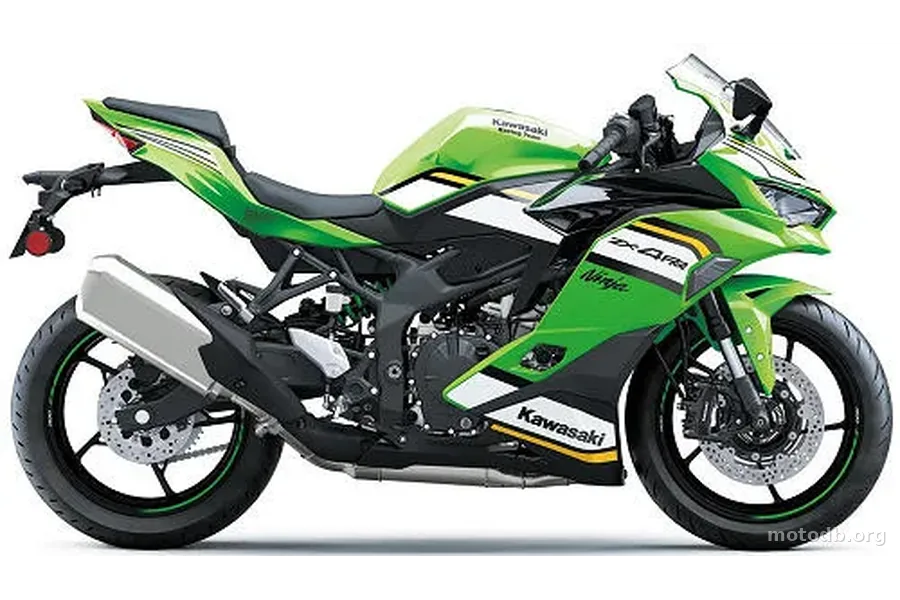
Beneath the sharp fairing, inherited from the Ninja lineage right down to the taillight borrowed from the ZX-10R, lies a 399cc inline four-cylinder, 16-valve engine producing 77 horsepower at 14,500 rpm. How much power does the Kawasaki Ninja ZX-4RR 400 make? Enough to crush the direct competition by roughly 80% in output. A KTM RC 390 or a standard Ninja 400 pale in comparison to this small engine that's just begging to scream. Peak torque of 39.2 Nm arrives at 13,000 rpm, which means one thing very clearly: this bike isn't ridden, it's piloted. Forget cruising at low revs — the tachometer needs to stay pinned in five figures for the magic to happen. The 12.3:1 compression ratio and an ultra-short stroke bore of 57 x 39.1 mm confirm this engine's screaming vocation. The claimed top speed of 230 km/h gives an idea of what these 399cc can accomplish when pushed to their absolute limits.
The RR version sets itself apart from the R with details that matter on track. The Up&Down quickshifter lets you keep your hands on the handlebars and your focus on the racing line. The Showa suspension — SFF-BP fork with preload adjustment and BFRC Lite rear shock adjustable for compression, rebound, and preload — offers genuine room to fine-tune the bike's behavior. The braking follows the same sporty logic: dual 290 mm front discs with radial-mount four-piston calipers. The steel trellis frame, rolling on 120/70-17 and 160/60-17 tires, gets the job done without claiming the nobility of an aluminum perimeter chassis. An industrial compromise that purists will note.
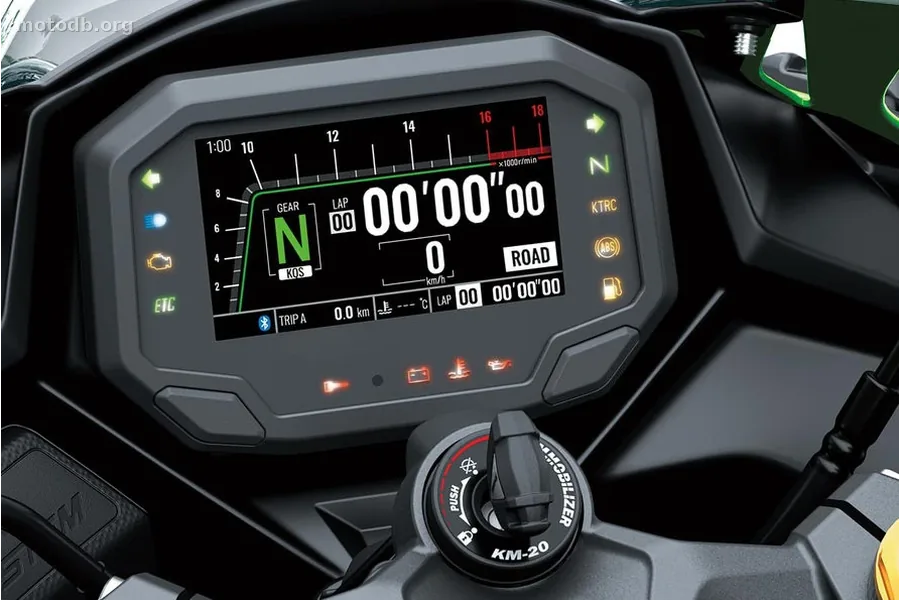
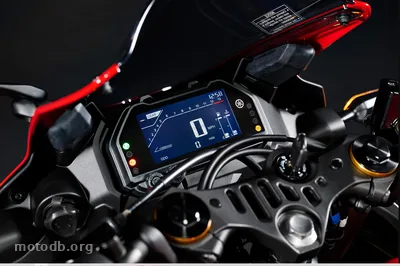
The weight of the Kawasaki Ninja ZX-4RR 400 is its most obvious weak point. At a claimed 175 kg, it remains heavier than a KTM RC 390, which tips the scales 25 kg lower. Euro5 regulations and onboard electronics partly explain this excess weight compared to its 90s ancestors that came in under 160 kg. Because the ZX-4RR packs a modern arsenal: a 4.3-inch color TFT display, Bluetooth connectivity, three-level KTRC traction control, two power modes, and four ride maps (Sport, Road, Rain, Rider). The 15-liter fuel tank and 800 mm seat height round out an accessible package, built for aspiring track riders and experienced pilots alike looking for a training machine.
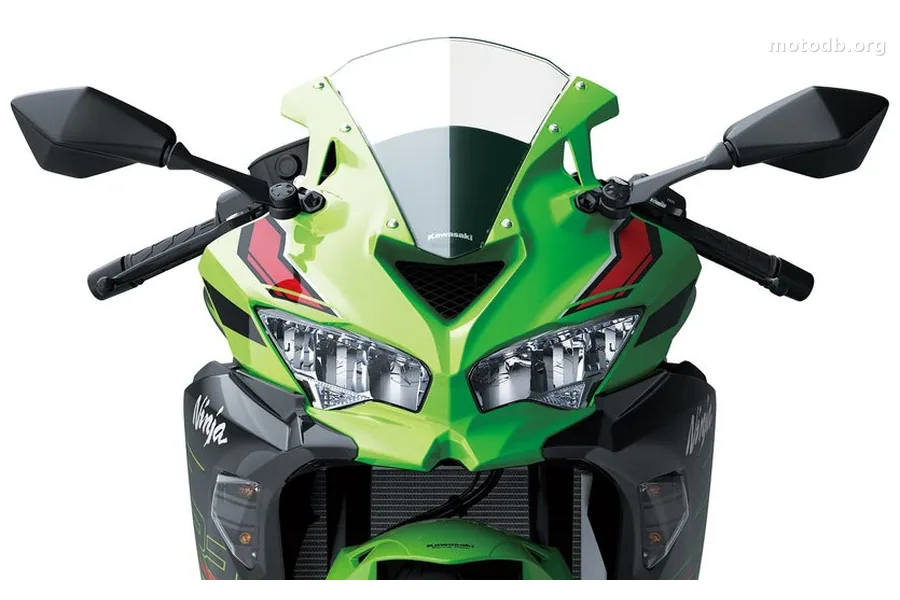
At €9,695, the Kawasaki Ninja ZX-4RR 400 occupies singular territory. Its power flirts with that of a Yamaha R7 700, but the two machines aren't playing the same game. Step outside the powerband and the limited torque quickly reminds you that 399cc is still 399cc. Keep the engine on alert, hold the needle in the red, and this little Kawa becomes a scalpel capable of carving through corners with a precision that big-bore bikes simply don't know. It's aimed at those who prefer the accuracy of a perfect line over the brutality of raw acceleration. A niche, certainly, but what a niche.
Standard equipment
- Assistance au freinage : ABS
- Nombre de mode de conduite : 4
- Taille de l'écran TFT couleur : 10,92 cm / 4.3 pouces
- Shifter
- Indicateur de vitesse engagée
- Bluetooth
- Contrôle de traction
- Embrayage anti-dribble
Practical info
- La moto est accessible aux permis : A
Reviews & comments
No reviews yet. Be the first to share your opinion!