Key performance
Technical specifications
No spec differences between these two model years.
Engine
- Displacement
- 738 cc
- Power
- 76.0 ch @ 9500 tr/min (55.9 kW)
- Torque
- 62.8 Nm @ 7500 tr/min
- Engine type
- 4 cylindres en ligne, 4 temps
- Cooling
- par air
- Compression ratio
- 9.5 : 1
- Bore × stroke
- 66 x 54 mm
- Valves/cylinder
- 2
- Camshafts
- 2 ACT
Chassis
- Frame
- Double berceau en tubes d’acier
- Gearbox
- boîte à 5 rapports
- Final drive
- Chaîne
- Front suspension
- Fourche téléhydraulique Ø 41 mm, déb : 130 mm
- Rear suspension
- Mono-amortisseur, déb : 130 mm
Brakes
- Front brakes
- Freinage 2 disques Ø 300 mm, étrier 2 pistons
- Rear brakes
- Freinage 1 disque Ø 240 mm, étrier 2 pistons
- Front tyre
- 120/70-17
- Front tyre pressure
- 2.50 bar
- Rear tyre
- 160/60-17
- Rear tyre pressure
- 2.50 bar
Dimensions
- Seat height
- 815.00 mm
- Fuel capacity
- 22.00 L
- Weight
- 220.00 kg
- Dry weight
- 202.00 kg
- New price
- 6 097 €
Overview
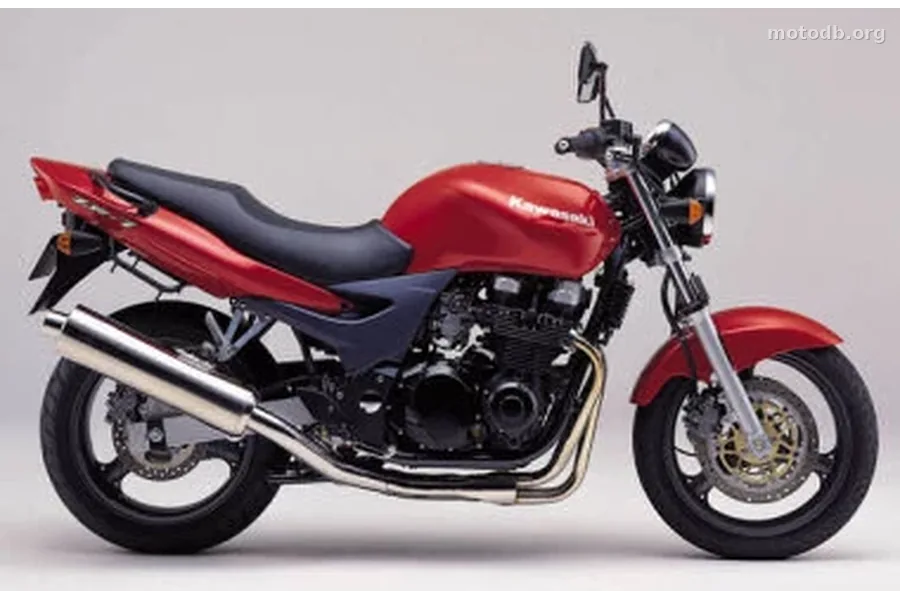
When everyone else is fighting with aggressive 600cc machines, Kawasaki plays a different game. In the early 2000s, the ZR-7 N arrives with its 738cc and visible cooling fins, like a deliberate nod to the mechanics of another era. Facing the Fazer, the Bandit, and the Hornet as they battle for the mid-range roadster podium, the green team chooses distinction over one-upmanship.
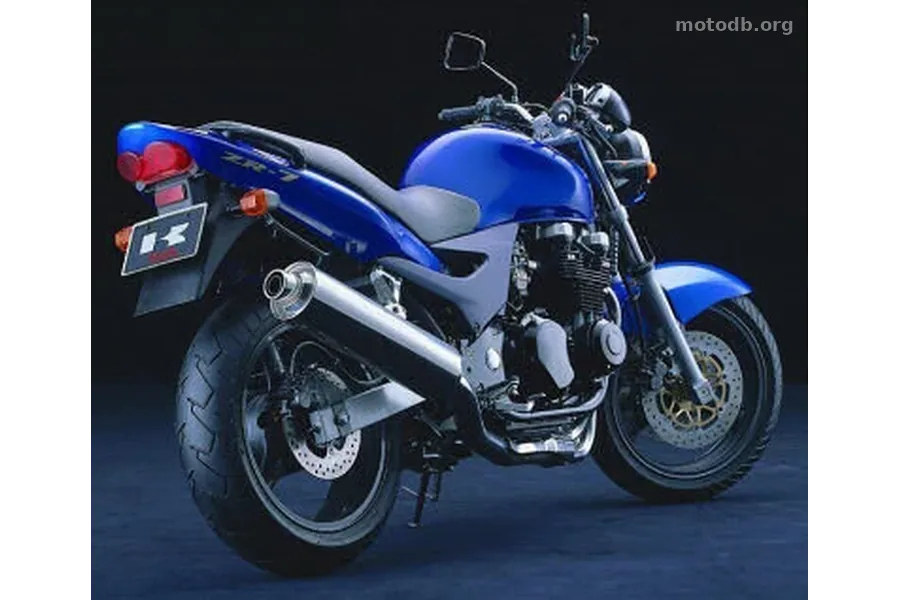
The engine is what strikes first, and not just for its retro aesthetics. Two valves per cylinder, an architecture that harks back to the 1980s, a compression ratio of 9.5:1, and a bore of 66mm for a stroke of 54mm. Nothing revolutionary on paper. But in use, this four-cylinder delivers 62.8 Nm of torque from 7,500 rpm and proves remarkably flexible where its direct competitors demand high revs to come alive. The K-TRIC system, which optimizes ignition mapping, makes a real difference in the mid-range. Peak power of 76 hp arrives at 9,500 rpm, but it is well below that figure where the ZR-7 earns its stripes. Those wondering what riders think of the 2000 Kawasaki 750 ZR-7 N will find the most convincing answer in that usable rev range.
The steel double-cradle frame does its job without trying to impress. The 41mm fork with 130mm of travel and the rear mono-shock offer an honest compromise between comfort and stability. The machine steers naturally through corners, the front end responds with precision, and the 202 kg dry weight does not feel as heavy as the figure might suggest in town. On rough roads, however, the rear can become unsettled when the pace picks up. The footpegs touch down at a genuinely serious lean angle. This is not a track machine, and it makes no pretense of being one. The twin 300mm front discs with twin-piston calipers deliver progressive and reassuring braking; the 240mm rear disc is more discreet, which is standard in this category.
In everyday use, the ZR-7 N reveals its true qualities. The slightly forward-leaning riding position remains natural over long distances. The 22-liter tank allows for serious range, and the motorcycle is thoughtfully equipped: fuel gauge, center stand, tie-down hooks, space for a lock under the seat. Practical details that make a difference over time. The 815mm seat height will suit the majority of riders without issue.
At 6,097 euros on release, the ZR-7 N was positioned as a solid proposition for the rider seeking a versatile tool with no compromise toward the spectacular. This is not the motorcycle that will turn heads in a parking lot. It is the one that keeps its promises kilometer after kilometer, welcoming the serious beginner as much as the rider returning to the road after a few years away. The lack of visual charisma is real, and those chasing sharp thrills will look elsewhere. But for anyone wanting a reliable, flexible, well-built, and accessible roadster, this Kawasaki is well worth a closer look.
Practical info
- La moto est accessible aux permis : A
Reviews & comments
No reviews yet. Be the first to share your opinion!