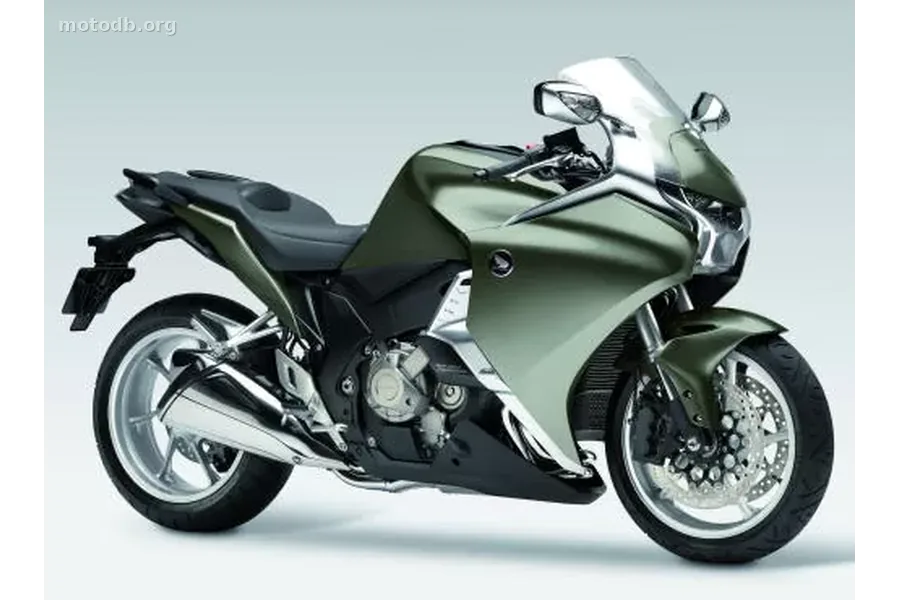
Key performance
Technical specifications
- Power
- 173.0 ch @ 10000 tr/min (127.2 kW) → 170.3 ch @ 10000 tr/min (124.3 kW)
- Torque
- 128.5 Nm @ 8750 tr/min → 129.0 Nm @ 8750 tr/min
- Camshafts
- 2 ACT → —
- Ignition
- Digital transistorized with electronic advance → Computer-controlled digital transistorised with electronic advance
- Frame
- Double poutre en alu → Diamond; aluminium twin-spar
- Clutch
- Wet, multiplate slipper type, Clutch Operation Hydraulic → —
- Front wheel travel
- 119 mm (4.7 inches) → 109 mm (4.3 inches)
- Front brakes
- Double disc → Double disc. ABS. Floating discs. Six-piston calipers.
- Rear brakes
- Single disc → Single disc. ABS. Two-piston calipers.
- Front tyre pressure
- 2.50 bar → —
- Rear tyre pressure
- 2.90 bar → —
- Wheelbase
- 1544.00 mm → 1545.00 mm
- Ground clearance
- — → 128.00 mm
- Length
- — → 2244.00 mm
- Width
- — → 752.00 mm
- Height
- — → 1222.00 mm
- Fuel capacity
- 18.55 L → 18.93 L
- Weight
- 268.10 kg → 267.00 kg
- New price
- 14 990 € → —
Engine
- Displacement
- 1237 cc
- Power
- 170.3 ch @ 10000 tr/min (124.3 kW)
- Torque
- 129.0 Nm @ 8750 tr/min
- Engine type
- V4, four-stroke
- Cooling
- Liquid
- Compression ratio
- 12.0:1
- Bore × stroke
- 81.0 x 60.0 mm (3.2 x 2.4 inches)
- Valves/cylinder
- 4
- Fuel system
- Injection. Programmed Fuel Injection (PGM-FI) with automatic enrichment circuit, 44mm throttle bodies and 12-hole injectors
- Valve timing
- Single Overhead Cams (SOHC)
- Ignition
- Computer-controlled digital transistorised with electronic advance
- Starter
- Electric
Chassis
- Frame
- Diamond; aluminium twin-spar
- Gearbox
- 6-speed
- Final drive
- Shaft drive (cardan) (final drive)
- Front suspension
- 43mm cartridge fork with spring-preload adjustability
- Rear suspension
- Pro Arm single-side swingarm with Pro-Link single gas-charged shock with remote spring-preload adjustability and rebound-damping adjustability
- Front wheel travel
- 109 mm (4.3 inches)
- Rear wheel travel
- 130 mm (5.1 inches)
Brakes
- Front brakes
- Double disc. ABS. Floating discs. Six-piston calipers.
- Rear brakes
- Single disc. ABS. Two-piston calipers.
- Front tyre
- 120/70-ZR17
- Rear tyre
- 190/55-ZR17
Dimensions
- Seat height
- 815.00 mm
- Wheelbase
- 1545.00 mm
- Ground clearance
- 128.00 mm
- Length
- 2244.00 mm
- Width
- 752.00 mm
- Height
- 1222.00 mm
- Fuel capacity
- 18.93 L
- Weight
- 267.00 kg
Overview
When Honda brings the VFR back into production, it's never insignificant. The lineage carries considerable weight in the history of Japanese motorcycles, and each new generation carries the burden of accumulated expectations. The 2010 model made a strong impact, perhaps too strong for some, with a 1237 cm3 V4 inclined at 76° that definitively broke with the legacy of 90-degree Superbike engines from the competition RVF models. In 2014, the motorcycle inherited the revisions made two years earlier, and the picture is consistent: increased torque at low RPM, recalibrated injection, a reworked seat, and a fuel tank extended to nearly 19 liters. Honda doesn't reinvent the machine; it refines it. That's the hallmark of the company.
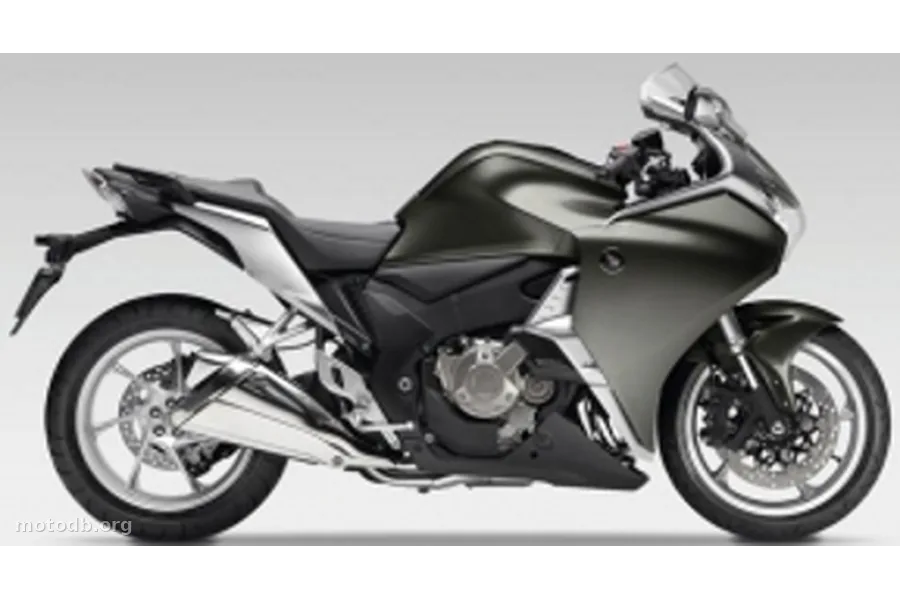
Under the multi-layered fairing, this V4 produces 173 horsepower at 10,000 rpm and 128.5 Nm of torque at 8,750 rpm. But what truly changes daily is the availability of torque in the mid-range: 80% of the maximum value is accessible from 3,000 rpm, which transforms exiting a roundabout into an exercise in disarming ease. For a machine that weighs 268 kilograms when ready to ride, that's a crucial figure. On this specific point, the road handling and suspension of the Honda VFR1200F play a decisive role: the 43 mm inverted fork and the rear Pro-Link monoshock with adjustable preload manage the mass with a consistency that surprises those accustomed to large displacement engines. The motorcycle behaves very well for such an imposing frame; it's a fact that owners regularly highlight on Honda VFR1200F forums. It doesn't claim to be light; it accepts its weight and works with it.
The shaft drive transmission, long requested by VFR owners, is present. It pairs with a six-speed gearbox and, optionally, the second-generation DCT dual-clutch system, which was refined in 2012. In standard automatic mode, the electronic management adapts to the rider's style and switches between two maps depending on the load. In sport mode, gear changes are more direct and aggressive. The rider retains control at all times via the paddle shifters, and the system resumes automatic control as soon as intervention ceases. It's an automotive technology that Honda has successfully tamed on two wheels without betraying the sensations. Traction control TCS complements the package by comparing the rotational speeds of the two wheels to smooth out excess rear-wheel torque. On a machine capable of reaching 280 km/h, it's not a gadget.
Honda VFR1200F reliability and build quality, that’s the foundation upon which everything else rests. The finish is impeccable, the assemblies are rigorous, and long-term reliability is part of the implicit contract with the brand. Where the VFR1200 is more disappointing is in the standard equipment compared to what some European rivals offer at the same price, displayed around €14,100. A BMW S 1000 XR or a Ducati Multistrada of the era incorporate more advanced dynamic management technologies, and their equipment/price ratio leans differently. The VFR focuses on mechanical consistency and robustness rather than the accumulation of electronic modes.
What this machine achieves is to convince a demanding touring rider that 268 kilograms can be forgotten in a well-taken corner. The aluminum twin-spar frame, the front calipers with six pistons clamping 320 mm discs, the coupled ABS, all contribute to reassuring without infantilizing. It is not intended for beginners, nor for the track. It belongs to this rare category of sport touring GTs that require a minimum level of experience to be fully exploited, and that reward experience with an overall consistency difficult to find elsewhere. The opinions of owners on Honda VFR1200F forums converge on the same conclusion: a motorcycle that must be earned, but that does not disappoint over time.
Reviews & comments
No reviews yet. Be the first to share your opinion!