Key performance
Technical specifications
- Power
- 48.0 ch @ 6250 tr/min (35.3 kW) → 48.0 ch @ 6250 tr/min (34.3 kW)
- Engine type
- Bicylindre en ligne, 4 temps → Twin, four-stroke
- Cooling
- liquide → Liquid
- Compression ratio
- 10.7 : 1 → 10.7:1
- Fuel system
- Injection Ø 36 mm → Injection. PGM-FI
- Valve timing
- — → Single Overhead Cams (SOHC)
- Ignition
- — → Computer-controlled digital transistorised with electronic advance
- Starter
- — → Electric
- Frame
- type Diamond en acier → Diamond; steel pipe
- Gearbox
- boîte à 6 rapports → 6-speed
- Final drive
- Chaîne → Chain (final drive)
- Clutch
- — → Wet multiplate (* Wet multiplate, hydraulic 2-clutch)
- Front suspension
- Fourche téléhydraulique Ø 41 mm, déb : 120 mm → 41mm telescopic fork, 120mm travel
- Rear suspension
- Mono-amortisseur, déb : 120 mm → Monoshock damper, Pro-Link swingarm, 120mm travel
- Front brakes
- Freinage 1 disque Ø 320 mm, étrier 2 pistons → Single disc. Wavy hydraulic disc with 3-piston caliper and sintered metal pads
- Rear brakes
- Freinage 1 disque Ø 240 mm, étrier simple piston → Single disc
- Wheelbase
- — → 1525.00 mm
- Ground clearance
- — → 140.00 mm
- Weight
- 227.00 kg → 211.00 kg
- New price
- 7 199 € → 5 490 €
Engine
- Displacement
- 670 cc
- Power
- 48.0 ch @ 6250 tr/min (34.3 kW)
- Torque
- 60.0 Nm @ 4750 tr/min
- Engine type
- Twin, four-stroke
- Cooling
- Liquid
- Compression ratio
- 10.7:1
- Bore × stroke
- 73 x 80 mm
- Valves/cylinder
- 4
- Camshafts
- 1 ACT
- Fuel system
- Injection. PGM-FI
- Valve timing
- Single Overhead Cams (SOHC)
- Ignition
- Computer-controlled digital transistorised with electronic advance
- Starter
- Electric
Chassis
- Frame
- Diamond; steel pipe
- Gearbox
- 6-speed
- Final drive
- Chain (final drive)
- Clutch
- Wet multiplate (* Wet multiplate, hydraulic 2-clutch)
- Front suspension
- 41mm telescopic fork, 120mm travel
- Rear suspension
- Monoshock damper, Pro-Link swingarm, 120mm travel
Brakes
- Front brakes
- Single disc. Wavy hydraulic disc with 3-piston caliper and sintered metal pads
- Rear brakes
- Single disc
- Front tyre
- 120/70-17
- Front tyre pressure
- 2.50 bar
- Rear tyre
- 160/60-17
- Rear tyre pressure
- 2.90 bar
Dimensions
- Seat height
- 790.00 mm
- Wheelbase
- 1525.00 mm
- Ground clearance
- 140.00 mm
- Fuel capacity
- 14.10 L
- Weight
- 211.00 kg
- New price
- 5 490 €
Overview
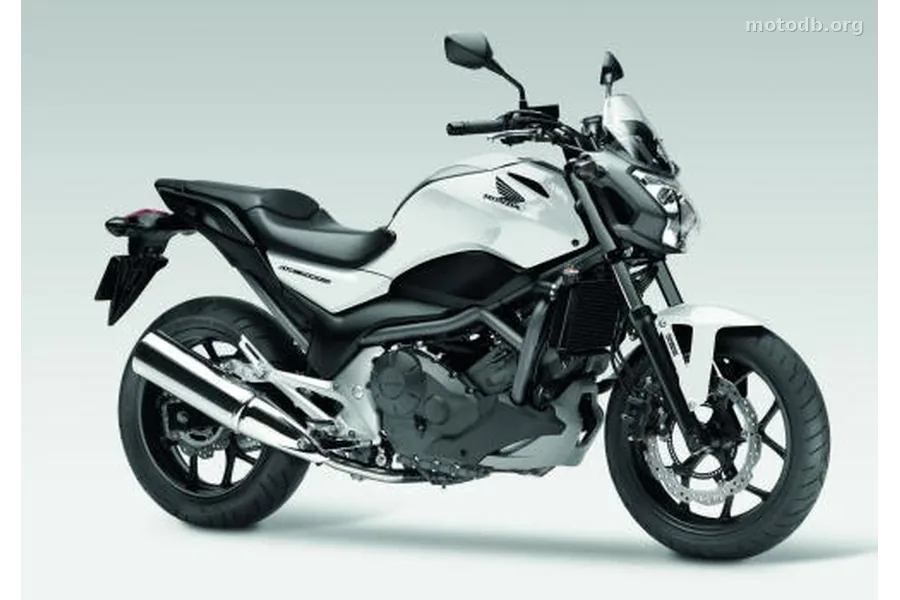
Who remembers the CB 500, the ER-5, the Suzuki GS 500, and the Yamaha XJ 600? Those unpretentious bikes that served as a first vehicle for entire generations of riders, before the industry launched into an ever more insane horsepower race. With the Honda NC700S, released in 2012, the Hamamatsu manufacturer decided to revive that philosophy. The Honda NC700S doesn't try to pin you to the backrest — it tries to simplify your life. And on that front, it plays a tune that nobody else was offering at the time.
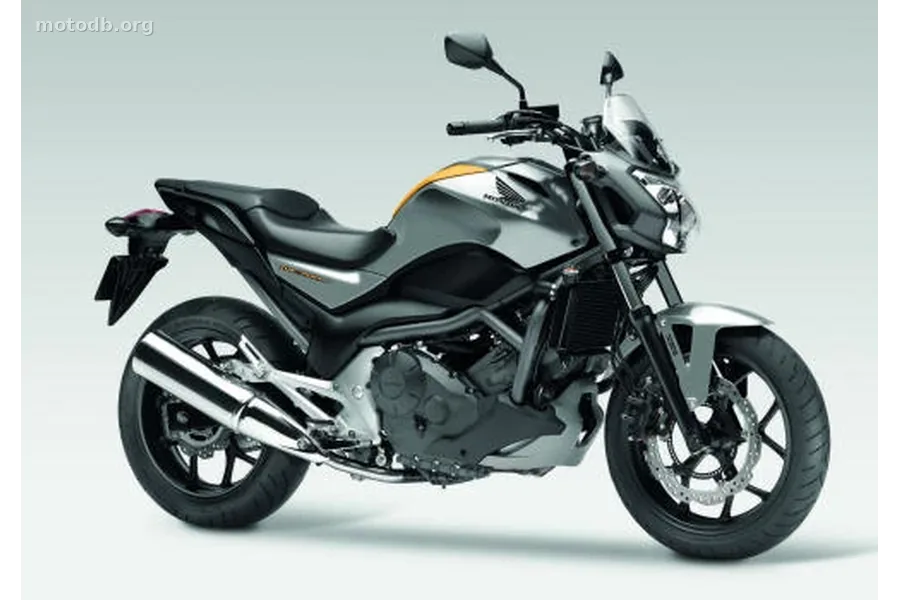
Hidden beneath the dummy tank is an entirely new 670 cc twin, with a 270-degree crank, also found on the X version and the Integra scooter. This parallel twin produces 48 horsepower at 6,250 rpm and 60 Nm of torque from just 4,750 rpm. Modest figures on paper, fitting right within the A2 license limit introduced in 2013. But the Honda NC700S spec sheet reveals an engine designed with ruthless logic. A single overhead camshaft drives both the four valves per cylinder and the water pump. The balancer shaft also runs the oil pump. One injector per cylinder, an ultra-short exhaust manifold that places the catalytic converter just centimeters from the cylinder head for rapid heat-up. Every part pulls double duty. The result, according to Honda, hovers around 3.6 liters per 100 km in DCT configuration on the smoothest mode, which remains remarkable even if real-world consumption climbs closer to 5.85 liters in mixed riding. With a 14.1-liter tank, range remains decent without being exceptional.
The 2012 Honda NC700S chassis doesn't go in for sophistication either, and that's deliberate. A diamond frame made of steel tubes, a 41 mm telescopic fork with 120 mm of travel, a Pro-Link mono-shock at the rear with the same travel. No fine adjustments, no high-end suspension. Braking relies on a single front disc with a three-piston caliper and a rear disc. A single front disc for a machine weighing 211 kg wet and packing 670 cc of displacement is a choice that raises questions. The combined C-ABS remains optional and provides a welcome safety net for the intended audience. The low 790 mm seat height and 1,525 mm wheelbase make it easy to handle for smaller riders — a real advantage for a Honda NC700S A2 motorcycle aimed at beginners.
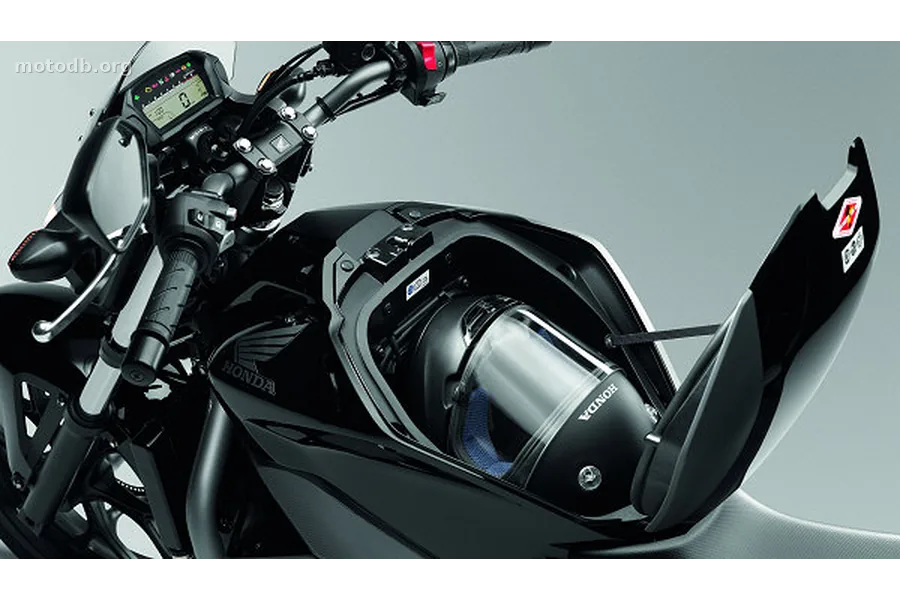
The stroke of genius is the engine, tilted sharply forward. This layout frees up space under the dummy tank for a storage compartment large enough to swallow a full-face helmet. The Aprilia Mana 850 had explored this idea, but Honda takes it further. For daily urban use, it's a killer argument. The Honda NC700S DCT version adds a dual-clutch automated transmission with automatic and sequential modes. In the city, this gearbox turns riding into a stroll. Testing the Honda NC700S DCT reveals a machine built to devour the daily commute without fatigue or stress, even if the sport mode test produces zero adrenaline rush. Top speed caps out at 190 km/h, and derestricting the Honda NC700S only unleashes 52 horsepower — in other words, thrill-seekers will need to look elsewhere.
The Honda NC700S price, set at 5,490 euros in 2012, was its most formidable selling point. Outside of 125s and small-displacement bikes, nothing competed at that price. Add 500 euros for ABS, 1,500 euros more for the DCT version. Today, the used Honda NC700S remains a safe bet on the market, with proven mechanical reliability and affordable maintenance. The clutch cable, battery, air filter — consumables are easy to find and cost next to nothing. Honda NC700S forums overflow with positive feedback on the overall longevity. This bike won't make anyone dream at a show, and it won't turn any heads in a parking lot. But for anyone looking for a reliable, frugal, and versatile mobility tool, it's a proposition the market had forgotten for far too long.
Standard equipment
- Assistance au freinage : C-ABS en option
Practical info
- La moto est accessible aux permis : A
Indicators & positioning
Similar bikes
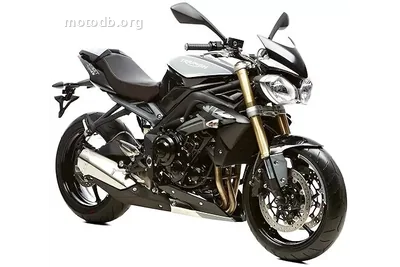
675 STREET TRIPLE R 10ème anniversaire
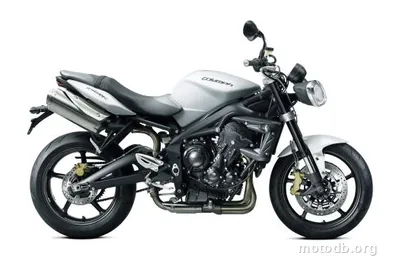
new 675 STREET TRIPLE R
Reviews & comments
No reviews yet. Be the first to share your opinion!