Key performance
Technical specifications
Engine
- Displacement
- 1833 cc
- Power
- 126.0 ch @ 5500 tr/min (92.7 kW)
- Torque
- 169.7 Nm @ 4500 tr/min
- Cooling
- liquide
- Compression ratio
- 10.5 : 1
- Bore × stroke
- 73 x 73 mm
- Valves/cylinder
- 4
- Camshafts
- 1 ACT
- Fuel system
- Injection Ø 50 mm
Chassis
- Frame
- Double poutre alu, type Diamant
- Gearbox
- boîte à 7 rapports
- Final drive
- Cardan
- Front suspension
- Fourche quadrilatère double bras longitudinaux
- Rear suspension
- Mono-amortisseur
Brakes
- Front brakes
- Freinage 2 disques Ø 320 mm, fixation radiale, étrier 6 pistons
- Rear brakes
- Freinage 1 disque Ø 316 mm, étrier 3 pistons
- Front tyre
- 130/70-18
- Front tyre pressure
- 2.50 bar
- Rear tyre
- 200/55-16
- Rear tyre pressure
- 2.80 bar
Dimensions
- Seat height
- 745.00 mm
- Fuel capacity
- 21.00 L
- Weight
- 367.00 kg
- New price
- 25 100 €
Overview
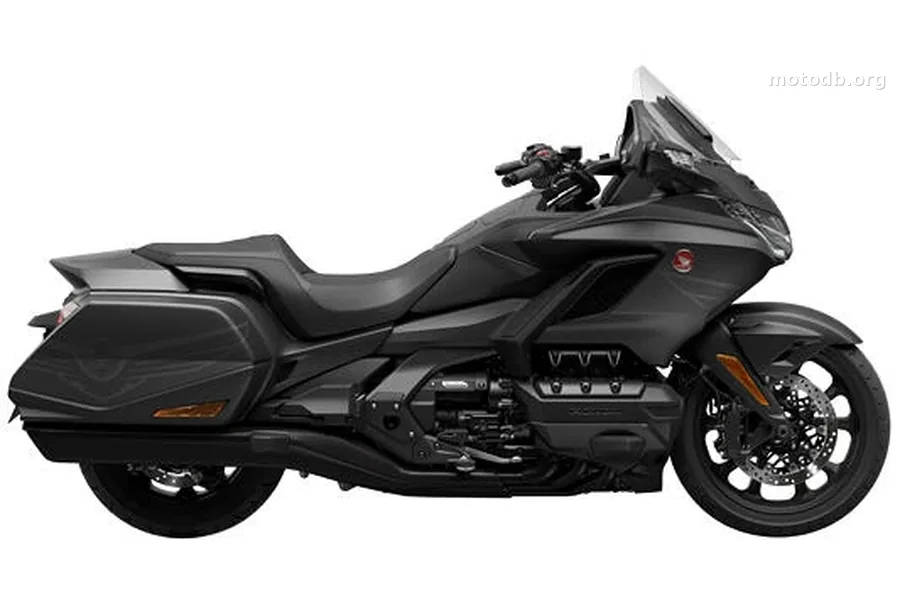
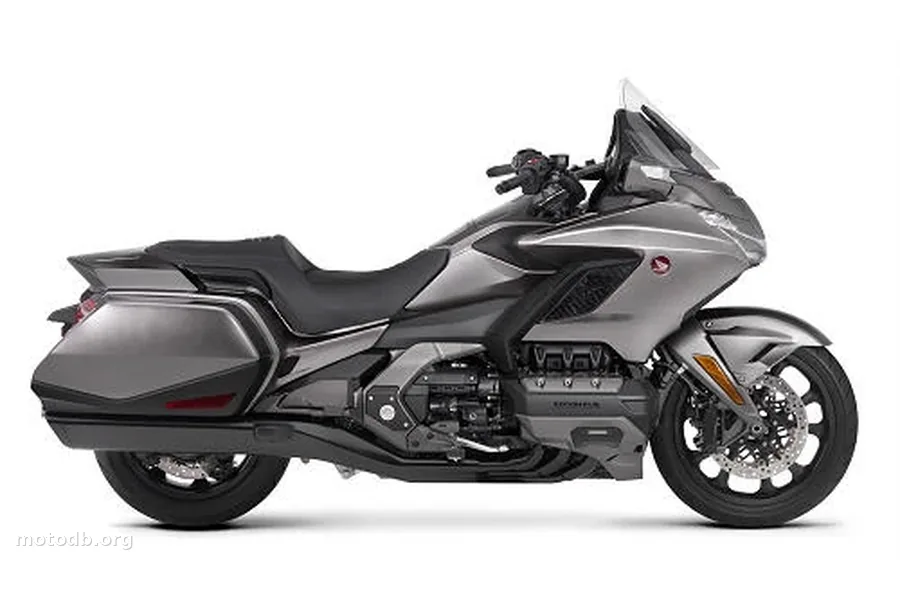
Imagine a touring bike that has slimmed down without disowning its ocean-liner DNA. That, in a few words, is what the Honda GL1800 Gold Wing DCT has become since its overhaul. Mind the vocabulary, though, because the nomenclature has changed. The short version of the Gold Wing, without top case, is now the pure-bred bagger, priced at 25,100 euros. For the rear trunk and all the paraphernalia of long-distance travel, you'll need to turn to the Tour variant. A distinction that matters when it comes time to sign the order form.
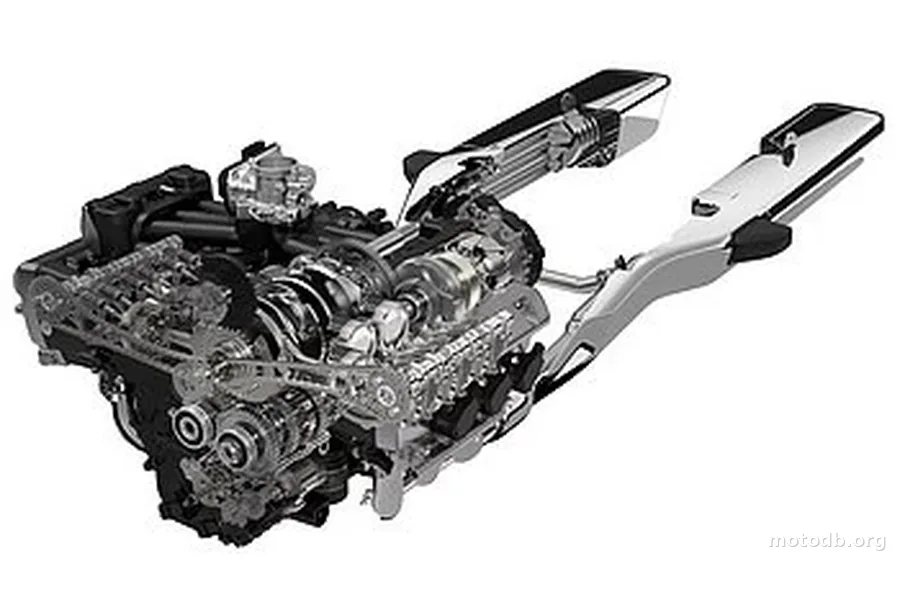
Beneath its refined fairings, the 1833 cc flat-six continues its duty with unchanged mechanical nobility. Honda didn't play the horsepower-race card against the in-line six-cylinder of the BMW K 1600 GT, which spits out a far more generous cavalry. Here, the claim is 126 horsepower at 5,500 rpm and 169.7 Nm of torque available from 4,500 rpm, figures tailored for a sovereign flick of the wrist rather than lyrical flight. The square bore and stroke of 73 x 73 mm and the modest compression ratio of 10.5:1 attest to this philosophy. The engineers have mainly reworked the top end with four valves per cylinder, shaved off a few centimetres of length, and saved a little over six kilos. Watchmaker's work rather than lumberjack's.
The real revelation remains the seven-speed DCT gearbox paired with shaft drive. A shortened first gear to iron out jolts during manoeuvres, then lengthened ratios to keep the rev counter calm at cruising speed, all governed by the Tour, Sport, Econ and Rain modes, which modify the injection mapping, the calibration of the electronically controlled suspension and the brake distribution. The Rain mode, for instance, softens the damping and smooths the throttle response, where Sport stiffens everything and sends the gears searching for higher revs. The electric reverse, an indispensable psychological crutch for 367 kilos fully fuelled, is still on board. By way of comparison, the old F6B tipped the scales at 384 kilos, seventeen kilos more, the equivalent of a breeze block under the arm at parking time.
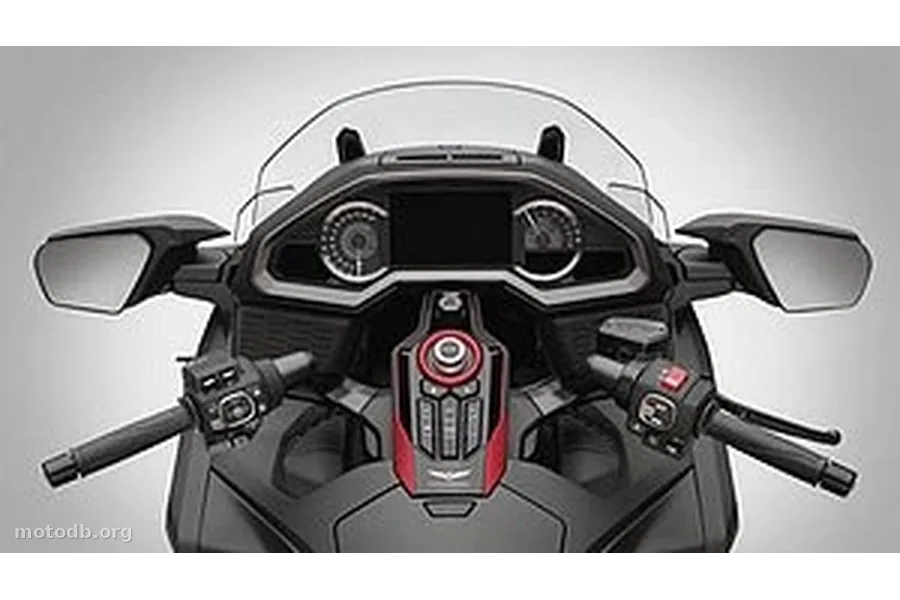
The cockpit plays the intelligent hybrid card. A 7-inch TFT screen takes pride of place in the centre for navigation, audio and mode settings, but Honda had the good idea of keeping two analogue dial gauges for speed and revs. Apple CarPlay, Android Auto, keyless Smart Key, advanced cruise control, full LED lighting, dual USB sockets, Bluetooth, hill-start assist — the inventory is complete. The chassis, a twin-spar aluminium Diamond-type frame, houses a double longitudinal-arm fork directly inspired by the Fior process, the same one that gave rise to BMW's Duolever. The result: more precise steering, a front end decoupled from the braking, and an agility that surprises for such a size. The seat height of 745 mm remains one of the most accessible in the segment, a valuable asset for riders under 1.75 m.
The downside lies in the pragmatism of travel. The side cases settle for 30 litres each compared to 51 on the F6B, the tank loses four litres to drop to 21 litres, and the top speed caps at 180 km/h. For those who want to cross Europe with the missus and three weeks of luggage, the Tour is a must. For the Sunday wanderer who wants to taste the flat-six without burdening himself with a rolling cathedral, this bagger finds its niche facing the Indian Challenger and the Harley Road Glide. A GT roadster, sporty in spirit even if never on the spec sheet, which finally embraces not wanting to do it all.
Standard equipment
- Assistance au freinage : ABS
- Nombre de mode de conduite : 4
- Volume de rangement : 60 litres
- Taille de l'écran TFT couleur : 17,78 cm / 7 pouces
- Indicateur de vitesse engagée
- Régulateur de vitesse
- Boîte automatique
- Radio
- Bluetooth
- GPS
- Prise USB
- Aide au démarrage en côte (Hill Hold Control)
- Démarrage sans clé
- Suspensions réglables électroniquement
- Contrôle de couple
- Valises
- Surveillance de la pression des pneus
Practical info
- La moto est accessible aux permis : A
Indicators & positioning
Similar bikes
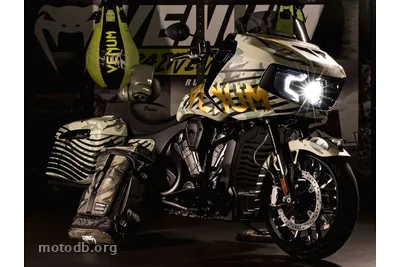
1830 Challenger Venum
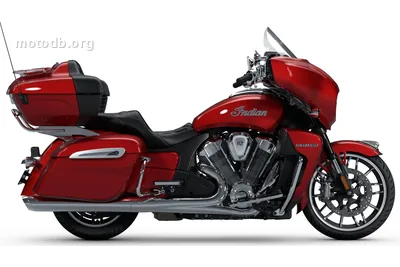
1830 Roadmaster Limited / Dark Horse
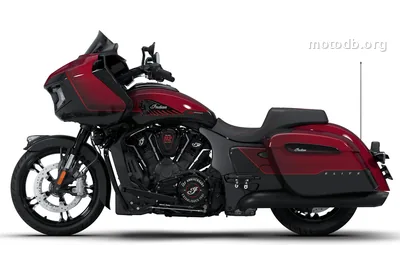
1830 Challenger 125th Anniversary Edition
Reviews & comments
No reviews yet. Be the first to share your opinion!