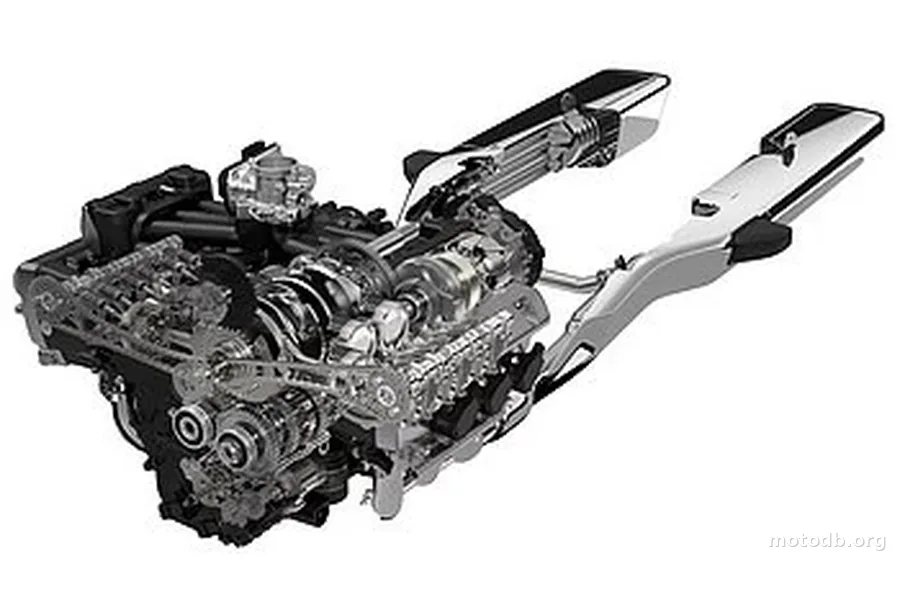
Key performance
Technical specifications
Engine
- Displacement
- 1833 cc
- Power
- 126.0 ch @ 5500 tr/min (92.7 kW)
- Torque
- 169.7 Nm @ 4500 tr/min
- Cooling
- liquide
- Compression ratio
- 10.5 : 1
- Bore × stroke
- 73 x 73 mm
- Valves/cylinder
- 4
- Camshafts
- 1 ACT
- Fuel system
- Injection Ø 50 mm
- Starter
- électrique
- Euro standard
- Euro 5+
Chassis
- Frame
- Double poutre alu, type Diamant
- Gearbox
- boîte à 7 rapports
- Final drive
- Cardan
- Front suspension
- Fourche quadrilatère double bras longitudinaux
- Rear suspension
- Mono-amortisseur
Brakes
- Front brakes
- Freinage 2 disques Ø 320 mm, fixation radiale, étrier 6 pistons
- Rear brakes
- Freinage 1 disque Ø 316 mm, étrier 3 pistons
- Front tyre
- 130/70-18
- Front tyre pressure
- 2.50 bar
- Rear tyre
- 200/55-16
- Rear tyre pressure
- 2.80 bar
Dimensions
- Seat height
- 745.00 mm
- Seat type
- Selle biplaces
- Fuel capacity
- 21.00 L
- Weight
- 373.00 kg
- New price
- 28 849 €
Overview
The Goldwing received subtle improvements in 2025. A few adjustments to the ECU for Euro5+ compliance, a complementary Wi-Fi system for Android Auto and Apple CarPlay, revised speakers for increased sound intensity, and an intercom optimization.
A motorcycle like this is designed to last for generations of 10 to 15 years before moving on to the next. During that time, certain things can be optimized, updated, and adapted to become even better.
It was in 2023 that the GL received a system to monitor tire pressure. The information is displayed on the dashboard, on the left side. A little earlier, in 2021, Honda had given it a small added touch of comfort. An improved audio system with new speakers. Other bonuses were and are for the Tour version – seat trim, a larger top case, and better passenger comfort.
Going back a bit in time, we see the Goldwing equipped with the DCT gearbox in 2020. Almost a given for this type of flagship. We’ll see later how it works.
Listening only to the pleasure of its engine, Honda reworked the injection to make it smoother at low speeds. On the onboard electronics side, two USB ports instead of one are available, and navigation has been updated with the ability to save 199 points of interest. Finally, the passenger handles are enlarged.
This predisposition to comfort is entirely fitting for the bearing of this generous princess of the road. Be careful with your request when you make it. Before she becomes your lady, consider addressing her without mispronouncing her name. Since her spectacular redesign, Miss Gold has changed somewhat in identity. If previously you conceived of her with a large rear trunk, you will have to court the Goldwing Tour. Not the Goldwing proper, which has become the bagger version. Now, online or at a dealership, her original name will lead you here, to her refined definition. The GL 1800 Goldwing deploys new wings, with a variable geometry span.
The Airbus A380 is a formidable large carrier... that did not achieve the expected success. The GL seems to have drawn inspiration from that lesson. Getting bigger and bigger would only last for a while... Her new generation is more compact, lighter, more technological, and surprising in more ways than one. Imposing, still. The Honda must respect a bearing linked to its history. But with its more reasonable dimensions, the absence of a trunk, and this less elusive profile, the solemnity is no longer present. We have gone from a migratory bird to a raptor. This can be felt from the appearance to the function. The fairing thinks about channeling airflow rather than protecting the crew at all costs. A smaller electric bubble than on the Tour version allows modulation of the bow's tactical efficiency. For the seat, we remain in the high-end range. For cargo, it’s another matter. Already, the Tour has reduced its sails to reduce the total volume it can carry to 110 liters! We will have to be careful about the items we choose to take for the weekend. The two cases will not offer the same comfort as the F6B. From 51 liters per compartment, the Gold no longer offers than 30 liters.
We weren't looking to do long distances anyway. This 'bagger' GL is intended for light travel as well as velvety smoothness. A Corniche for the flank of the roads. With an engine completely reworked to perpetuate the dignity of this dynasty. Do you only suffer from a generous steel hand to lift the rock!? The 6-cylinder will employ it with a greater amplitude of breath. The engine specialists have retained the architecture, displacement, layout... and improved everything else. The cylinder heads house twice as many valves, that is 4 per cylinder. The engine itself has lost 6.2 kg, is more than 3 cm shorter, has gained 8 horsepower and a little torque. It can be commanded under 4 governors thanks to a massive amount of electronics. The riding modes affect engine response, braking distribution, and suspension settings. Because the Goldwing, like the Tour version, now has piloted suspension – but not semi-active. In the standard mode, called 'Tour', the acceleration corresponds exactly to the movement of the throttle. Braking and suspension are calibrated in a homogeneous format. Switch to 'Sport' for more vigorous acceleration, firmer suspension, and rear-biased braking. The 'Econ' mode seeks to save fuel by increasing the throttle-to-engine response ratio and places the brakes and suspension in standard configuration. Finally, the 'Rain' mode justifies its name with an even higher throttle-to-engine ratio, standard braking, and softened suspates.
The robotic gearbox settles quietly between the engine and the road. A small jewel of technology and complexity, equipped with 7 gears, a double clutch, and a large dose of silicon to function with smoothness and efficiency. As with the Tour model, it has been optimized with shorter first gears to limit jolts. The following gears are longer to reduce engine speed. As seen previously, the riding modes change the dynamic behavior of the motorcycle. But they have influenced the action of the double clutch and gear changes. - In automatic, the 'Tour' mode acts on the clutch in its standard setting and gear changes occur over a wide range of engine speed; - On the other hand, in 'Rain' mode, the clutch is more progressive and gear changes are distributed between low and high engine speeds; - In 'Econ', the clutch is also progressive while gears shift at low or medium engine speeds; - 'Sport' plays on its name for the clutch to be more direct and the gears to reach the middle and high engine speeds. Of course, it is enough to switch to manual (MT) to regain control of the gearbox. To facilitate maneuvers, an electric reverse gear is reintroduced in its prerogatives.
Beyond the engine, the automatic gearbox and its senatorial side, this bagger is also appreciated with its onboard equipment. A beautiful 7-inch color TFT screen occupies the place of honor, displaying data on the sound system, navigation, suspension settings, and other technical data. A panel of small digital screens informs about the priority driving data. Fortunately, not everything has been drowned in digital, and the essentials (speed and engine speed) are displayed with two beautiful needle gauges. A little more technology for dessert? Let's not deprive ourselves. The new generation Goldwing are equipped with keyless Smart Key start, hill start assist, central locking, Apple CarPlay and Android Auto compatibility, full LED lighting, automatic canceling turn signals, a more advanced cruise control, a double USB port, Bluetooth connectivity, and a beautiful dashboard console. Ah, yes, let me not forget to tell you that the tank has lost 4 liters of capacity. But since the engine consumes less, we should make up for it in terms of autonomy.
With all this, Honda is catching up on technical shortcomings in comfort and entertainment. For the engine, we are not particularly concerned about the six-in-line of the rival BMW K 1600 GT; the engine optimizations are not aimed at a mechanical confrontation but at personal improvement. However... However, a few engineers must have been impressed by the Duolever front end of the K series of the 21st century, itself inspired by the Fior process. Germans and Japanese are well advised to adopt this front-end system, which is rich in qualities for a touring machine. With its double triangle fork, the latest generation GoldWing promises to be easier to handle, more agile, with a smoother movement of the train. The Nipponese engineers took advantage of the redesign to revise the frame and lighten it, rework the swingarm design, modify the ABS, and congratulate themselves on an amazing result on the scale. The silhouette has been refined, the scale confirms the look. When the F6B announced 384 kg, the Goldwing drops to 373. A slight drop for such a beast? An effort to be applauded given the work accomplished? A dozen kilos is the weight of a small cinder block. Take one under your arm and walk around the block; you will see this figure differently after this mini-challenge.
The Goldwing, whether standard (bagger) or Tour (flagship), marks an important step in its evolution. There is enough to lose your marks. Much richer, noticeably lighter, more audacious than the F6B, the motorcycle seems to have been built under a will for dynamism that is almost too pronounced. Simply a matter of point of view, forcing the Pullman to yield to a virtuous naked GT.
M.B - Photos manufacturer
Standard equipment
- Assistance au freinage : ABS
- Nombre de mode de conduite : 4
- Volume de rangement : 60 litres
- Taille de l'écran TFT couleur : 17,78 cm / 7 pouces
- Jantes aluminium
- Indicateur de vitesse engagée
- Régulateur de vitesse
- Boîte automatique
- Freinage combiné
- Radio
- Bluetooth
- GPS
- Prise USB
- Aide au démarrage en côte (Hill Hold Control)
- Démarrage sans clé
- Pare brise réglable électriquement
- Suspensions réglables électroniquement
- Contrôle de couple
- Valises
- Surveillance de la pression des pneus
Practical info
- La moto est accessible aux permis : A
- Pays de fabrication : Japon
Indicators & positioning
Similar bikes
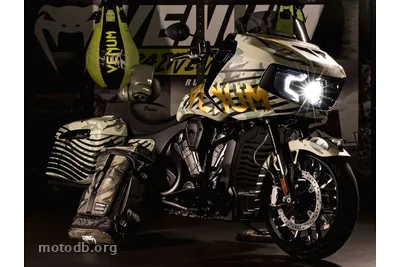
1830 Challenger Venum
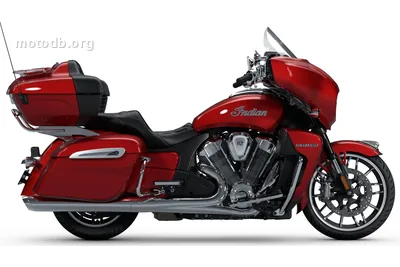
1830 Roadmaster Limited / Dark Horse
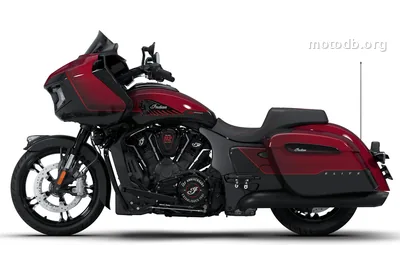
1830 Challenger 125th Anniversary Edition
Reviews & comments
No reviews yet. Be the first to share your opinion!