Key performance
Technical specifications
Engine
- Displacement
- 1832 cc
- Power
- 118.0 ch @ 5500 tr/min (86.8 kW)
- Torque
- 166.7 Nm @ 4000 tr/min
- Cooling
- liquide
- Compression ratio
- 9.8:1
- Bore × stroke
- 74 x 71 mm
- Valves/cylinder
- 2
- Camshafts
- 2 ACT
- Fuel system
- Injection PGM-FI Ø 40 mm
Chassis
- Frame
- Double poutre alu, type Diamant
- Gearbox
- boîte à 5 rapports
- Final drive
- Cardan
- Front suspension
- Fourche téléhydraulique Ø 45 mm, déb : 122 mm
- Rear suspension
- monobras Pro-Arm mono-amortisseur Pro-link, déb : 105 mm
Brakes
- Front brakes
- Freinage 2 disques Ø 296 mm, étrier 3 pistons
- Rear brakes
- Freinage 1 disque Ø 316 mm, étrier 3 pistons
- Front tyre
- 130/70-18
- Front tyre pressure
- 2.50 bar
- Rear tyre
- 180/60-17
- Rear tyre pressure
- 2.80 bar
Dimensions
- Seat height
- 725.00 mm
- Fuel capacity
- 25.00 L
- Weight
- 384.00 kg
- New price
- 23 299 €
Overview
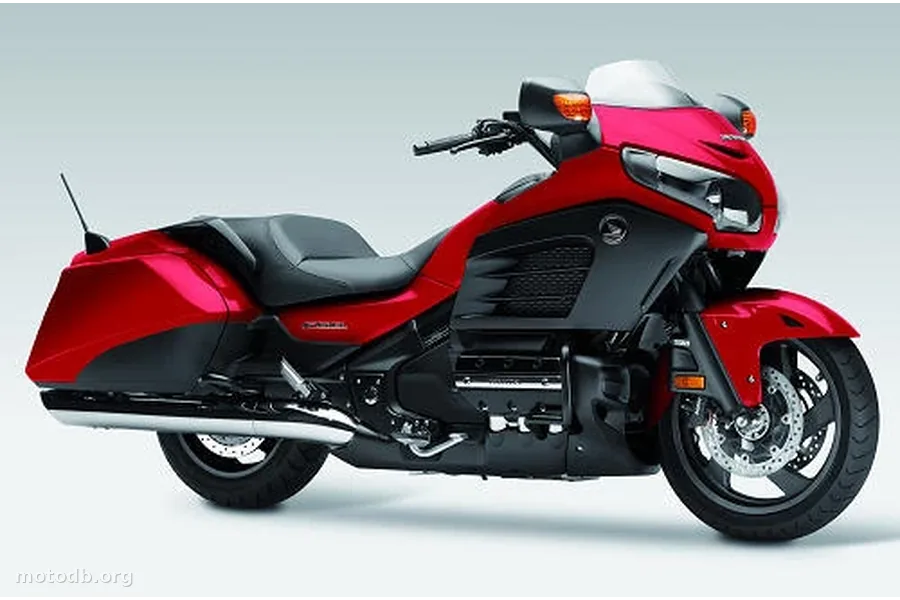
Who would have thought you could put a Goldwing on a diet and give it the look of an American bagger? Honda did it, and the result has a name: GL 1800 Goldwing F6B. The concept is simple on paper. Take the undisputed queen of grand touring, strip away all the excess, and transform it into a pavement cruiser built to devour miles in style. Gone are the panoramic windshield, the moving-van-sized top case, the heated seat, the reverse gear, and the passenger footrests worthy of a club chair. The result is radical: 28 kilos less on the scales and nearly 6,000 euros off the price compared to the standard Goldwing. At 23,299 euros, the F6B remains a substantial investment, but we're talking about a 1,832 cc flat-six here, not some twin pulled from a generic catalog.
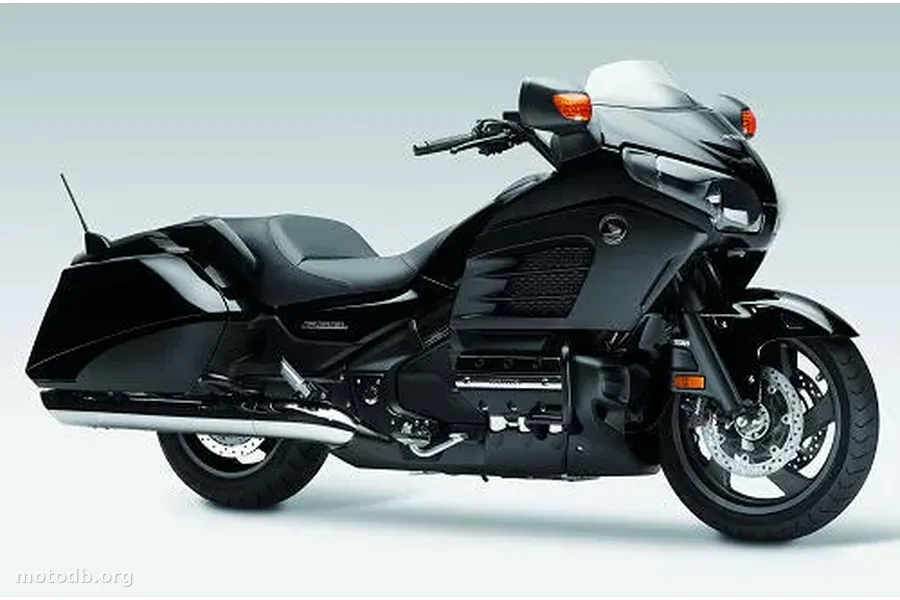
This flat-six remains the centerpiece of the show. With 118 horsepower at 5,500 rpm and especially 166.7 Nm of torque available from just 4,000 rpm, the Honda engine doesn't play the raw power card. The BMW K 1600 and its 160 horsepower clearly outclass it on that front. But the comparison stops there, because the Honda flat-six delivers a mechanical smoothness that nobody in the category can match. The engine runs with metronome-like regularity, pulls without hesitation at any rpm, and propels the 384 kg wet weight with disconcerting ease. The shaft drive and five-speed gearbox do their job without drawing attention. One does regret the absence of a sixth gear, which would have calmed the revs on the highway and perhaps pushed the top speed beyond the claimed 200 km/h.
On the chassis side, Honda changed nothing compared to the standard Goldwing. The diamond-type aluminum twin-spar frame remains identical, as does the 45 mm telescopic hydraulic fork equipped with an anti-dive system and the Pro-Arm single-sided swingarm fitted with a Pro-Link shock. The setup offers 122 mm of travel at the front and 105 mm at the rear, placing the machine firmly in the sport-touring register. The seat, perched at just 725 mm, makes low-speed maneuvering a breeze — a real relief when you're handling a machine of this size. The combined ABS braking system pairs two 296 mm front discs with a 316 mm rear disc, all clamped by three-piston calipers. Effective, reassuring, and suited to the overall mass.
The visual identity sets it apart from the touring Goldwing. Honda dressed the engine, wheels, frame, belly pan, and fork in matte or gloss black to give it that bagger look straight off the California highways. Specific chrome logos adorn the fairing sides. A small wind deflector replaces the large windshield, the saddlebags remain but the top case is gone. The line stretches out, slims down, and gains in character what it loses in wind protection. The passenger gets a redesigned seat, dedicated footpegs, and grab handles, but will never find the princely comfort of the standard version. The USB and MP3-compatible audio system survives the weight-loss program, ensuring a soundtrack for the long hauls.
The F6B is aimed at a very specific rider: one who wants the prestige and noble engineering of the Goldwing without the bulk or the ocean liner image. A road rider who likes to travel light — or at least lighter — and who prefers the look of a bagger to that of an overloaded GT. The 25-liter tank allows for reasonable legs between fuel stops. Against the Harley-Davidson Street Glide or Indian Chieftain, the Honda plays the card of Japanese reliability and a one-of-a-kind six-cylinder. It will never be the most powerful or the lightest, but it possesses that mechanical smoothness that turns every mile into velvet.
Standard equipment
- Assistance au freinage : Dual-CBS and ABS
Practical info
- La moto est accessible aux permis : A
Indicators & positioning
Similar bikes
1830 Challenger Venum
1830 Roadmaster Limited / Dark Horse
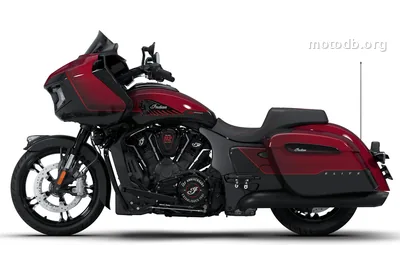
1830 Challenger 125th Anniversary Edition
Reviews & comments
No reviews yet. Be the first to share your opinion!