Key performance
Technical specifications
Engine
- Displacement
- 1832 cc
- Power
- 118.0 ch @ 5500 tr/min (86.8 kW)
- Torque
- 166.7 Nm @ 4000 tr/min
- Cooling
- liquide
- Compression ratio
- 9.8:1
- Bore × stroke
- 74 x 71 mm
- Valves/cylinder
- 2
- Camshafts
- 2 ACT
- Fuel system
- Injection PGM-FI Ø 40 mm
Chassis
- Frame
- Double poutre alu, type Diamant
- Gearbox
- boîte à 5 rapports
- Final drive
- Cardan
- Front suspension
- Fourche téléhydraulique Ø 45 mm, déb : 122 mm
- Rear suspension
- monobras Pro-Arm mono-amortisseur Pro-link, déb : 105 mm
Brakes
- Front brakes
- Freinage 2 disques Ø 296 mm, étrier 3 pistons
- Rear brakes
- Freinage 1 disque Ø 316 mm, étrier 3 pistons
- Front tyre
- 130/70-18
- Front tyre pressure
- 2.50 bar
- Rear tyre
- 180/60-17
- Rear tyre pressure
- 2.80 bar
Dimensions
- Seat height
- 725.00 mm
- Fuel capacity
- 25.00 L
- Weight
- 384.00 kg
- New price
- 23 299 €
Overview
Who would have thought you could put a Goldwing on a diet and give it the look of an American bagger? Honda did it with the GL 1800 F6B, a bold gamble that strips the queen of Grand Touring down to a lighter, sleeker tourer, free of all the excess. The result is a singular machine, halfway between a luxury liner and a cruiser built to devour highways. In 2017, this version takes its final bow: emissions regulations caught up with it and Honda chose not to adapt the model. A premature end for a concept that truly deserved to last.
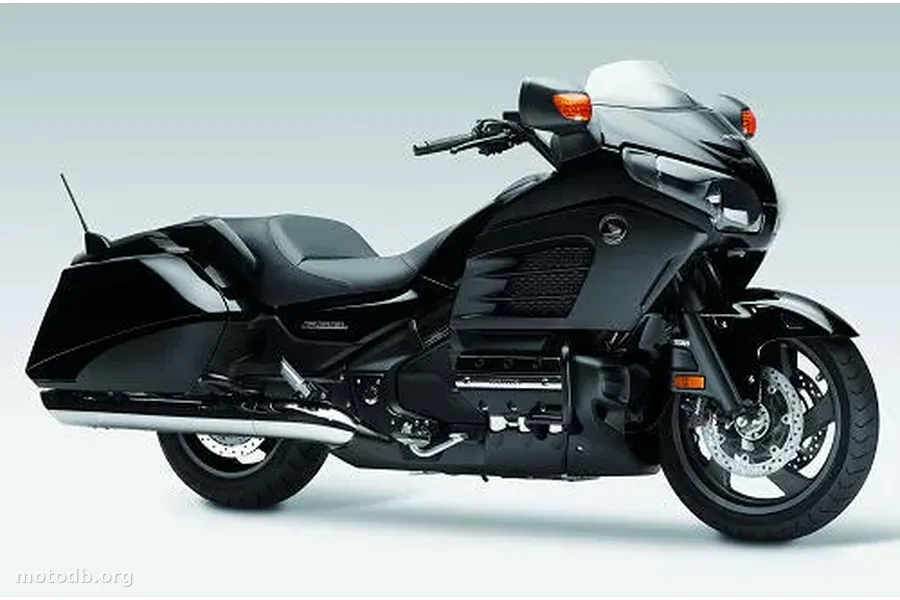
The principle is simple but radical. Take the Goldwing, remove the tall windshield, the top case, the heated seat, the passenger floorboards, the reverse gear, the optional GPS, and the airbag. What remains is a small wind deflector, a pair of side cases, and the USB and MP3-compatible audio system. This trimming is no mere cosmetic exercise: the scales show 384 kg wet, nearly 28 kg less than the full-dress version. The price follows the same logic at 23,299 euros, roughly 6,000 euros below the standard Goldwing. For a machine of this size, the weight savings are felt from the very first meters. The seat, set at just 725 mm, reassures shorter riders and reinforces the accessible character Honda intended for its F6B.
Beneath that matte or gloss black bodywork lies the 1832 cc flat-six that built the dynasty's reputation. Its 118 horsepower at 5,500 rpm won't set any speed records, especially against the 160 hp from BMW's K 1600 inline-six 1600. But the comparison ends there. The 166.7 Nm of torque available from just 4,000 rpm delivers a smoothness that only a flat-six can provide. The engine purrs, pulls without a hiccup, and turns every burst of acceleration into a silken exercise. The five-speed gearbox and shaft drive complete a package designed for comfort, not outright performance. Top speed caps out at 200 km/h, more than enough for the intended purpose.
On the chassis side, Honda changed nothing from the Goldwing it derives from. The diamond-type aluminum twin-spar frame, the 45 mm telescopic hydraulic fork with anti-dive system, and the Pro-Arm single-sided swingarm with Pro-Link shock form a solid technical foundation. The combined ABS braking pairs two 296 mm front discs with a 316 mm rear disc, all squeezed by three-piston calipers. On the road, the F6B handles like a livelier, more playful Goldwing through sequences of corners. The 25-liter tank allows comfortable legs without turning every gas station into a mandatory stop.
The F6B is aimed at a very specific rider: one who loves the idea of the Goldwing without wanting its bulk or its price tag. The touring rider who prefers to travel light, with just enough luggage capacity and a flat-six as a road companion. Against the Harley-Davidson Street Glide and Indian Chieftain that dominate the bagger segment, Honda offered a radically different alternative — technically more refined, less flashy in style. Its disappearance from the lineup leaves a gap that the new generation Goldwing, oriented toward different choices, doesn't quite fill. For those who track down one of the last available examples, it's an opportunity to seize before it becomes a sought-after curiosity.
Standard equipment
- Assistance au freinage : Dual-CBS and ABS
Practical info
- La moto est accessible aux permis : A
Indicators & positioning
Similar bikes
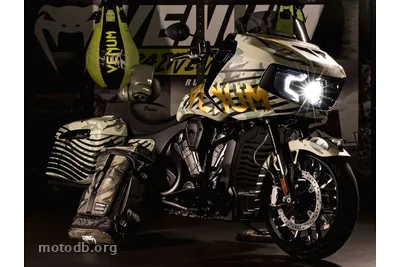
1830 Challenger Venum
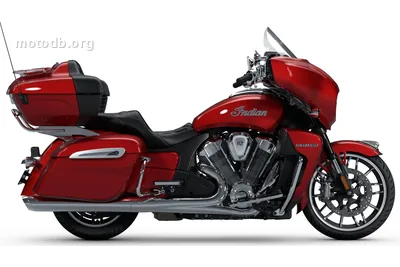
1830 Roadmaster Limited / Dark Horse
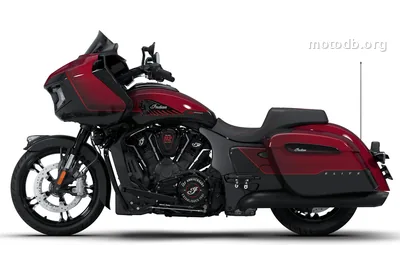
1830 Challenger 125th Anniversary Edition
Reviews & comments
No reviews yet. Be the first to share your opinion!