Key performance
Technical specifications
Engine
- Displacement
- 1832 cc
- Power
- 118.0 ch @ 5500 tr/min (86.8 kW)
- Torque
- 166.7 Nm @ 4000 tr/min
- Cooling
- liquide
- Compression ratio
- 9.8:1
- Bore × stroke
- 74 x 71 mm
- Valves/cylinder
- 2
- Camshafts
- 2 ACT
- Fuel system
- Injection PGM-FI
Chassis
- Frame
- Double poutre alu, type Diamant
- Gearbox
- boîte à 5 rapports
- Final drive
- Cardan
- Front suspension
- Fourche téléhydraulique Ø 45 mm, déb : 140 mm
- Rear suspension
- monobras Pro-Arm mono-amortisseur Pro-link, déb : 105 mm
Brakes
- Front brakes
- Freinage 2 disques Ø 296 mm, étrier 3 pistons
- Rear brakes
- Freinage 1 disque Ø 316 mm, étrier 3 pistons
- Front tyre
- 130/70-18
- Front tyre pressure
- 2.50 bar
- Rear tyre
- 180/60-17
- Rear tyre pressure
- 2.80 bar
Dimensions
- Seat height
- 740.00 mm
- Fuel capacity
- 25.00 L
- Weight
- 417.00 kg
- Dry weight
- 363.00 kg
- New price
- 31 990 €
Overview
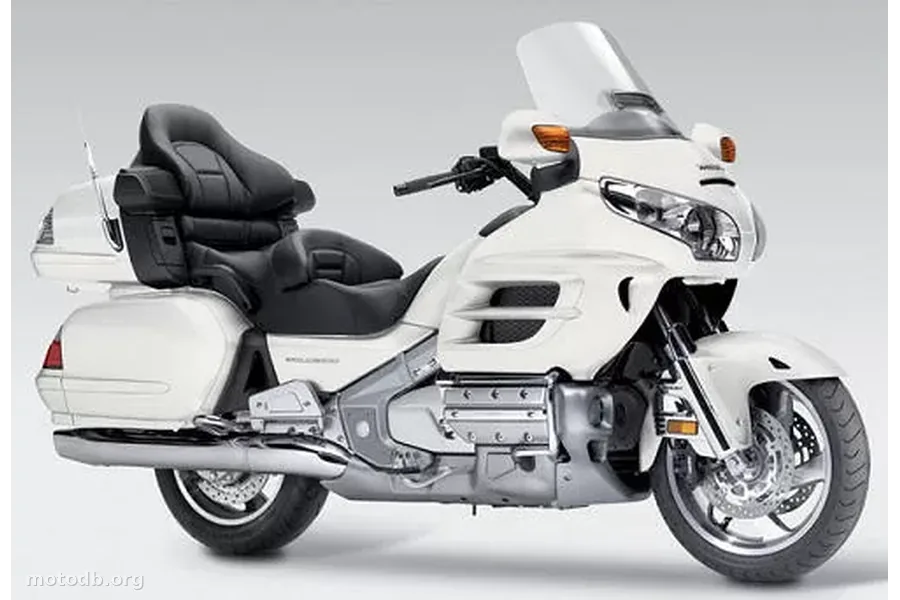
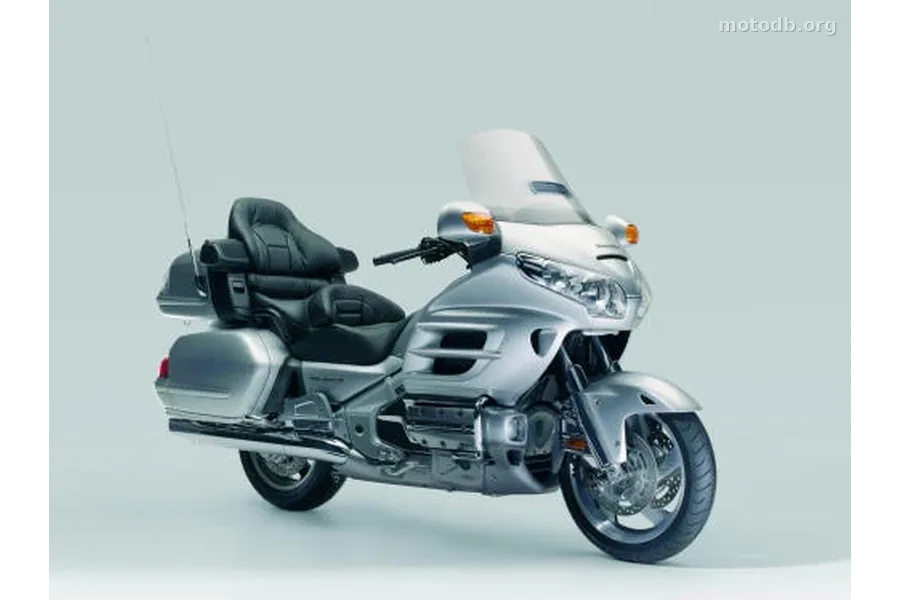
Remember 2007. While the motorcycle world was obsessing over hyper-sport bikes and the first consumer traction control systems, Honda arrived with a far quieter breakthrough that carried much heavier implications. An airbag. On a motorcycle. Not a show concept, not a forward-looking video, but a homologated system, fitted as standard equipment, integrated into the fuel tank of a 1832 cc tourer. Three years later, in 2010, the GL 1800 Goldwing still carries this innovation alone, and no competitor has yet dared to follow.
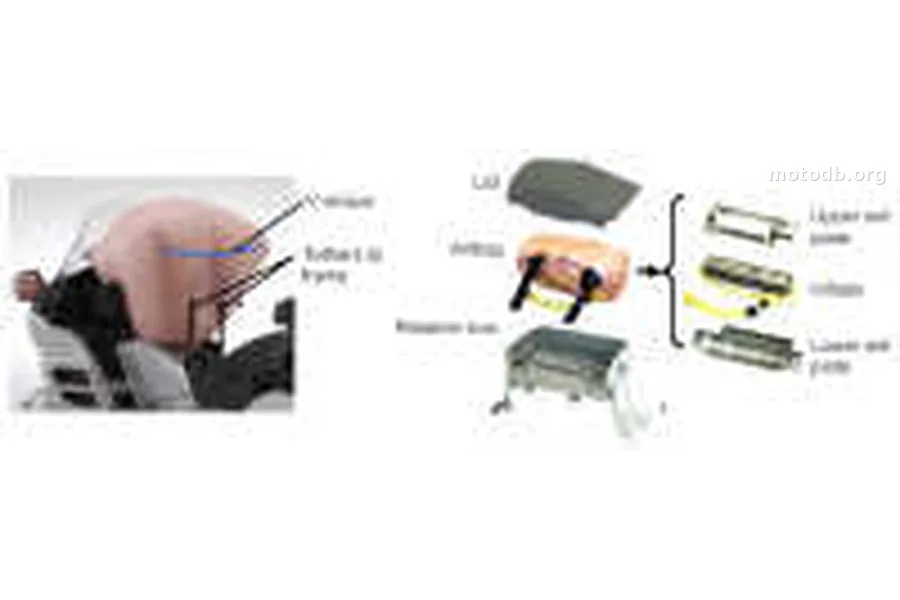
The engineering work behind this cushion deserves attention. Four redundant sensors on the fork tubes continuously monitor deceleration, transmit their data to a control unit that individually compares them to stored thresholds, and trigger inflation in 0.15 seconds during a frontal impact. The bag, housed on top of the tank, deploys in a geometry that prevents the rider from sliding sideways, held back by two straps anchored to the chassis. Honda began working on it in the 90s, tested a prototype on the GL 1500, then on a Silverwing in 2004 before deeming the technology mature enough for production. That's watchmaker's patience, not marketing haste.
Still, this airbag is grafted onto a machine that is already out of the ordinary. The 1832 cc flat-six delivers 118 horsepower at 5500 rpm and 166.7 Nm of torque from 4000 rpm, transmitted through a shaft via a five-speed gearbox. On paper, it isn't the horsepower excess of the K 1600 GTL that BMW will bring out a few years later, but on the road, the smoothness of the flat-six remains a benchmark. The Diamond-type aluminum double cradle handles the 417 kg fully fueled without flinching, provided you accept that a Goldwing isn't handled like a 600 Hornet. The 740 mm seat nonetheless allows most builds to plant their feet, and the 25-liter tank opens the door to 400 km stages without pinch-penny calculation.
On the competition side, the BMW K 1200 LT of the era played in the same league but without this safety argument, and the Harley Electra Glide banked on folklore rather than engineering. The Goldwing therefore remains alone in offering this complete package: living-room comfort, a raspy and silky six-cylinder, dual 296 mm front discs clamped by three-piston calipers, and a Pro-Arm single-sided swingarm at the rear. The linked braking works wonders on such a mass, even if pushing to the announced 200 km/h top speed with a passenger and full luggage remains an exercise that demands anticipation.
The bill comes to 31,990 euros in 2010, roughly 12% more than a standard Goldwing. A couple of thousand euros for a device that may never be used, but which, the day it deploys, will justify its existence in a fraction of a second. The target audience is clear. Long-distance rider covering 30,000 km a year, couple fond of long two-up stages, mature motorcyclist who has already done their time on sport bikes and now seeks to travel rather than attack. For this profile, the 2010 GL 1800 remains the only motorcycle in the world to offer this added peace of mind. Visionary pioneer or isolated technological demonstration, history will decide. In the meantime, Honda can take pride in having made everyone agree on one point. Active safety on motorcycles could reach a new level, and it took a manufacturer to prove it.
Standard equipment
- Assistance au freinage : Dual-CBS et ABS
Practical info
- La moto est accessible aux permis : A
Indicators & positioning
Similar bikes
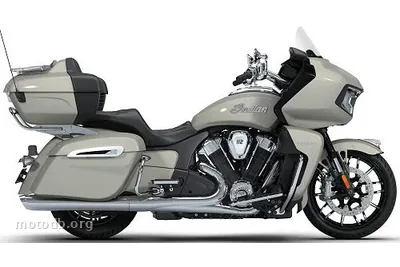
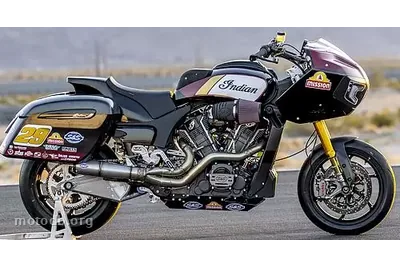
1830 Challenger Venum
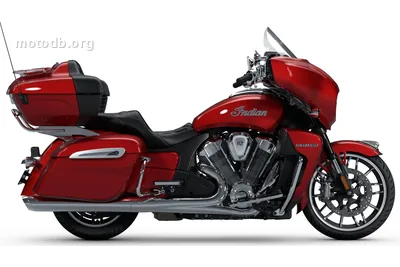
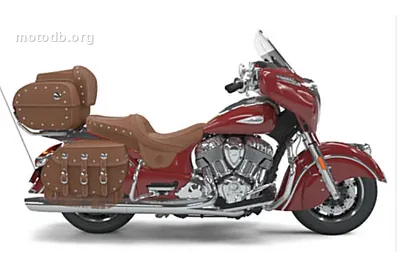
1830 Roadmaster Limited / Dark Horse
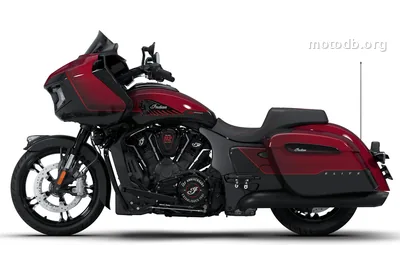
1830 Challenger 125th Anniversary Edition
Reviews & comments
No reviews yet. Be the first to share your opinion!