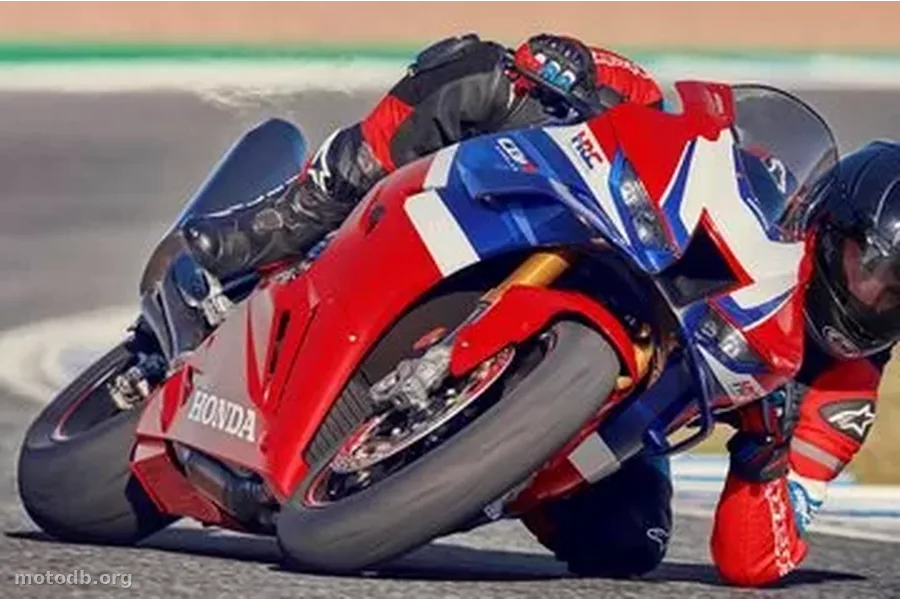
Key performance
Technical specifications
Engine
- Displacement
- 1000 cc
- Power
- 217.6 ch @ 14000 tr/min (160.0 kW)
- Torque
- 113.0 Nm @ 12000 tr/min
- Engine type
- 4 cylindres en ligne, 4 temps
- Cooling
- liquide
- Compression ratio
- 13.6 : 1
- Bore × stroke
- 81 x 48.5 mm
- Valves/cylinder
- 4
- Camshafts
- 2 ACT
- Fuel system
- Injection Ø 52 mm
- Starter
- électrique
- Euro standard
- Euro 5+
Chassis
- Frame
- double poutre en aluminium
- Gearbox
- boîte à 6 rapports
- Final drive
- Chaîne
- Front suspension
- Fourche téléhydraulique inversée Ø 43 mm, déb : 120 mm
- Rear suspension
- Mono-amortisseur, déb : 137 mm
Brakes
- Front brakes
- Freinage 2 disques Nissin Ø 330 mm, fixation radiale, étrier 4 pistons
- Rear brakes
- Freinage 1 disque Brembo Ø 220 mm, étrier simple piston
- Front tyre
- 120/70-17
- Front tyre pressure
- 2.50 bar
- Rear tyre
- 200/55-17
- Rear tyre pressure
- 2.90 bar
Dimensions
- Seat height
- 830.00 mm
- Seat type
- Selle biplaces
- Fuel capacity
- 16.50 L
- Weight
- 200.00 kg
- New price
- 22 749 €
Overview
Going fast, that’s not a problem. You weld and you charge ahead until the horizon starts to freak out. The CBR 1000 RR-R has set itself another goal: to go faster between each corner, so as to give a jolt to each acceleration. But how? By increasing horsepower? No need, the Fireblade already has plenty under the hood. No, by optimizing the cavalry, to give even more velocity of inspiration until the explosion of its power.
This desire, this need to burn through the stopwatch, it doesn’s show with a new face but with an increased sense of efficiency. Fundamentally, the plastics of the CBR evolve very little, except for the aerodynamics. After choosing “fully integrated” winglets in the fairing flanks, Honda changes philosophy with prominent wings with elliptical curves. Large moustaches...with a design very close to that of the old Yamaha M1 MotoGP. The manufacturer mainly aims to generate more downforce on the front end, calm front wheelies before traction control engages, and reduce the moment of inertia by 10% (the rotation of the motorcycle around its vertical axis).
Besides the winglets and a few fine touches to the fairing, you won’t see any other changes on the CBR 1000 phase 9, which doesn’t prevent it from remaining a very beautiful machine, racily elegant and full of promises in its HRC replica livery (only color available). It’s mainly at the heart of the motorcycle that everything is at stake.
Upon its redesign in 2020, the CBR 1000 shocked power figures, advancing a formidable 217 horsepower. Enough to rival the 1100 Panigale V4 and RSV4 1100. For the 2024 model year, the engine specialists worked in every corner of the 4-cylinder. The mission was not to add watts – the maximum power does not evolve – but to strengthen it everywhere possible. In this perspective, the compression ratio was increased, the valve timing was modified, the intake valves were lightened, the intake passages were optimized, 20 grams were removed from the connecting rods and their caps, and a new throttle control operates in tandem with the throttle butterflies.
With this system, Honda wants to improve engine control. There are 2 servo-motors to act on the arrival of the gas flow. The first for cylinders 1 and 2, the second for 3 and 4. With this duo, power and engine braking management are more progressive and more responsive. Engine adjustments result in an upgrade to the electronic assists. The CBR 1000 RR-R relies on its 3 Riding Modes to best exploit its potential, with the presence of adjustable traction/torque control on 9 levels, the 5 power levels, the 3 possibilities of engine braking intervention, and wheelie control at 3 levels as well. New features for this 2024 version: ABS cornering now has Race mode in addition to Standard and Track. It allows disabling the rear wheel ABS. Also, the tachometer becomes preventative, setting the redline at 8,000 rpm while the engine is cold. Once at temperature, it shifts to 14,000 rpm. More than giving it gas and shifting gears; do so quickly, because they have been shortened to give even more punch. Honda is thus gradually eliminating one of the flaws of the RR-R 2020; it pulled too long.
Alongside this, the hypersport still incorporates a 6-axis inertial unit, its specific HESD electronic steering damper, keyless start, a launch assistant, and a 5-inch TFT screen. Still no quickshifter (except as an option) nor Italian-style electronic flourishes. You won’t find drift control or a pit lane speed limiter here. But the Honda is already well-equipped; you’ll burn through front tires before you need more.
Regarding the frame, Honda has always placed great importance on this central element, working on its shapes, its composition, its internal structure... at an almost obsessive level. Balance and control above all. The double-beam aluminum perimeter frame is modified to reduce its stiffness – 17% laterally and – 15% in torsion, in order to offer a smoother riding feel and very precise steering. To achieve this result, Honda revised the shape of the beams, removed internal ribs, and enlarged the thinnest walls. As a bonus, this freed up 960 grams. And another 140 flew away with the new engine mounting bolts. So, the CBR 1000 RR-R is lighter?! A little, by 1 kilo, weighing 200 units on the scale.
The most discerning riders will quickly feel a difference because in addition to engine and chassis upgrades, the wheelbase has been reduced by 10 mm and the riding position has been reworked. The handlebars-seat-footpeg triangle straightens the rider slightly with raised 19 mm grips, brought closer by 23 mm, and lowered footpegs by 16 mm. Ready to fight, the CBRist will grasp, as on the previous generation of RR, a Showa BPF large-piston inverted fork, fully adjustable. At the end, these are enormous 330 mm discs that brake the machine, with the action of 4-piston Nissin radial calipers. The rear suspension continues its career with a swingarm inspired by the exclusive RC213V-Set, animated by a (also Showa) BFRC-Light damper; fully adjustable of course. There, the braking is more timid, with a Brembo single-piston caliper pinching a 220 mm disc.
Honda takes advantage of this overhaul to revise the tank and increase its capacity to 16.5 liters (+ 40 cl). There is also an ESS function in the rear turn signals so they flash rapidly during sudden braking. The series titanium Akrapovic silencer is larger to reduce the sound level, by 5 dB. It may not seem like much, but it’s more than halving the sound power.
For the delight of fans of more refined parts, the CBR 1000 RR-R Fireblade is renewed in its SP version. With Öhlins pilot suspensions, Brembo Stylema R brakes (big top) with a master cylinder from the same origin, and a very (too) similar livery.
M.B - Photos manufacturer
Standard equipment
- Assistance au freinage : ABS
- Nombre de mode de conduite : 3
- Taille de l'écran TFT couleur : 12,70 cm / 5 pouces
- ABS Cornering
- Jantes aluminium
- Amortisseur de direction
- Indicateur de vitesse engagée
- Aide au départ arrêté (Launch Control)
- Démarrage sans clé
- Contrôle de couple
- Contrôle anti wheeling
- Contrôle du frein moteur
Practical info
- La moto est accessible aux permis : A
- Pays de fabrication : Japon
Indicators & positioning
Similar bikes
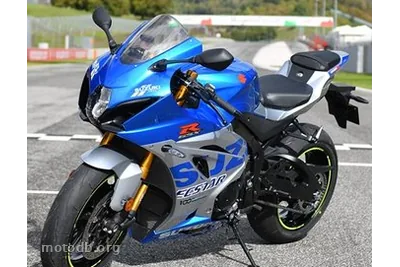
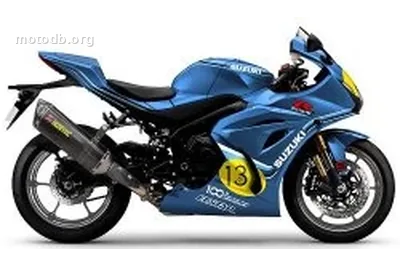
GSX-R 1000 R 100th Anniversary France
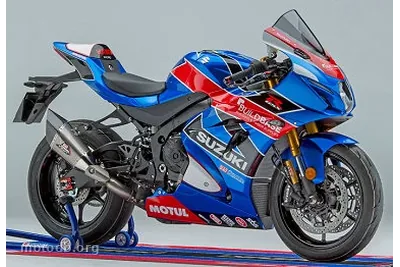
GSX-R 1000 R Buildbase Limited Edition
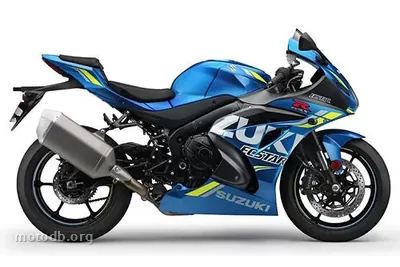
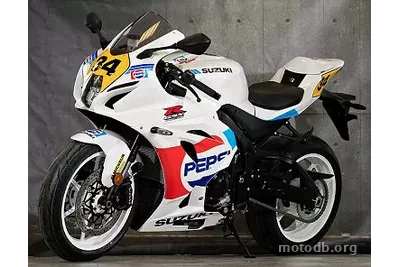
GSX-R 1000 Pepsi GP Edition
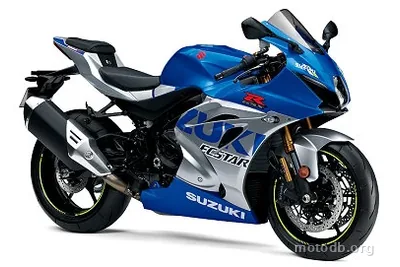
GSX-R 1000 R 100th Anniversary (Japon)
Reviews & comments
No reviews yet. Be the first to share your opinion!