Key performance
Technical specifications
Engine
- Displacement
- 599 cc
- Power
- 121.0 ch @ 14250 tr/min (89.0 kW)
- Torque
- 63.0 Nm @ 11500 tr/min
- Engine type
- 4 cylindres en ligne, 4 temps
- Cooling
- liquide
- Compression ratio
- 12.2 : 1
- Bore × stroke
- 67 x 42.5 mm
- Valves/cylinder
- 4
- Camshafts
- 2 ACT
- Fuel system
- Injection Ø 44 mm
- Starter
- électrique
- Euro standard
- Euro 5+
Chassis
- Frame
- périmétrique en aluminium
- Gearbox
- boîte à 6 rapports
- Final drive
- Chaîne
- Front suspension
- Fourche téléhydraulique inversée Ø 41 mm, déb : 120 mm
- Rear suspension
- Mono-amortisseur, déb : 128 mm
Brakes
- Front brakes
- Freinage 2 disques Tokico Ø 310 mm, fixation radiale, étrier 4 pistons
- Rear brakes
- Freinage 1 disque Nissin Ø 220 mm, étrier simple piston
- Front tyre
- 120/70-17
- Rear tyre
- 180/55-17
Dimensions
- Seat height
- 820.00 mm
- Seat type
- Selle biplaces
- Fuel capacity
- 18.00 L
- Weight
- 193.00 kg
- New price
- 11 699 €
Overview
You are here, regardless of speed, your knee a few centimeters from the ground and the frame in action. The trajectory is tense, faithful, and inseparable from the very existence of the Honda CBR 600 RR. Born in 1987, disappearing from radars in 2017, the mother of Supersports has decided to end its desert crossing to the great satisfaction of track enthusiasts.
It’s a comeback out of sync: one of Honda’s most famous sportbikes returned in 2024 but, in fact, the new generation arrived in 2021; solely for the Asian market. The CBR 600 presented here is therefore new to us but not to the other side of the world.
Its lines have noticeably evolved without fundamentally changing its nature. The most striking feature is its sharper gaze, with multiple LED pupils embedded in a sadistic scowl. The fairing panels and the undertray are slightly redesigned, and it is noted that the rear section remains unchanged. The 600 CBR shows a very particular exhaust layout: under the seat. What was once an essential trend is now simply unthinkable, given the obsessive pursuit of mass optimization. The CBR doesn’t care; it reminds it of the RCV 211 from MotoGP.
The current trend is winglets. It appropriates them without overdoing it. Two small spoilers have appeared on the flanks, like the canards of the Rafale. Enough to officially improve stability and cornering speed.
Here we are: speed. It is in pursuit of this that sportbikes have ceaselessly strived. To achieve this, the CBR renews its confidence in its trusty 599 cm³ four-cylinder engine. In recent years, Honda has increased the diameter of its injectors, redesigned the intake passages, recalibrated the timing, and finally added two very useful and appreciated assists: a quickshifter and an anti-dribble assisted clutch. However, to return to the European market, it had to be validated Euro5, thanks notably to a larger catalyst. And the engine is not doing so badly. It even gains one horsepower, for a total of 121 horses at 14,250 rpm. The torque did not have this luck and loses a few Nm. The two companions must also seek their maximum potential higher in the rev range. The Honda allows itself to be a little more powerful than its best enemy, the R6; when it was the opposite for so many years.
When the CBR 600 RR said goodbye in 2017, the only riding assists it knew were an (very heavy) coupled ABS and an electronic steering damper. It was the end of an era when only the right hand managed the engine’s hysteria. All that is a long time ago, and the average CBR has finally understood. The dashboard alone allows all possible excitement. From the sad and outdated instrument cluster, the 600 has evolved to a 5-inch color TFT screen similar to that of the CBR 1000 RR-R; from Starfox to Star Trek. Finally a real control center with gear indicator, 5-diode shiftlight, speed, rpm, multiple infos and access to the settings of the multiple electronic assists. The CBR 600 RR "PC69" includes traction control (of torque) HSTC, engine braking management, wheelie control, anti-stoppie, a 6-axis inertial measurement unit IMU, and several Riding Modes.
There are five. Mode 1 is the most sporty, 2 is calibrated for a fun ride, and the 3rd wants to play comfort. Alongside them, the rider has two "User Mode" allowing him to calibrate his own strategies. He can then adjust the HSTC on 9 levels or deactivate it, choose the power delivery on 5 levels, 3 for the engine braking, 3 for the wheelie control, and another 3 for the shifter management. The IMU allows for cornering ABS and rear wheel lift control during hard braking.
Many new dynamic controls in all this, while the chassis relies on proven components. It has recovered the hardware from the previous generation, with a perimeter aluminum frame, a large reinforced swingarm - 150 gr lighter, Showa adjustable suspension components everywhere, including the recognized BPF large-piston inverted fork, a Unit Pro-Link rear suspension, and Tokico-taxed brakes. The 310 mm front discs are gripped by 4-piston radial calipers; the rear, much wiser, uses only one piston to temper a 220 mm disc. The whole constitutes a braking solution that is both classic and effective for the category. But it would be time for Honda to look at Brembo. We find M50 or Stylema even on trail bikes these days.
Apart from a large infusion of electronics, Honda has not opened the big checkbook for technical development. This is evident with an engine update rather than a new block, a chassis barely retouched (which does not prevent it from having very beautiful assets)... but also on the price, which is falling sharply. With inflation, a 2017 CBR 600 would cost 14,300 euros today. The new model, much better equipped, is presented at 11,699 euros!
Not only is its price very well positioned, but in constant euros, it is the least expensive 600 CBR in history. A 600 track bike for the price of a 900 Bonneville, do you believe it or not?
What happened!?! In recent years, the Supersport market has been so moribund that its disappearance seemed inevitable - only the R6 was still trying to believe in it, solely on the track. In 2024, spectacular resurrection with the return of the Kawa ZX-6R 636 and the CBR 600 RR, crossing swords with the R6 Race. The GSX-R 600 is missing from the quartet of the great era (it is not allowed to come and play in Europe). All these models will not regain the sales level of the beginning of the century but they allow access to committed sport without having to pass on 1000 both very powerful and very expensive.
But after talking about performance, electronics, winglets, research & development, super high revs and trajectories, we have almost forgotten something essential: the majority of sportbikes are superb machines. This 600 RR is one of them, beautiful and racy as a CBR knows how to be. And for some, having a beautiful bike is as delectable as frequenting a magnificent companion.
M.B - Photos manufacturer
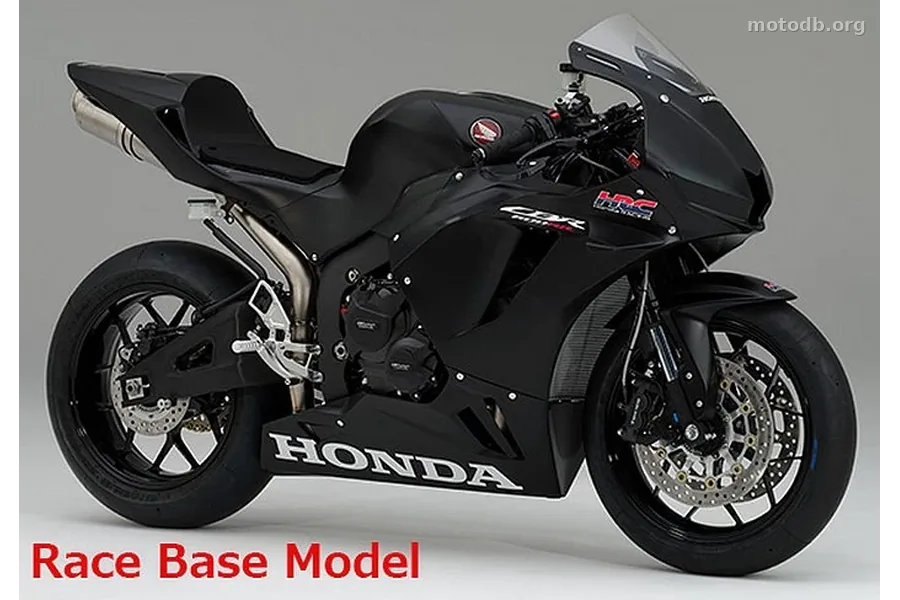
For experienced pilots and / or SuperSport championship engagement, HRC has also planned a "Race Base Model" version, prepared for more radical use. Destined exclusively for the track, this CBR 600 racing loses road equipment and receives a race ECU and harness, thicker brake discs, revised suspensions, a turn-in ignition cut-off control, a remapping of the injection and ride-by-wire, plus a few well-felt racing parts: radiator, exhaust, spark plugs and brake calipers. More than calling HRC for an idea of the price and availability in Europe.
Standard equipment
- Assistance au freinage : ABS
- Nombre de mode de conduite : 5
- Taille de l'écran TFT couleur : 12,70 cm / 5 pouces
- ABS Cornering
- Jantes aluminium
- Shifter
- Amortisseur de direction
- Indicateur de vitesse engagée
- Contrôle de couple
- Contrôle anti stoopi
- Contrôle anti wheeling
- Embrayage anti-dribble
- Centrale inertielle
- Contrôle du frein moteur
Practical info
- La moto est accessible aux permis : A
- Pays de fabrication : Japon
Indicators & positioning
Similar bikes
ZX-6RR 600 25eme anniversaire
600 GSX-R MotoGP Replica
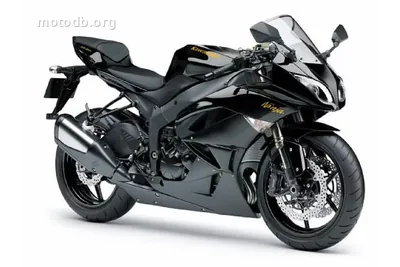
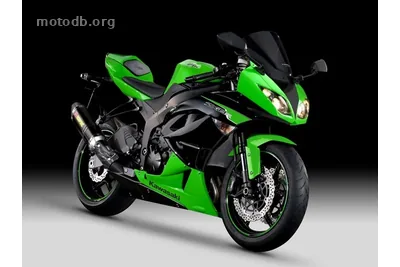
ZX-6R 600 Série spéciale
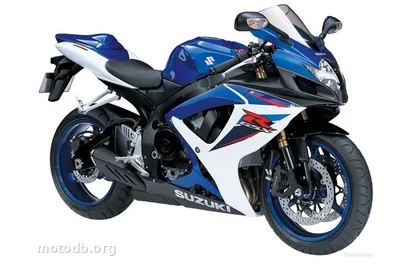
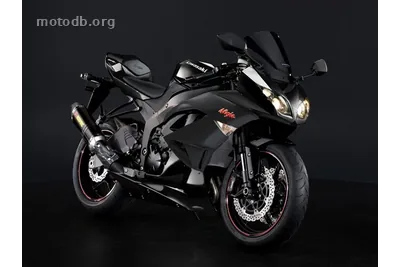
Reviews & comments
No reviews yet. Be the first to share your opinion!