Key performance
Technical specifications
Engine
- Displacement
- 1284 cc
- Power
- 113.0 ch @ 7750 tr/min (83.1 kW)
- Torque
- 111.8 Nm @ 6250 tr/min
- Engine type
- 4 cylindres en ligne, 4 temps
- Cooling
- liquide
- Compression ratio
- 9.6:1
- Bore × stroke
- 78 x 67.2 mm
- Valves/cylinder
- 4
- Camshafts
- 2 ACT
- Fuel system
- Injection Ø nc
- Euro standard
- Euro 5
Chassis
- Frame
- double berceau en acier
- Gearbox
- boîte à 5 rapports
- Final drive
- Chaîne
- Front suspension
- Fourche télescopique Ø 43 mm
- Rear suspension
- 2 amortisseurs latéraux
Brakes
- Front brakes
- Freinage 2 disques Nissin Ø 310 mm, étrier 4 pistons
- Rear brakes
- Freinage 1 disque Nissin Ø 256 mm, étrier 2 pistons
- Front tyre
- 120/70-17
- Front tyre pressure
- 2.50 bar
- Rear tyre
- 180/55-17
- Rear tyre pressure
- 2.90 bar
Dimensions
- Seat height
- 790.00 mm
- Fuel capacity
- 21.00 L
- Weight
- 266.00 kg
Overview
Some endings deserve respect. Honda draws the curtain on the CB 1300 Super Four with a limited series of 3,400 units, reserved for the Japanese market, sold at the equivalent of 10,800 euros. This isn't just a catalog number disappearing: it's a school of thought fading away — that of the pure, uncompromising roadster, massive, without aggressive posturing, whose sole ambition was to impress through stature rather than ferocity.
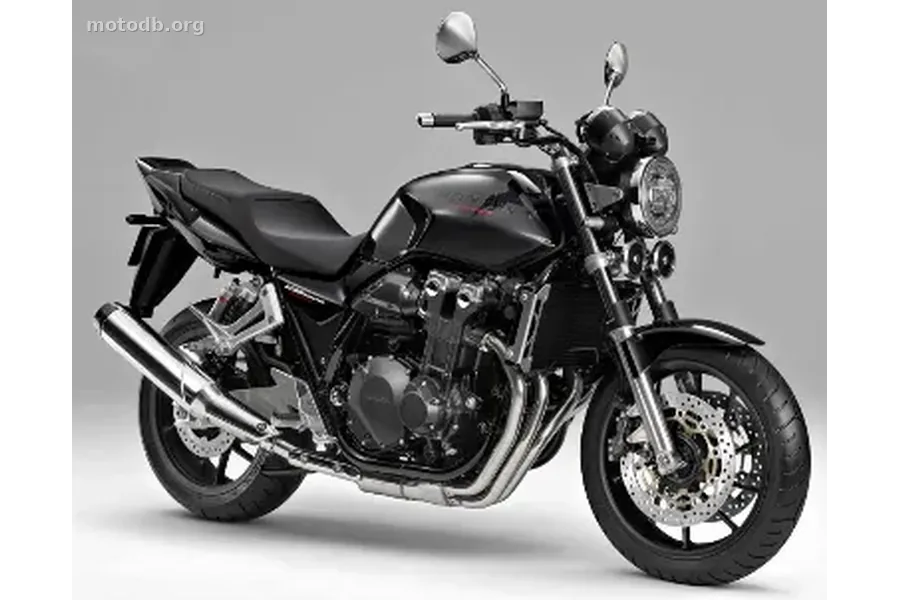
The claimed lineage is clear. The "Graphite Black" color of this Final Edition pays homage to the first vintage of the CB 1000, the Big-1 from the early 90s, direct ancestor of the entire lineage. The "Final Edition BIG-1" badge on the tank, the silver-finished fork and swingarm, the gold chain: Honda held nothing back with the nods to the past. It's a carefully staged farewell that aims for dignity, and it works. The 266 kg wet weight and the 790 mm seat height immediately set the scale: this motorcycle is aimed at experienced riders accustomed to handling mass, not beginners seeking their first large-format bike.
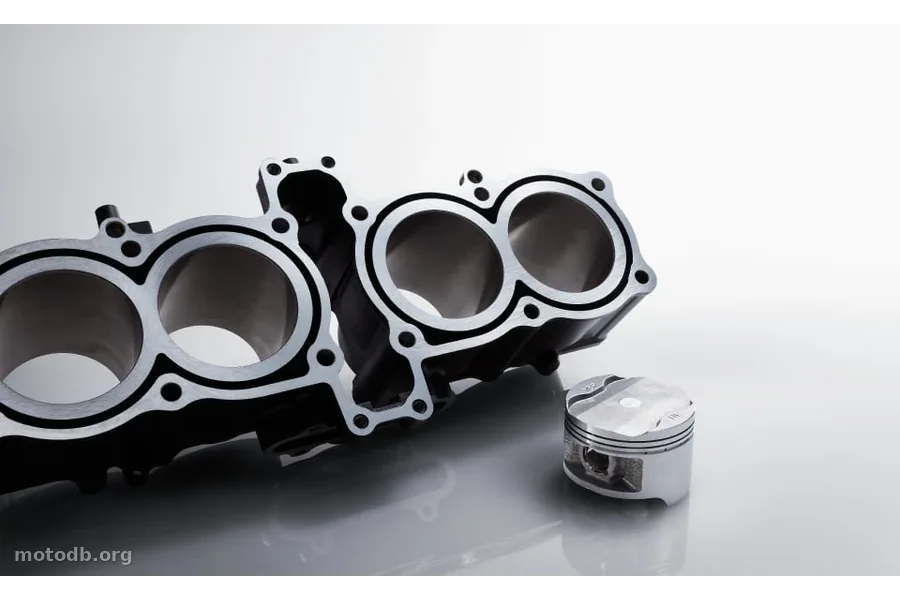
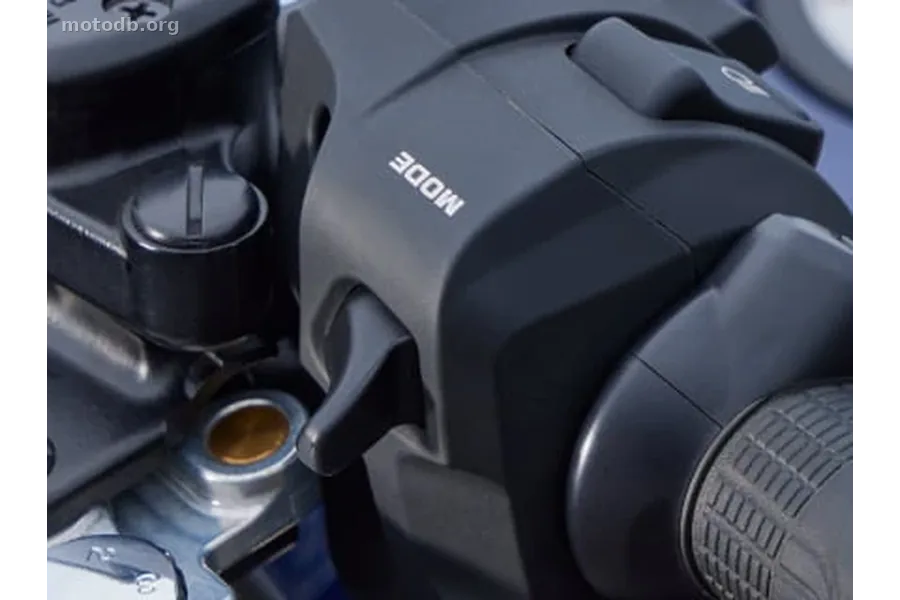
The 1,284 cc inline four-cylinder is the centerpiece. With its twin overhead camshafts, 16 valves and central cam chain, it delivers 113 horsepower at 7,750 rpm and, above all, 111.8 Nm of torque available from 6,250 rpm. This engine doesn't scream — it pushes. The difference is fundamental: where a Kawasaki Z1000 or a Yamaha MT-10 chase adrenaline through brutality, the CB 1300 builds its speed through progressive accumulation, with a smoothness that the years have not diminished. The unit has nonetheless absorbed some welcome developments: assisted and slipper clutch, three riding modes, cruise control and a quickshifter as options. The 2003 model didn't even offer standard ABS. Twenty years of quiet progress.
The steel double-cradle frame, the non-inverted 43 mm telescopic fork, the twin Showa rear shock absorbers: all of it carries the pleasant scent of confident classicism. Nissin four-piston calipers bite two 310 mm front discs, while a 256 mm disc with two-piston caliper handles the rear. Nothing revolutionary — braking that is robust and predictable. The instrument panel resists the digital age almost entirely, with only a central screen to display data from the onboard electronics. Full LED lighting and heated grips as standard round out an honest specification for the category.
What makes this motorcycle endearing is precisely what it refuses to be. At a time when Yamaha's XJR 1300, Suzuki's GSX 1400 and Kawasaki's ZRX 1200 shared the large classic roadster segment, the CB 1300 held its ground without trying to dominate stylistically. Streetfighters then imposed their aggressive aesthetic and made this format seem outdated. In Japan, Honda held firm. The Super Four stops today, taking with it something the current market no longer truly offers: a characterful roadster for the accomplished rider, one who prefers mechanical substance over visual spectacle. The Final Edition, available in four versions including the SP with Öhlins suspension and the fully-faired Super Bol d'Or, concludes this story with consistency. No excess, no showmanship. Just the final expression of a philosophy that few manufacturers would have had the patience to defend for so long.
Standard equipment
- Assistance au freinage : ABS
- Nombre de mode de conduite : 3
- Jantes aluminium
- Indicateur de vitesse engagée
- Régulateur de vitesse
- Prise USB
- Poignées chauffantes
- Contrôle de couple
- Embrayage anti-dribble
Practical info
- La moto est accessible aux permis : A
Reviews & comments
No reviews yet. Be the first to share your opinion!