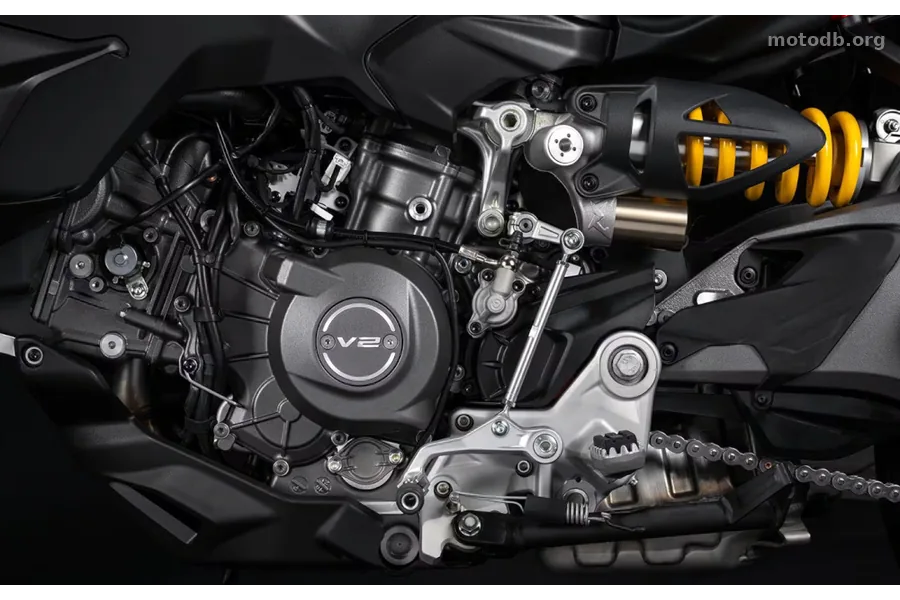
Key performance
Technical specifications
Engine
- Displacement
- 937 cc
- Power
- 113.0 ch @ 9000 tr/min (83.1 kW)
- Torque
- 94.1 Nm @ 6750 tr/min
- Engine type
- Bicylindre en L à 90°, 4 temps
- Cooling
- liquide
- Compression ratio
- 12.6 : 1
- Bore × stroke
- 94 x 67.5 mm
- Valves/cylinder
- 4
- Camshafts
- 2 ACT
- Fuel system
- Injection Ø 53 mm
Chassis
- Frame
- Treillis tubulaire en acier
- Gearbox
- boîte à 6 rapports
- Final drive
- Chaîne
- Front suspension
- Fourche téléhydraulique inversée Ø 48 mm, déb : 170 mm
- Rear suspension
- Mono-amortisseur, déb : 170 mm
Brakes
- Front brakes
- Freinage 2 disques Brembo Ø 320 mm, fixation radiale, étrier 4 pistons
- Rear brakes
- Freinage 1 disque Ø 265 mm, étrier 2 pistons
- Front tyre
- 120/70-19
- Front tyre pressure
- 2.40 bar
- Rear tyre
- 170/60-17
- Rear tyre pressure
- 2.50 bar
Dimensions
- Seat height
- 830.00 mm
- Fuel capacity
- 20.00 L
- Weight
- 222.00 kg
- Dry weight
- 199.00 kg
- New price
- 16 190 €
Overview
Originally, the Multistrada was conceived to offer a completely different experience within the Ducati lineup. A bit of an oddball in the range; but today, it’s hard to imagine the manufacturer doing without it. Entry into this family is made with the Multistrada V2. A designation to better mark the technical difference between the mid and large-trail models, as is the case for the Panigale Superbike.
This V2 isn’t really new. You could almost say it’s the 950, refreshed in a minor way. In terms of design, it’s obvious. Apart from the bodywork, which now extends under the seat, it’s hard to differentiate the version of yesterday from that of today. This MTS doesn’t even try to adopt expressions from the V4. Somewhere, that’s a good thing: it draws more personality from it.
Digging a little, you can find a few elements inherited from the powerful Multistrada. They don’t change the plastics but will have more or less influence on the V2’s performance. First, the footpegs are 10 mm lower. Then the mirrors, 700 gr lighter than on the 950. Then we conclude with aluminum brake calipers (- 500 gr) and wheels derived from the V4. The wheels allow a weight saving of 1700 grams. Far from negligible.
Because it’s one of the key points of the evolution of the “small” Multistrada: the rev range. It has managed to lose 5 kilos. We’ve just seen part of this loss, let’s see how the rest was lost. The clutch alone sheds 1.5 kilos. The engine contributes 500 gr, with revisions to the connecting rods and gearbox. The latter has focused its efforts more on its smoothness than on its weight. These modifications, plus an optimization of the Up&Down shifter (still optional), promise more fluidity and precision.
This doesn’t change the main figures of the twin. We’ve been glad about that. On the 950, this 937 cm3 engine proved particularly pleasant, with a power output of almost an ideal level for a motorcycle in this segment. Its 113 horsepower are well present and you have almost 10 mkg of torque at your disposal. We are far from the 170 horsepower monster that is the V4. And for Ducati enthusiasts, a few symbols are still present. It’s a 90° L-twin, its distribution is desmodromic, there are still steel tubes around… The affection is understandable. I often hear tifosi unhappy about no longer hearing the clatter of a dry clutch.
The V2 also marks the opening of the Multistrada family to younger riders, as it is now available in A2 version. The gesture is to be applauded but… It might not be on a trail of this caliber that a freshly licensed rider will spend their first two years of riding. Given the price - twice that of a CB 500 X, but the smoothness is nothing like it - it fiercely selects the clientele.
Damn, 2 years. A purgatory – the opposite of the km on board the MTS V2. Ducati has made a few tweaks to improve comfort. The footpegs are lower (already mentioned), as is the seat at 83 cm (- 1 cm). The entire seat has been redesigned to offer more freedom of movement, as well as a new finesse in the groin to better place your feet on the ground. Although it’s a trail, it’s still a bit high… Should you want, an extra small bill and options will allow you to lower the altitude to 79 cm.
Flute, the new Multistrada V2 hasn’t been authorized to adopt a color TFT screen. This remains the privilege of the S version. But the electronic equipment remains at a good level, i.e. faithful to Ducati doctrine. It includes 4 fully customizable riding modes (Sport – Touring – Urban – Enduro), traction control at 8 levels, cornering ABS on 3 modes, hill-hold control, Brake Light (flashing the rear light if heavy braking) and automatic-off turn signals.
This isn’t what distinguishes a Ducati, but its sporty and rigorous chassis. Apart from the wheels, it is completely taken over from the 950. With a trellis half-frame in aluminum tubes anchored to aluminum plates, an inverted Kayaba 48 mm fork, a fully adjustable Sachs shock absorber, a 170 mm suspension travel on each side, 320 mm Brembo radial-mount calipers and a 265 mm rear brake disc. A 20-liter tank allows for beautiful stages. All that in 222 kg when wet.
When transitioning from 950 to V2, the most accessible Multistrada doesn’t operate major changes; it’s refined, gives a little more smoothness and cultivates its image. It leaves it to the V4 to take care of a more demanding audience, of demonstrations and a more muscular wallet. As with the previous generation, refinement is conceived with the S version, carrying piloted suspensions, more abundant electronics, the shifter, adaptive cornering lights, keyless start, backlit controls, etc…
M.B - Manufacturer Media
Standard equipment
- Assistance au freinage : ABS in curves
- Nombre de mode de conduite : 4
- Taille de l'écran TFT couleur : 12,70 cm / 5 pouces
- Jantes aluminium
- Indicateur de vitesse engagée
- Aide au démarrage en côte (Hill Hold Control)
- Contrôle de traction
Practical info
- Véhicule accessible au permis A2 ou bridable à 47.5ch / 35 Kw
- La moto est accessible aux permis : A, A2
Indicators & positioning
Similar bikes
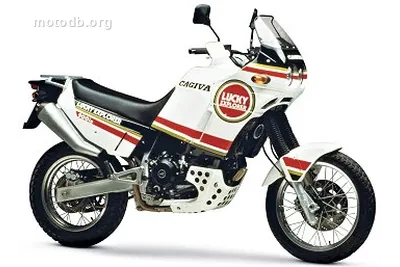
Lucky Explorer Project 9.5
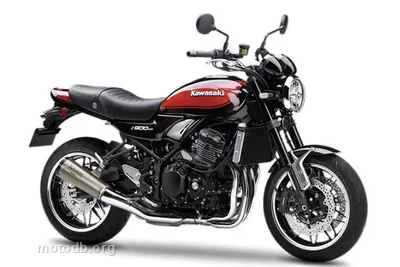
Z 900 RS Performance
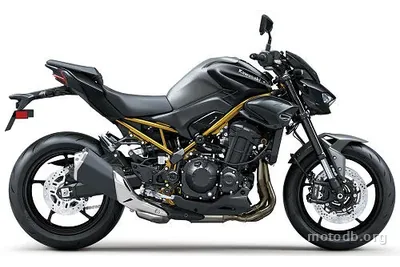
900 Tornado Limited Edition
Tornado 900 RS
Reviews & comments
No reviews yet. Be the first to share your opinion!