Key performance
Technical specifications
Engine
- Displacement
- 989 cc
- Power
- 200.0 ch @ 13800 tr/min (147.1 kW)
- Torque
- 115.7 Nm @ 10500 tr/min
- Engine type
- 4 cylindres en L à 90°, 4 temps
- Cooling
- liquide
- Compression ratio
- 13.5 : 1
- Bore × stroke
- 86 x 42.56 mm
- Valves/cylinder
- 4
- Camshafts
- 2 ACT
- Fuel system
- Injection Ø 50 mm
Chassis
- Frame
- treillis tubulaire en tube d'acier
- Gearbox
- boîte à 6 rapports
- Final drive
- Chaîne
- Front suspension
- Fourche téléhydraulique inversée Öhlins FG353 PFF Ø 43 mm, déb : 120 mm
- Rear suspension
- Mono-amortisseur Öhlins, déb : 120 mm
Brakes
- Front brakes
- Freinage 2 disques Ø 320 mm, fixation radiale, étrier 4 pistons
- Rear brakes
- Freinage 1 disque Ø 240 mm, étrier 2 pistons
- Front tyre
- 120/70-17
- Rear tyre
- 200/55-17
Dimensions
- Seat height
- 830.00 mm
- Fuel capacity
- 15.00 L
- Dry weight
- 171.00 kg
- New price
- 60 000 €
Overview
How many enthusiasts have dreamed, helmet resting on the sofa, of feeling the very machine of Rossi or Capirossi vibrating between their thighs, without going through the factory team route? For decades, the Replicas sold in dealerships settled for imitating the livery and silhouette, never the mechanics. With the ducati desmosedici 1000 rr, unveiled in June 2006 at Mugello and then delivered to the first customers starting in 2008, Borgo Panigale broke the tacit pact that separated the track from the road. This is no longer a marketing wink like the Honda CBR 600 RR borrowing the colors of the RCV 211. This is the GP6 with turn signals.
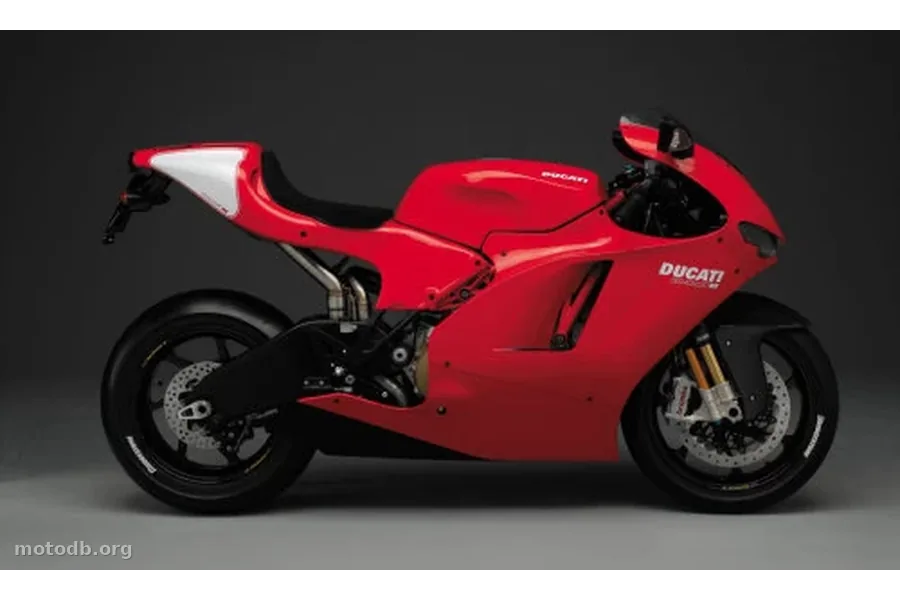
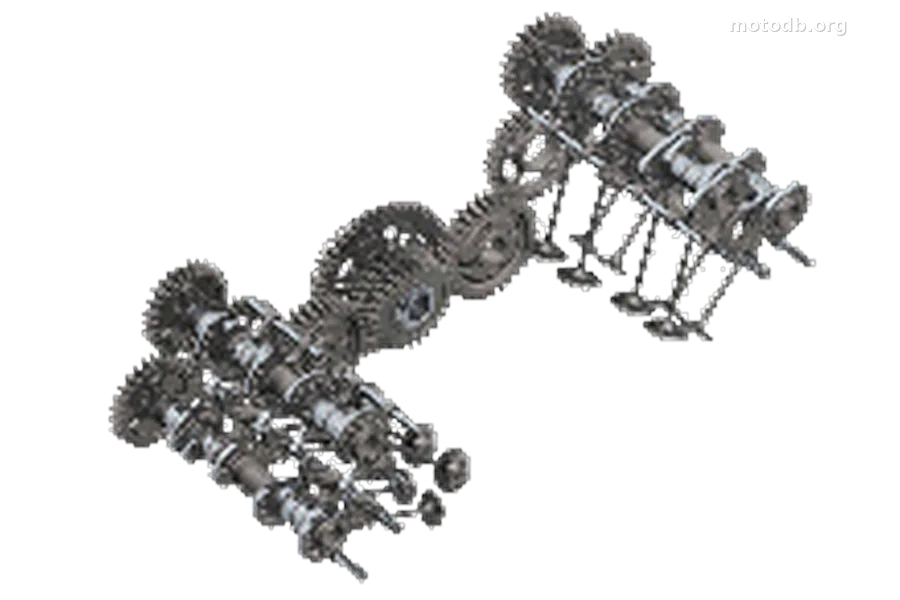
Under the fairing, no civilized sport engine for Sunday commuters, but a 90-degree V4 of 989 cc, short bore and ridiculously brief stroke (86 x 42.56 mm), 13.5:1 compression, desmodromic valve train driven by a gear cascade. The connecting rods and valves are titanium, the crankcases aluminum-magnesium. The whole delivers 200 horsepower at 13,800 rpm, for 115.7 Nm of torque wrested at 10,500 rpm. The thrust is brutal, the exhaust howl flirts with 100 decibels in homologated configuration, and the race kit supplied at delivery pushes the engine up to 102 dB. Count 171 kg dry and a 15-liter tank, the whole propelled up to 310 km/h top speed, a figure more theoretical than road-going.
The chassis doesn't cheat either. Steel tubular trellis inherited from the factory prototype, swingarm fixed directly to the crankcases, inverted 43 mm Öhlins FG353 PFF fork up front, Öhlins monoshock at the rear, 120 mm of travel on both sides. Braking relies on two 320 mm discs with radial mounting and four-piston monobloc calipers, fitted on Marchesini magnesium rims. The Bridgestones in 120/70-17 and 200/55-17 were developed specifically for the bike, which complicates life a bit when it comes time to replace the rubber. The 830 mm seat remains accessible for an average build, even if the radical position quickly reminds you that this toy is not designed for motorway slip roads.
Faced with the competition of the era, the comparison almost raises a smile. A BMW S1000 RR was trading around €18,000, an MV Agusta F4 312 R climbed to €28,000. The Desmosedici, for its part, demands €60,000 from the 2008 vintage, against €55,000 at launch. For that price, Ducati delivers a three-year warranty, three years of scheduled maintenance, a racing exhaust, a dedicated electronic control unit, a cover, a paddock stand and a sticker kit. Production is paced at 400 units per year, with priority granted to 999 R owners. Suffice it to say the customer is not an average rider, but a wealthy collector or a well-heeled track rider seeking the purest possible sensation without going through the FIM.
Should we see it as the ultimate road bike or a private-stable object? Both, probably. The ducati desmosedici 1000 rr is not recommendable to a beginner, it would even be cruel for a tourer, and its hostile ergonomics discourage urban use. On the track, however, it remains one of the rare homologated machines capable of speaking the same language as a prototype. Its price transforms it into a heritage investment as much as a motorcycle, and that is perhaps its only real flaw: too precious to be truly mistreated, it ends up more often photographed than ridden.
Practical info
- La moto est accessible aux permis : A
Indicators & positioning
Similar bikes
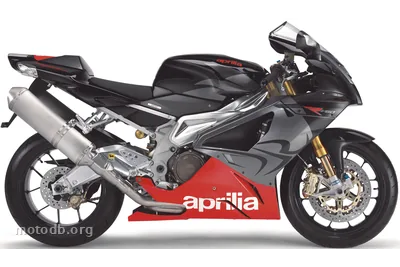
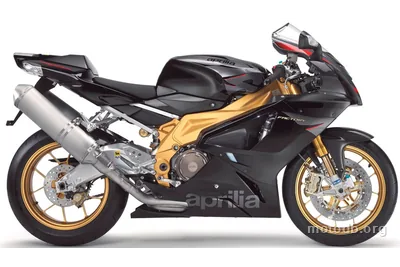
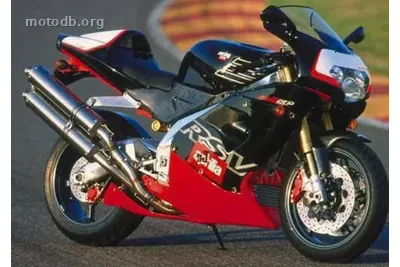
RSV 1000 R Factory
Reviews & comments
No reviews yet. Be the first to share your opinion!