Key performance
Technical specifications
- Power
- 112.0 ch @ 8500 tr/min (81.8 kW) → 112.0 ch @ 9250 tr/min (82.5 kW)
- Torque
- 93.0 Nm @ 8000 tr/min → 96.0 Nm @ 7000 tr/min
- Cooling
- Liquid → liquide
- Fuel system
- — → Injection
- Starter
- Electric → —
- Frame
- — → treillis tubulaire en tube d\'acier
- Front suspension
- — → Fourche téléhydraulique inversée Ø 43 mm, déb : 127 mm
- Rear suspension
- — → Mono-amortisseur, déb : 130 mm
- Front brakes
- — → Dual disc
- Front tyre
- 120/70-ZR17 → 120/60-ZR17
- Weight
- 221.00 kg → —
- Dry weight
- — → 198.00 kg
- New price
- — → 15 408 €
Engine
- Displacement
- 996 cc
- Power
- 112.0 ch @ 9250 tr/min (82.5 kW)
- Torque
- 96.0 Nm @ 7000 tr/min
- Engine type
- V2, four-stroke
- Cooling
- liquide
- Compression ratio
- 11.5:1
- Bore × stroke
- 98.0 x 66.0 mm (3.9 x 2.6 inches)
- Valves/cylinder
- 4
- Fuel system
- Injection
Chassis
- Frame
- treillis tubulaire en tube d\'acier
- Gearbox
- 6-speed
- Final drive
- Chain (final drive)
- Front suspension
- Fourche téléhydraulique inversée Ø 43 mm, déb : 127 mm
- Rear suspension
- Mono-amortisseur, déb : 130 mm
- Front wheel travel
- 127 mm (5.0 inches)
- Rear wheel travel
- 130 mm (5.1 inches)
Brakes
- Front brakes
- Dual disc
- Rear brakes
- Single disc
- Front tyre
- 120/60-ZR17
- Rear tyre
- 190/50-ZR17
Dimensions
- Seat height
- 790.00 mm
- Wheelbase
- 1410.00 mm
- Fuel capacity
- 17.00 L
- Dry weight
- 198.00 kg
- New price
- 15 408 €
Overview
When Massimo Tamburini set his pencils to the drawing board for the 916, he could never have imagined that his creation would redefine the codes of Italian sportbikes for an entire generation. The Ducati 996, introduced in 1998 and produced through 2002, is nothing less than the logical evolution of that masterpiece. Carl Fogarty carried it to the pinnacle of World Superbike, and that racing aura still clings to its bodywork like the smell of castor oil on a racer's leathers. In 2001, the Ducati 996 remains true to the original recipe. The 996 cc desmodromic V-twin produces 112 horsepower at 9,250 rpm and, more importantly, 96 Nm of torque at 7,000 rpm. It is in this rev range that the twin gained muscle over the 916: more thrust on corner exit, more decisive traction when you crack the throttle on lean.
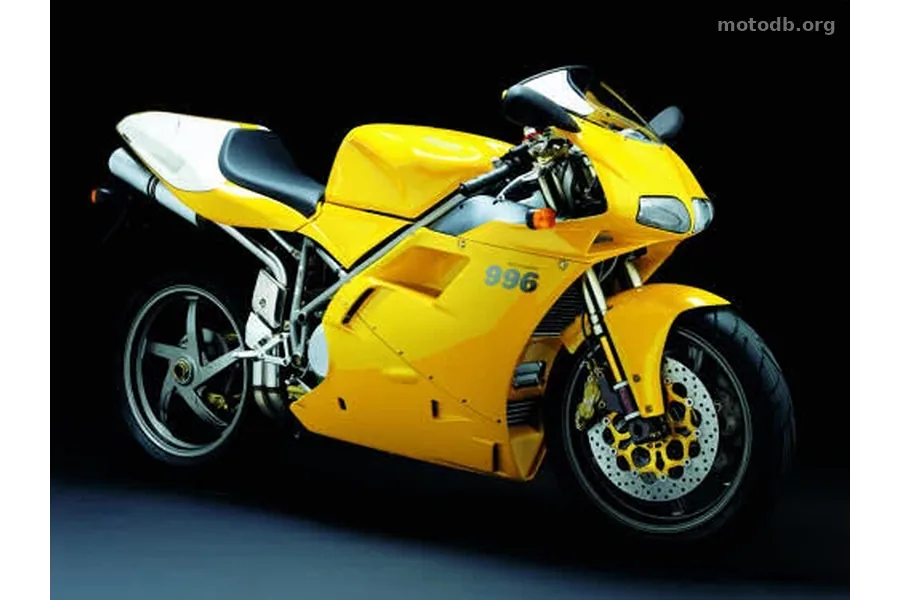
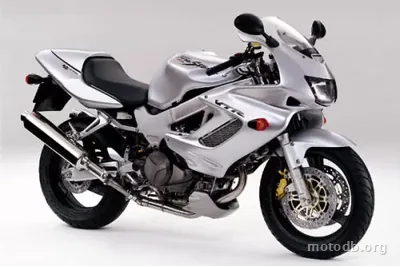
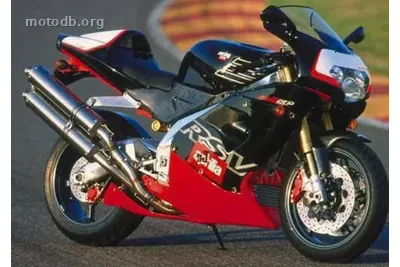
The rest of the Ducati 996's spec sheet hasn't changed, and nobody's complaining. The tubular steel trellis frame, Bologna's signature, wraps around this twin with surgical precision. The 43 mm inverted fork offers 127 mm of travel, the rear monoshock 130 mm. It's firm, calibrated for the track, and on twisty roads the machine handles like a scalpel. You have to command it with authority on corner entry, almost force it in, but once committed to its line, it holds its trajectory with disconcerting stability. The short 1,410 mm wheelbase and the contained dry weight of 198 kg play a large part in this. Against a Honda VTR 1000 SP1 or an Aprilia RSV Mille of the same era, the Ducati plays the card of surgical precision rather than brute power.
But riding a 996 must be earned. The 790 mm seat height looks modest on paper, yet the riding position is radical. Wrists bent, torso diving forward, thighs clamped against the 17-liter tank. On a ride of more than a hundred kilometers, your back protests and your forearms burn. This is no touring bike in disguise — it's a pure riding tool. The six-speed gearbox slots precisely, the chain final drive stays direct, and the dual front disc brakes bite with conviction. The claimed top speed of 260 km/h places the beast at the top of the table for a twin, even though the Japanese inline-fours of the era posted higher figures. The Ducati 996 cannot be reduced to raw numbers. It is experienced through the cavernous sound of its underseat exhaust, through the V-twin vibrations that travel up into the footpegs, through that feeling of being connected to the machinery with no filter or electronic aid.
On the used Ducati 996 market, prices vary widely depending on condition and version. The 996 S, the 996 SPS, and the highly coveted Ducati 996 R command steadily rising valuations. The standard version, listed at 15,408 euros in 2001, now trades at prices that reflect its status as a future classic. You occasionally come across a yellow Ducati 996, echoing the Matrix edition popularized by the film, or more understated examples in traditional Ducati red. The Ducati 996 rocker arm, an emblematic component of the single-sided swingarm, is one of those technical details that fuel collectors' passion. As for the Ducati 996 S4R or the 996 Monster, they prove that this engine spread well beyond the sportbike platform, feeding the entire Borgo Panigale lineup.
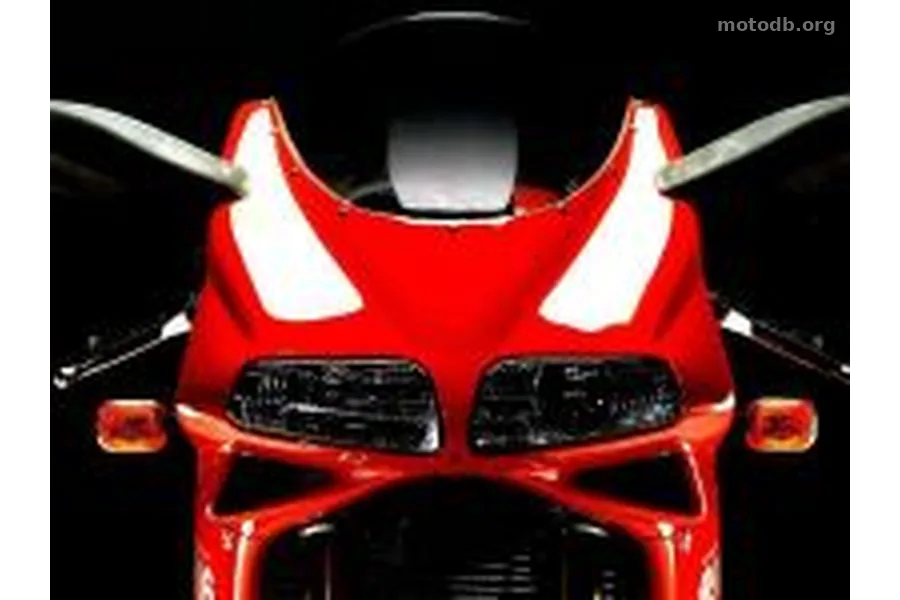
The Ducati 996 in its 1999, 2000, or 2001 vintage remains a radical proposition, reserved for riders willing to accept its demands in exchange for sensations that few machines can deliver. It is neither a beginner's motorcycle nor a comfortable weekend toy. It is an object of mechanical passion, built for the corner and designed for the track, one that rewards those who take the time to tame it.
Practical info
- La moto est accessible aux permis : A
Indicators & positioning
Similar bikes
SB8K édition Gobert
Reviews & comments
No reviews yet. Be the first to share your opinion!