Key performance
Technical specifications
Engine
- Displacement
- 745 cc
- Power
- 27.0 ch @ 5000 tr/min (19.7 kW)
- Engine type
- Two cylinder boxer, four-stroke
- Cooling
- Air
- Compression ratio
- 7.0:1
- Bore × stroke
- 78.0 x 78.0 mm (3.1 x 3.1 inches)
- Valves/cylinder
- 2
- Valve timing
- Overhead Valves (OHV)
Chassis
- Gearbox
- 4-speed with reverse
- Final drive
- Shaft drive (cardan) (final drive)
Brakes
- Front brakes
- Single disc
- Rear brakes
- Expanding brake
- Front tyre
- 3.75-19
- Rear tyre
- 3.75-19
Dimensions
- Fuel capacity
- 24.00 L
- Weight
- 370.00 kg
Overview
In 1992, as Japanese motorcycles were overwhelming the world with their technology and power, the Chang-Jiang 750 J-1 with its sidecar existed on another temporal plane. It wasn’t a motorcycle, but a rolling relic, a faithful and stubborn Chinese copy of the BMW R71 that the Soviets themselves had copied for their Ural. Its 745 cm³ flat-twin developed only 27 horsepower, a power that any modern 125 would easily surpass. With a compression ratio of 7:1 worthy of a 1950s tractor, it ran at the RPM of a diesel, bleeding its modest power at a maximum of 5000 RPM.
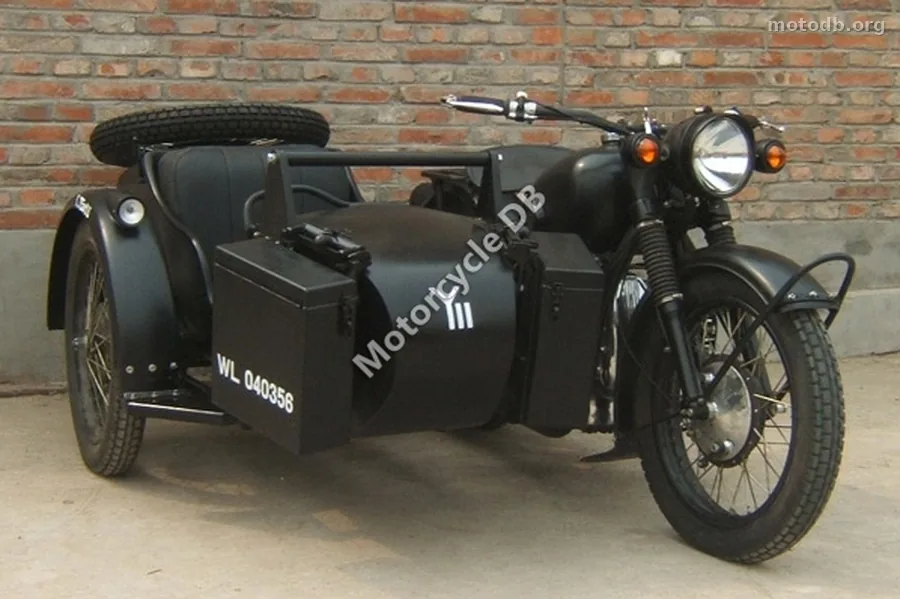
The advertised weight of 370 kg at full load, sidecar included, is dizzying. This mass was moved thanks to a four-speed gearbox, featuring the supreme luxury for this type of machine: a reverse gear, essential for maneuvering this convoy nearly four meters long. The final drive by cardan shaft, a direct inheritance from the original BMW, ensured legendary robustness at the expense of any agility. The theoretical top speed of 110 km/h would be a heroic exploit on a straight, and a pure fiction on an incline.
Its equipment was an exercise in radical minimalism. A single disc brake at the front, probably more symbolic than effective, and a drum brake on the rear wheel, had to contain the enormous inertia of the whole. The tires, in 3.75-19 dimensions on the three wheels, looked like those of a moped pumped with steroids. The sidecar, fixed and rigid, transformed any attempt at turning without a passenger into a perilous exercise in muscular counter-steering.
Faced with a Honda Gold Wing or even a more recent Ural, the Chang-Jiang looked like a fossil ancestor. It had neither the comfort, nor the performance, nor the reliability. Its existence was justified only by its palpable historical value and its indestructible character. Riding this machine was negotiating with the physics of mass, anticipating stops a length of time in advance, and accepting that the journey counts far more than the destination.
The Chang-Jiang 750 J-1 with sidecar obviously wasn’t aimed at the standard motorcyclist. It was the vehicle of choice for the pure collector, the adventurer ready to repair on the side of the road with a hammer and a screwdriver, or anyone seeking a radical antidote to sanitized modernity. It was a machine that taught patience, humility, and a form of rudimentary mechanics. Today, it represents much more than a means of transport: it is a fragment of history of the Cold War and the motorcycle industry, rolling at the slow and solemn pace of its blower flat-twin.
Indicators & positioning
Similar bikes
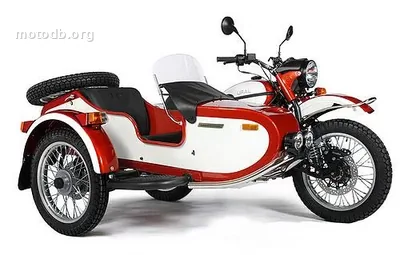
750 Spezial A (with sidecar)
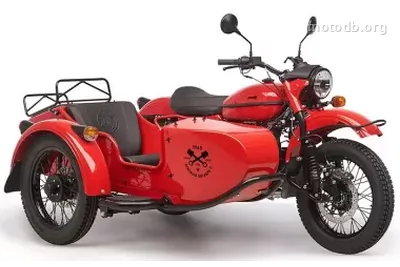
750 Octobre rouge II - KRASNYJ OKTJABR II
Reviews & comments
No reviews yet. Be the first to share your opinion!