Key performance
Technical specifications
Engine
- Displacement
- 1300 cc
- Power
- 145.0 ch @ 7750 tr/min (106.6 kW)
- Torque
- 149.1 Nm @ 6500 tr/min
- Engine type
- Bicylindre à plat, 4 temps
- Cooling
- liquide
- Compression ratio
- 13.3 : 1
- Bore × stroke
- 106.5 x 73 mm
- Valves/cylinder
- 4
- Camshafts
- 2 ACT
- Fuel system
- Injection Ø 52 mm
Chassis
- Frame
- Structure en profilés d'acier
- Gearbox
- boîte à 6 rapports
- Final drive
- Cardan
- Front suspension
- Fourche EVO Telelever Ø 37 mm, déb : 190 mm
- Rear suspension
- Mono-amortisseur et monobras EVO Paralever, déb : 200 mm
Brakes
- Front brakes
- Freinage 2 disques Ø 310 mm, fixation radiale, étrier 4 pistons
- Rear brakes
- Freinage 1 disque Ø 285 mm, étrier 2 pistons
- Front tyre
- 120/70-19
- Front tyre pressure
- 2.50 bar
- Rear tyre
- 170/60-17
- Rear tyre pressure
- 2.90 bar
Dimensions
- Seat height
- 850.00 mm
- Fuel capacity
- 19.00 L
- Weight
- 237.00 kg
- New price
- 20 690 €
Overview
Forty-six years separate the R 80 G/S of 1980 from this BMW R 1300 GS 2024, and one now measures the extent of the journey traveled. What began as an off-road motorized experiment powered by a rustic flat-twin has become the best-selling motorcycle in its category, a machine whose every evolution is scrutinized, commented on, sometimes criticized, always awaited. BMW doesn’t reform the GS, it reinvents it. And this time, the stylistic cut is significant.
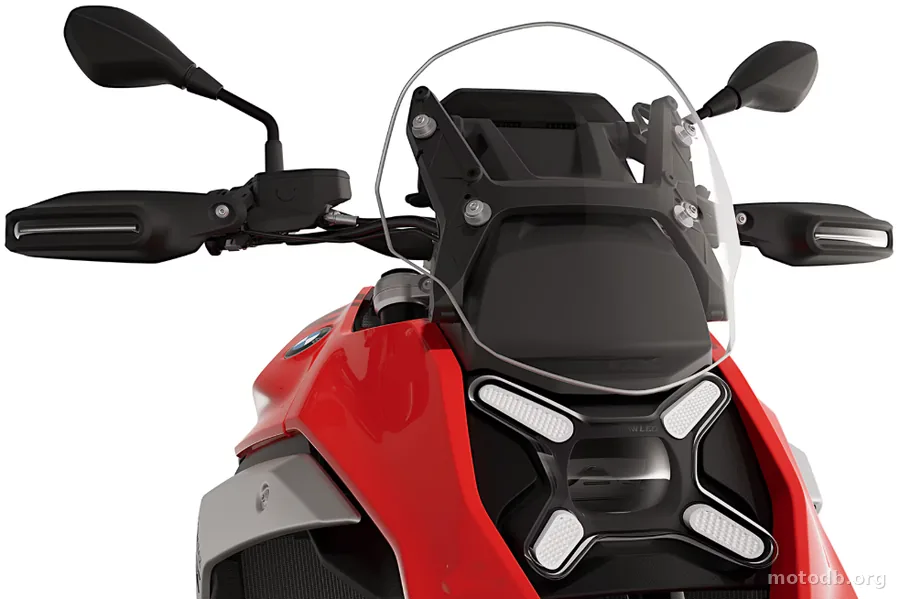
The first shock is visual. The Matrix light signature, the molded aluminum swingarm in place of the raw tubular trellis, the flattened tank that slims the silhouette: the BMW R 1300 GS breaks with the massive build that defined the R 1200 and R 1250 GS. Some aficionados cry betrayal, others finally applaud a design consistent with the times. In either case, the debate proves that BMW has touched something essential. Motorcycles that don’s spark conversation are dead motorcycles. Mechanically, the flat-twin gains 100 cc to reach 1,300 cc, with a bore increased to 106.5 mm against a reduced stroke of 73 mm: an assumed, square configuration that releases 145 hp at 7,750 rpm and 149 Nm at 6,500 rpm. Nine horsepower more than the R 1250 GS, six additional Nm of torque. Intake valve sizes grow from 40 to 44 mm. The ShiftCam variable valve timing system is now joined by a knock sensor to refine injection. The engine gains compactness despite the increased displacement, with the gearbox housed under the block. On paper, this is a serious engineering exercise.
What attracts even more attention is the loss of 12 kg on the scale, to 237 kg fully fueled. Since 2004, the GS had gained weight with each generation. It regains a streamlined profile here and stands as the lightest in its segment against the KTM 1290 Super Adventure or the Ducati Multistrada V4, competitors that play in the same price range. Combined with the increased power, this slimming treatment promises a power-to-weight ratio that was not found on previous generations. The wheelbase lengthens slightly, from 1,514 to 1,518 mm, and the steering geometry opens to gain stability. The EVO Telelever and EVO Paralever systems are reworked. As an option, the new DSA now acts on the preload of both shock absorbers according to the selected mode, where the old ESA only controlled the rear. The adjustable seat height can drop to 820 mm when stationary, a significant detail for shorter riders who question the price of a BMW R 1300 GS before even straddling one.
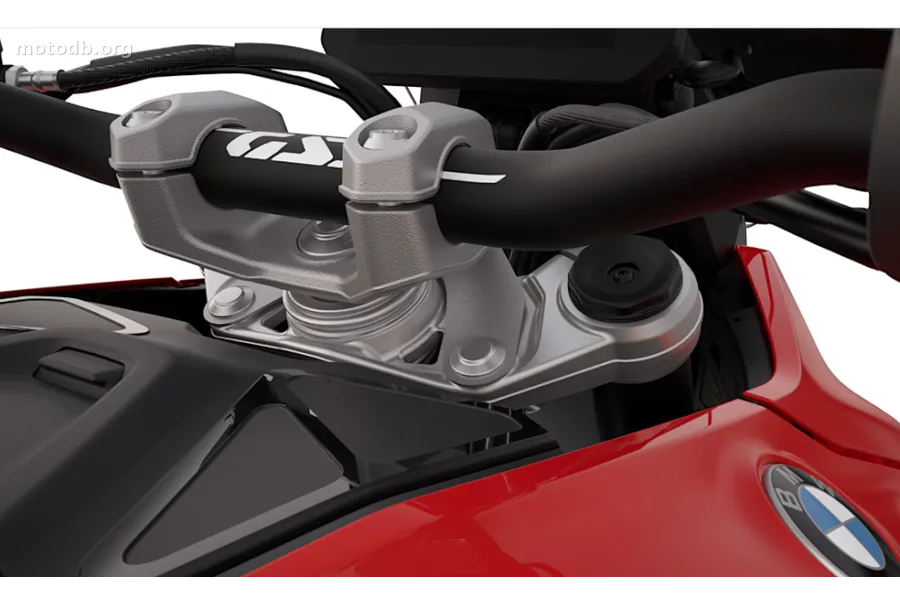
The standard equipment is solid: four riding modes including an Enduro, traction control, integral ABS Pro, engine braking management, hill start assist, 6.5-inch TFT screen, keyless start, tire pressure monitoring, heated grips. This is the expected level at €20,690, an entry price up €800 compared to the R 1250 GS. What is the price of a BMW R 1300 GS once the options are ticked? The question deserves to be asked honestly, because the list is long: ACC with integrated braking, lane change warning, Headlight Pro, heated seats. A complete Triple Black model cheerfully exceeds €32,000. The BMW tradition is respected; what the motorcycle offers as standard is good, what it charges you for in options is even more so.
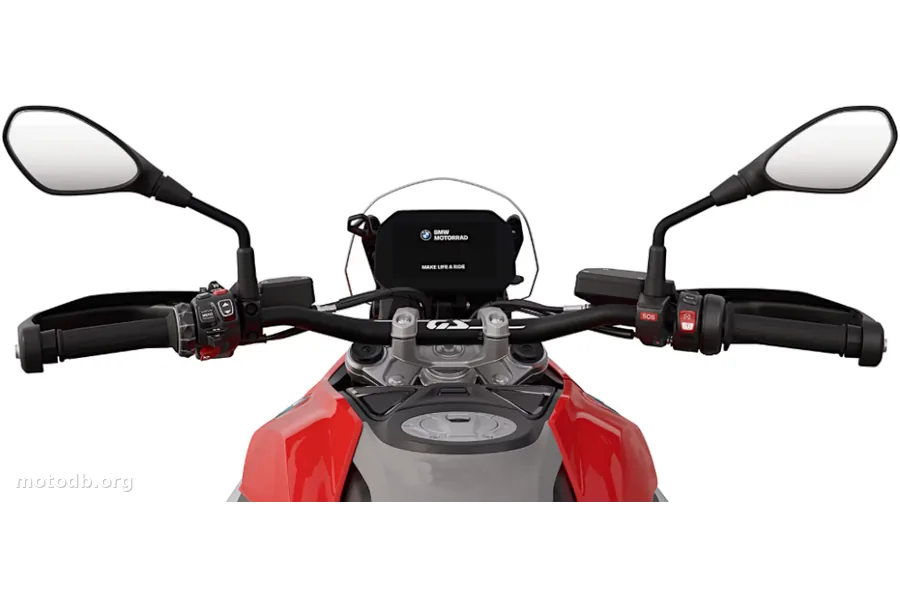
The BMW R 1300 GS is primarily aimed at the experienced long-distance traveler, one who chains thousands of kilometers between asphalt and forest track, who wants a machine capable of holding 235 km/h at top speed on the German highway and clearing a muddy pass without hesitation. It is not a motorcycle for beginners, despite its numerous electronic aids, and its size requires a certain physical ease. What the new version promises in terms of dynamics, only an extended test will allow us to confirm. But the foundations are there, solid, and the history of the GS does not lie on this point.
Standard equipment
- Assistance au freinage : ABS cornering désactivable
- Nombre de mode de conduite : 4
- Taille de l'écran TFT couleur : 16,51 cm / 6.5 pouces
- Béquille centrale
- Indicateur de vitesse engagée
- Régulateur de vitesse
- Bluetooth
- Prise USB
- Aide au démarrage en côte (Hill Hold Control)
- Démarrage sans clé
- Contrôle de traction
- Poignées chauffantes
- Système radar
- Embrayage anti-dribble
- Contrôle du frein moteur
- Surveillance de la pression des pneus
Practical info
- La moto est accessible aux permis : A
Indicators & positioning
Similar bikes
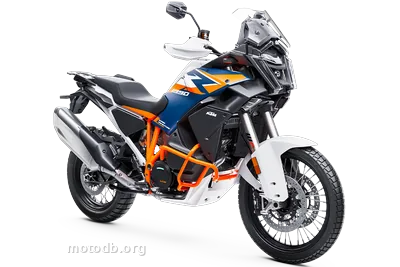
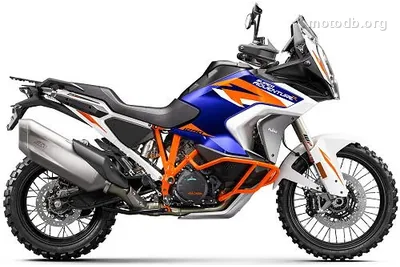
1390 Super Adventure R
Reviews & comments
No reviews yet. Be the first to share your opinion!