Key performance
Technical specifications
Engine
- Displacement
- 1170 cc
- Power
- 125.0 ch @ 7750 tr/min (90.1 kW)
- Torque
- 125.0 Nm @ 6500 tr/min
- Engine type
- Two cylinder boxer, two-stroke
- Cooling
- Liquid
- Compression ratio
- 12.5:1
- Bore × stroke
- 101.0 x 73.0 mm (4.0 x 2.9 inches)
- Valves/cylinder
- 4
- Camshafts
- 2 ACT
- Fuel system
- Injection. Electronic intake pipe injection
- Valve timing
- Double Overhead Cams/Twin Cam (DOHC)
- Lubrication
- Dry sump
- Starter
- Electric
Chassis
- Frame
- Two-section frame, front- and bolted on rear frame, load-bearing engine
- Gearbox
- 6-speed
- Final drive
- Shaft drive (cardan) (final drive)
- Clutch
- Oil lubricated clutch, hydraulically operated
- Front suspension
- Telescopic Upside-Down fork
- Rear suspension
- Cast aluminium single-sided swing arm with BMW Motorrad Paralever
- Front wheel travel
- 140 mm (5.5 inches)
- Rear wheel travel
- 140 mm (5.5 inches)
Brakes
- Front brakes
- Double disc. Floating discs. Four-piston calipers.
- Rear brakes
- Single disc. Floating disc. Two-piston calipers.
- Front tyre
- 120/70-17
- Front tyre pressure
- 2.50 bar
- Rear tyre
- 180/55-17
- Rear tyre pressure
- 2.90 bar
Dimensions
- Seat height
- 820.00 mm
- Wheelbase
- 1527.00 mm
- Length
- 2202.00 mm
- Width
- 925.00 mm
- Height
- 1273.00 mm
- Fuel capacity
- 18.00 L
- Weight
- 236.00 kg
- Dry weight
- 198.00 kg
- New price
- 14 305 €
Overview
Ten years of absence, and the RS returns. Not with the discretion of a prodigal child returning on tiptoe, but with the quiet confidence of one who knows their worth. The BMW R 1200 RS resurfaced in 2015 within a range where the liquid-cooled boxer, inherited from the GS, had already proven its worth. Munich isn't inventing a new category, but reactivating a positioning that the brand had left fallow since the R 1200 ST, that cousin with the single headlight that had struggled to convince. The style has matured, the mechanics have followed suit.
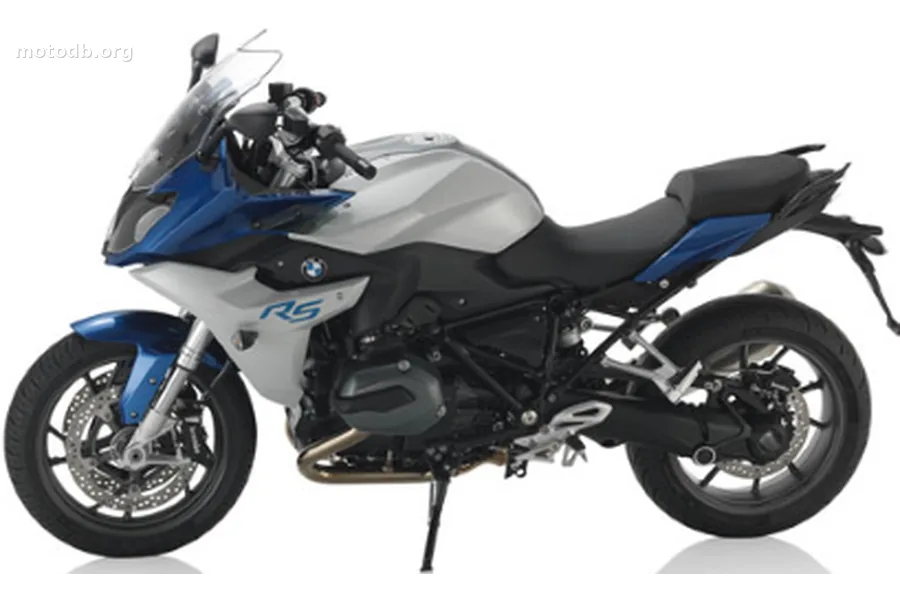
What immediately strikes you is the consistency of the silhouette. The RS no longer plays the sport-GT in a schizophrenic way: its enveloping fairing, its snub nose, and its muscular flanks form a logical whole. The riding position accompanies this ambition, slightly inclined forward to involve the rider without massacring their wrists over 800 kilometers. It's exactly the niche targeted, somewhere between the RT that is too bourgeois and a sports bike that is too demanding. The small transparent deflectors attached to the fork head, inspired by the S 1000 RR, add a touch of hypersport to the picture. Decorative or truly effective on the highway, opinions will diverge, but the intention is clear.
Under the fairing, the 1170 cm3 boxer develops 125 horsepower at 7750 rpm and 125 Nm of torque at 6500 rpm, figures identical to those of the GS and RT equipped with the same engine. BMW hasn't turbocharged the RS to give it a unique identity, which is a debatable choice for a machine priced at €14,305. However, specific intake and exhaust systems inflate the torque curve at the bottom of the rev range, which makes mid-range acceleration more visceral. With 236 kilograms in running order and this availability of torque, the weight is forgiven, within the segment standard. The 6-speed gearbox with shaft drive does the job without fanfare, and the announced consumption of 4.1 liters per hundred kilometers is a significant argument for the long-distance touring rider. The 18-liter tank ensures more than 430 kilometers of theoretical range, which counts.
The real departure from previous generation RS models is the 45 mm diameter inverted fork, a first for BMW, which had sanctified its Telelever for decades. The Paralever remains at the rear, combining a monobrach and a shaft drive as only Munich knows how to do it. Brembo radial four-piston calipers bite on 320 mm front discs, complemented by a single 276 mm rear disc. ABS is switchable, which will please Sunday track riders. The onboard electronics are dense: ABS, traction control ASC, Road and Rain riding modes as standard, with the more advanced DTC as an option, the Dynamic and User modes, the semi-active ESA Dynamic suspension, and the Shifter Pro to change gears without a clutch. The latter, long reserved for competition machines, is a true satisfaction in everyday use. The ESA Dynamic, for its part, adapts the behavior of the suspension in real time according to the road and the mode chosen, a technology that is found in the most recent BMW R 1200 RS tests as a recurring argument.
For whom is it intended? The used BMW R 1200 RS logically attracts experienced motorcyclists seeking a sporty touring bike capable of devouring mountain passes as well as national roads, without the rigidity of a pure sports bike. The typical profile: a rider who knows their classics, who may have read a BMW R 1200 RS 2015 or 2017 test before buying, and who understands that paying the high price for options to have heated grips or a center stand on a motorcycle at this price remains an anomaly that is difficult to defend. This is the main criticism, and it holds. That said, the BMW R 1200 RS fulfills its contract seriously: it puts back in the saddle a category that the VFR 800 or the old Sprint ST animated alone, and it does so with a level of finish and electronic equipment that its direct competitors cannot match. The ratio between the felt dynamism, the versatility, and the reasonable consumption makes it a coherent machine. Imperfect in its options pricing, convincing on the substance.
Standard equipment
- Assistance au freinage : ABS désactivable
Practical info
- La moto est accessible aux permis : A
Indicators & positioning
Similar bikes
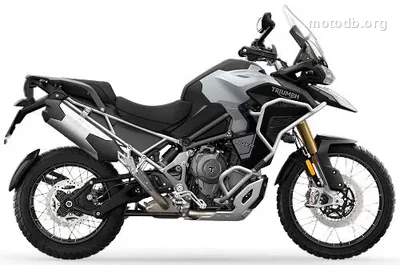
Tiger 1200 Rally Explorer
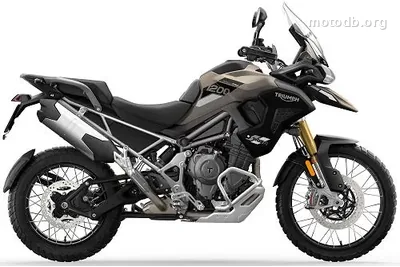
Tiger 1200 Rally Pro
Tiger 1200 Desert Edition
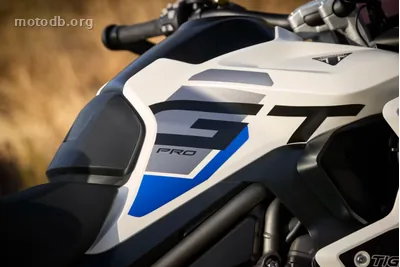
Tiger 1200 Alpine Edition
Reviews & comments
No reviews yet. Be the first to share your opinion!