Key performance
Technical specifications
Engine
- Displacement
- 1170 cc
- Power
- 125.0 ch @ 7750 tr/min (91.2 kW)
- Torque
- 125.0 Nm @ 6500 tr/min
- Engine type
- Two cylinder boxer, two-stroke
- Cooling
- Liquid
- Compression ratio
- 12.5:1
- Bore × stroke
- 101.0 x 73.0 mm (4.0 x 2.9 inches)
- Valves/cylinder
- 4
- Camshafts
- 2 ACT
- Fuel system
- Injection. Electronic intake pipe injection/BMS-K digital engine management with electromotive throttle actuator
- Valve timing
- Double Overhead Cams/Twin Cam (DOHC)
- Lubrication
- Dry sump
- Starter
- Electric
Chassis
- Frame
- Twin-section frame, front- and bolted on rear frame,load-bearing engine
- Gearbox
- 6-speed
- Final drive
- Shaft drive (cardan) (final drive)
- Clutch
- Oil lubricated clutch, hydraulically operated
- Front suspension
- BMW Motorrad Telelever; stanchion diameter 37 mm, central spring strut
- Rear suspension
- Cast aluminium single swingarm with BMW Motorrad Paralever
- Front wheel travel
- 190 mm (7.5 inches)
- Rear wheel travel
- 200 mm (7.9 inches)
Brakes
- Front brakes
- Double disc. ABS. Floating discs. Four-piston calipers.
- Rear brakes
- Single disc. ABS. Floating disc. Two-piston calipers.
- Front tyre
- 120/70-R19
- Front tyre pressure
- 2.50 bar
- Rear tyre
- 170/60-R17
- Rear tyre pressure
- 2.90 bar
Dimensions
- Seat height
- 850.00 mm
- Wheelbase
- 1507.00 mm
- Length
- 2210.00 mm
- Width
- 953.00 mm
- Height
- 1450.00 mm
- Fuel capacity
- 20.00 L
- Weight
- 238.00 kg
- New price
- 16 000 €
Overview
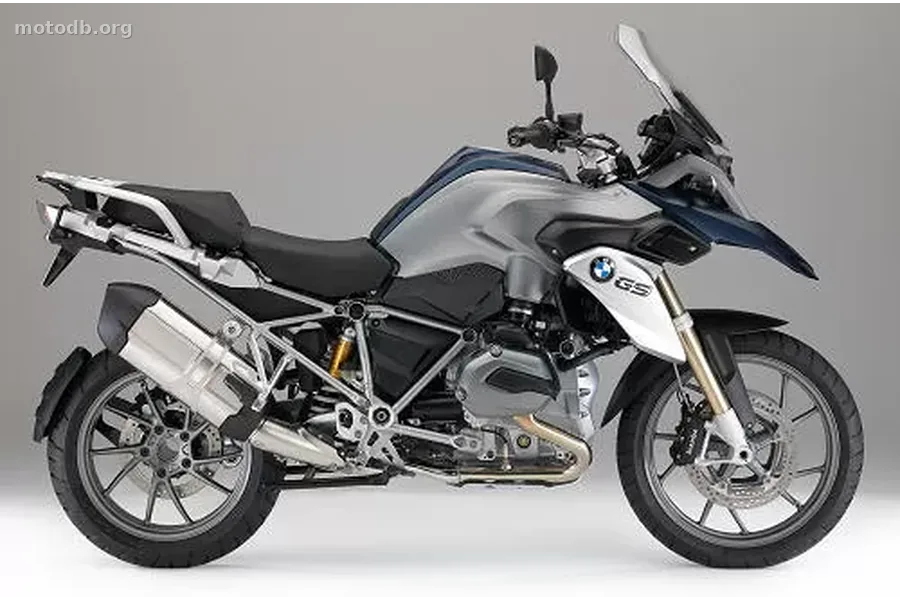
Gelände Straße. Two words German that most motorcyclists cannot translate, but whose initials have redrawn the boundaries of motorized travel. When BMW released the R 80 G/S at the turn of the 1980s, no one really knew that an entire category was being born. Forty years later, the BMW R 1200 GS still leads global sales, and this 2016 version represents the culmination of a transformation that began in 2013 with the introduction of liquid cooling. A choice that almost provoked a mutiny among purists.
Because we are touching on a dogma here. The air-cooled Boxer was the signature sound, thermal and visual of Bavaria for decades. Ducati had liquidated its V-twins a long time ago, KTM was playing on other terrains, but BMW held firm. Until the day that emissions standards made resistance untenable. Munich engineers then pulled off a remarkable feat: integrating a liquid circuit that calms the cylinder heads without betraying the iconic silhouette of the flat-twin. The fins remained, the radiators are hidden behind side fairings that push forward like claws. The added weight, 2.7 kg, is the price of survival. We won’t quibble about that. In return, the engine has been completely redesigned: compression ratio increased to 12.5:1, enlarged valves, injection increased to 52 mm, lightweight and stiffened crankshaft, 6-speed gearbox now integrated into the cases with a multi-disc wet clutch. The result is reflected in the technical specifications: 125 horsepower at 7,750 rpm, 125 Nm at 6,500 rpm. Fifteen horsepower more than the previous air-cooled version, for a weight that remains within 238 kg when fully fueled.
This weight, just so, is the argument brandished by detractors. The KTM 1290 Super Adventure is lighter, the Ducati Multistrada V4 is more powerful, and for a few years now, the competition is no longer content to observe from the bottom of the podium. But the BMW R 1200 GS has an answer to all of that: a versatility of use that no one has really managed to reproduce at this level of coherence. The seat adjusts to 850 or 870 mm, the handlebars pivot on 10 degrees, the 20-liter tank allows for comfortable autonomy, and the announced consumption of 4.1 liters per 100 km lets you glimpse stages of 480 kilometers between two stations. On a BMW R 1200 GS Adventure, this figure makes even more sense with the large tank, but even on this standard version, the calculation is advantageous.
Electronics is the other area where the GS asserts its credibility against a Multistrada equipped with Skyhook Öhlins. As standard, there are two riding modes Road and Rain, traction control ASC and a steering damper. As an option, there are three additional modes including an Enduro and an Enduro Pro, the latter disabling ABS at the rear to allow for intentional wheelspin on knobby tires. Dynamic ESA adapts the damping in real time according to the terrain and selected mode. From 2016, ABS Pro complements the arsenal: it modulates braking pressure according to the angle of the motorcycle, applying less stress to the calipers when the GS is leaned in a curve. The Control Brake Light, which makes the brake light flash proportionally to the intensity of emergency braking, is a useful gadget. The Pro shifter allowing up and down gear changes without a clutch, is a real added value for long journeys. Keyless Ride, key in your pocket, unlocks the steering and ignition without manipulation. These details contribute to the impression of a motorcycle designed for those who really use it, not for the showroom.
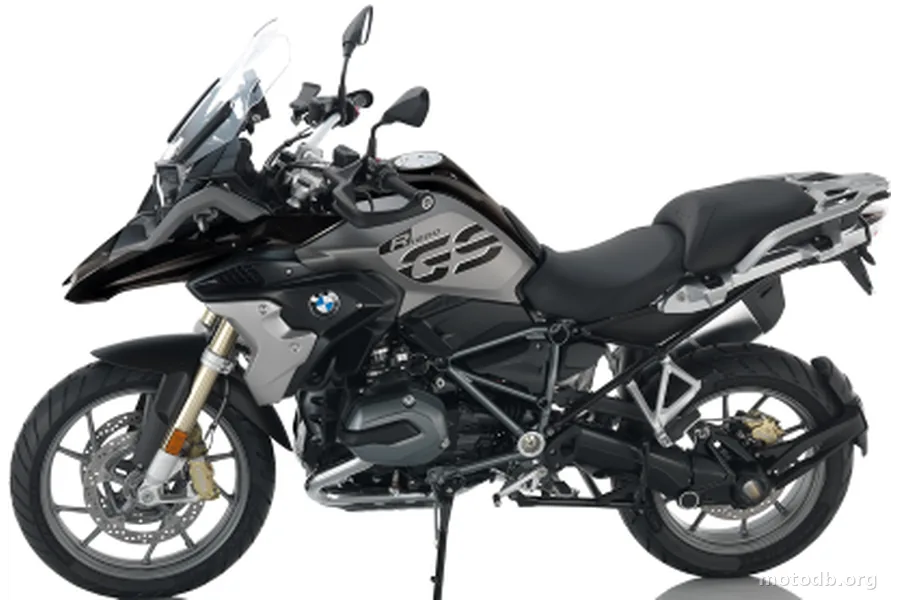
The BMW R 1200 GS Rallye, the triple black version or the variations with BMW R 1200 GS Adventure custom decor kits personalize an already dense catalog. The best tires for BMW R 1200 GS remain Metzeler Karoo or Tourance depending on the use, and official BMW R 1200 GS accessories cover most travel needs. One can reproach Munich for charging premium prices for options on a base already priced at 16,000 euros. Semi-active suspension, Enduro modes, adaptive LED lighting: everything is charged extra. This is the shadow on the tableau of a motorcycle that would be perfect if it stopped holding back the best for the packs. On the BMW R 1200 GS used market, the 2014 to 2016 models offer this liquid engine with a few years of hindsight on reliability, and the BMW R 1200 GS problems reported on the early series concerned mainly the distribution box and some cylinder head gaskets, largely treated by manufacturer recalls. This 2016 GS remains the reference in the segment for anyone looking for a mount capable of swallowing the highway in the morning and a rocky path in the afternoon, without having to choose its camp.
Standard equipment
- Assistance au freinage : ABS de série
- Poignées chauffantes
Practical info
- La moto est accessible aux permis : A
Indicators & positioning
Similar bikes
Stelvio 1200 8V
XTZE 1200 Super Ténéré
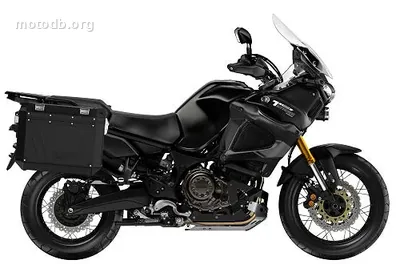
XTZE 1200 Super Ténéré Raid Edition
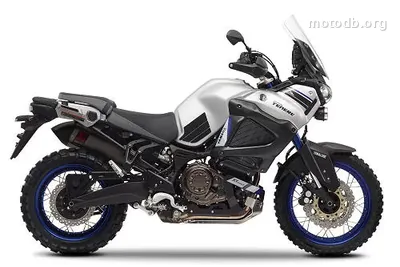
XTZE 1200 Super Ténéré Worldcrosser
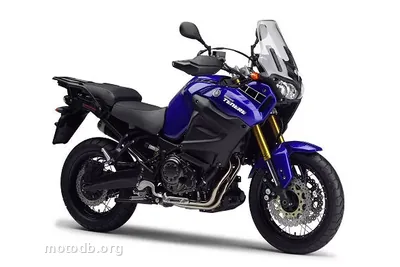
XT 1200 Z Super Ténéré 'Limited Edition'
Reviews & comments
No reviews yet. Be the first to share your opinion!