Key performance
Technical specifications
Engine
- Displacement
- 652 cc
- Power
- 50.0 ch @ 6500 tr/min (36.5 kW)
- Torque
- 60.0 Nm @ 5000 tr/min
- Engine type
- Single cylinder, four-stroke
- Cooling
- Liquid
- Compression ratio
- 11.5:1
- Bore × stroke
- 100.0 x 83.0 mm (3.9 x 3.3 inches)
- Valves/cylinder
- 4
- Fuel system
- Injection. Electronic intake pipe injection/BMW engine management, twin spark ignition
- Valve timing
- Double Overhead Cams/Twin Cam (DOHC)
- Lubrication
- Dry sump
- Starter
- Electric
Chassis
- Frame
- Bridge-type steel section frame with bolted on rear section
- Gearbox
- 5-speed
- Final drive
- Chain (final drive)
- Clutch
- Multiple-disc clutch in oil bath, mechanically operated
- Front suspension
- Telescopic fork, 41mm diameter, fork stabiliser
- Rear suspension
- Box-section steel dual swing arm, central spring strut operated by lever system, spring pre-load hydraulically adjustable (continuously variable) at handwheel, rebound damping adjustable
- Front wheel travel
- 170 mm (6.7 inches)
- Rear wheel travel
- 165 mm (6.5 inches)
Brakes
- Front brakes
- Single disc. ABS. Floating discs. Two-piston calipers.
- Rear brakes
- Single disc. ABS. Floating disc. Single-piston caliper.
- Front tyre
- 110/80-R19
- Rear tyre
- 140/80-R17
Dimensions
- Seat height
- 780.00 mm
- Wheelbase
- 1477.00 mm
- Length
- 2165.00 mm
- Width
- 920.00 mm
- Height
- 1390.00 mm
- Fuel capacity
- 14.00 L
- Weight
- 195.00 kg
- Dry weight
- 175.00 kg
Overview
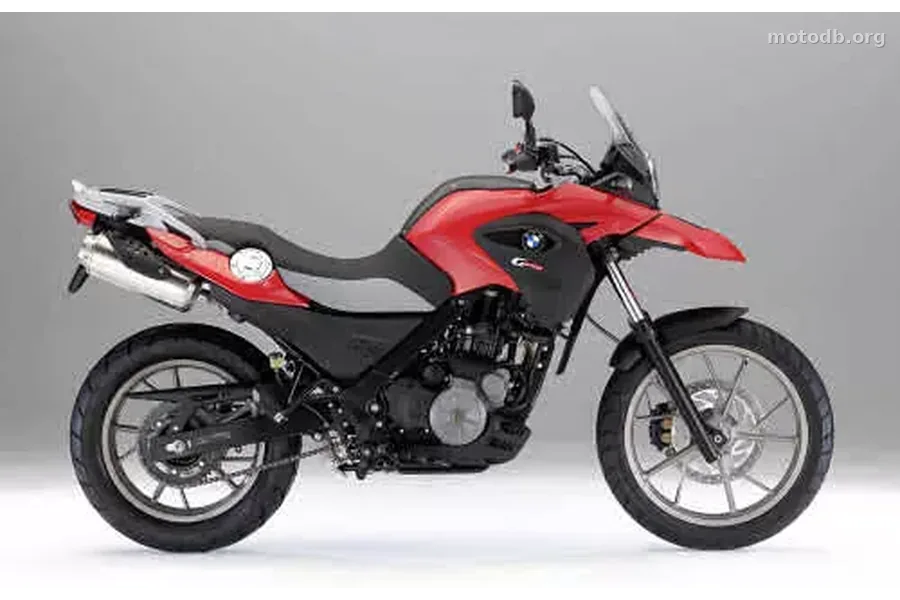
Recycling motorcycles is nothing new for manufacturers. BMW, despite its reputation for innovation, released the G 650 GS by playing the card of continuity with a touch of cosmetic boldness. Behind the new front fairing and spoked wheels, those familiar with the technical specifications will immediately recognize the old F 650 GS, this single-cylinder touring machine born at the turn of the 2000s. Same steel bridge frame, same 652 cc vertical twin, same wheelbase of 1477 mm. The restyling is honest, but it deceives no one who has ever put their hands in the engine.
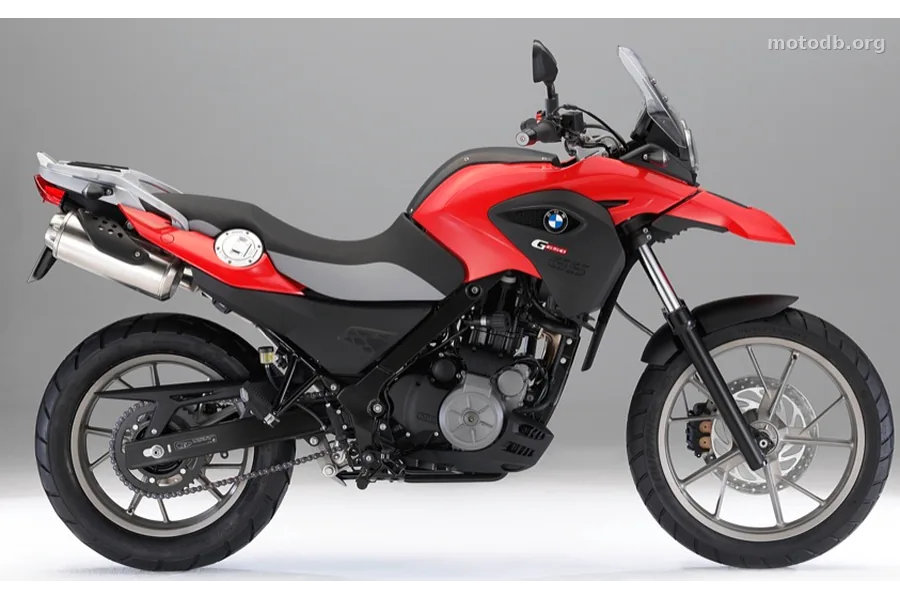
This four-valve single-cylinder engine, with an 83 mm bore and 100 mm stroke and a compression ratio of 11.5:1, delivers 48 horsepower at 6,500 rpm and 60 Nm of torque at 5,000 rpm. Modest figures on paper, but perfectly calibrated for versatile trail use. The G 650 GS A2 will interest A2 license holders as it falls below the regulatory threshold without a painful restriction. And then an announced consumption of 3.2 liters per 100 km for a 14-liter tank provides comfortable range on the road. At 170 km/h top speed, we won't be pushing an Africa Twin, but for an initiation or light touring trail, the cruising speed on the highway remains perfectly manageable.
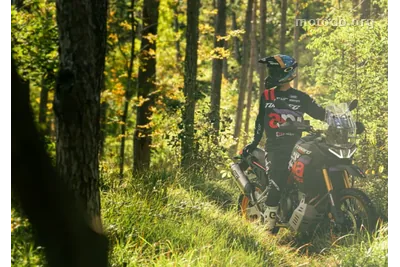
The real problem with the BMW G 650 GS lies in its technical choices related to the wheels. The 110/80-19 front and 140/80-17 rear tires clearly orient the machine towards tarmac. Forest path enthusiasts who had faith in the "enduro" label will be disappointed. The competition in this category, whether it's the Honda CB500X or the Kawasaki Versys-X 300, offers similar profiles but with a more consistent philosophy between marketing discourse and actual equipment. Here, the steel swingarm and 41 mm telescopic fork do the job on broken roads, but the semi-road tires limit ambitions as soon as the track becomes serious.
What the BMW G 650 GS test reveals is that the machine is lively and endearing. The single-cylinder vibrates, pulses, and communicates with the rider in a way that no smooth twin can reproduce. ABS is standard, the suspensions are adjustable at the rear, and the seat height at 780 mm remains accessible for an average build. At €7,500, it positions itself within a reasonable range for a BMW, especially in used BMW G 650 GS models where 2010, 2011 or 2012 versions are found at much lower prices with low mileage. There is also the Sertão variant, or Sertão depending on the markets, which offered a raised tank and more advanced trail equipment.
The verdict can be said in a few words. The BMW G 650 GS is an honest machine, designed for the urban rider who dreams of weekends in the countryside without ever really leaving the asphalt, or for the young A2 license holder who wants to enter the GS family without mortgaging their studio. It's not a Dakar, whatever the brand's imagination says, and the years of production spanning from 2008 to 2016 show that BMW has known how to take advantage of it without ever really reinventing it. A motorcycle without excessive pretension, reliable, economical and pleasant to ride. Sometimes, that's enough.
Reviews & comments
No reviews yet. Be the first to share your opinion!