Key performance
Technical specifications
- Frame
- Aluminum bridge-type frame with load-bearing engine → Bridge-type frame, cast aluminium
- Rear suspension
- Die-cast aluminium double-sided swing-arm, central spring strut, spring preload hydraulically and steplessly adjustable via handwheel, adjustable rebound damping → Cast aluminium dual swing arm, central spring strut, spring pre-load hydraulically adjustable (continuously variable) at handwheel, rebound damping adjustable
- Front tyre
- 120/70-ZR17 → 120/70-17
- Rear tyre
- 180/55-ZR17 → 180/55-17
- Seat height
- 770.00 mm → 790.00 mm
- New price
- 8 700 € → 8 500 €
Engine
- Displacement
- 798 cc
- Power
- 90.0 ch @ 8000 tr/min (65.7 kW)
- Torque
- 86.0 Nm @ 5800 tr/min
- Engine type
- Twin, four-stroke
- Cooling
- Liquid
- Compression ratio
- 12.0:1
- Bore × stroke
- 82.0 x 75.6 mm (3.2 x 3.0 inches)
- Valves/cylinder
- 4
- Camshafts
- 2 ACT
- Fuel system
- Injection. Electronic injection
- Valve timing
- Double Overhead Cams/Twin Cam (DOHC)
- Lubrication
- Dry sump
- Starter
- Electric
Chassis
- Frame
- Bridge-type frame, cast aluminium
- Gearbox
- 6-speed
- Final drive
- Chain (final drive)
- Clutch
- Multiple-disc clutch in oil bath, mechanically operated
- Front suspension
- Upside-down fork
- Rear suspension
- Cast aluminium dual swing arm, central spring strut, spring pre-load hydraulically adjustable (continuously variable) at handwheel, rebound damping adjustable
- Front wheel travel
- 125 mm (4.9 inches)
- Rear wheel travel
- 125 mm (4.9 inches)
Brakes
- Front brakes
- Double disc. ABS. Floating discs. Four-piston calipers. Radially mounted.
- Rear brakes
- Single disc. ABS. Floating disc. Single-piston caliper.
- Front tyre
- 120/70-17
- Front tyre pressure
- 2.50 bar
- Rear tyre
- 180/55-17
- Rear tyre pressure
- 2.90 bar
Dimensions
- Seat height
- 790.00 mm
- Wheelbase
- 1520.00 mm
- Length
- 2145.00 mm
- Width
- 860.00 mm
- Height
- 1235.00 mm
- Fuel capacity
- 15.00 L
- Weight
- 203.00 kg
- New price
- 8 500 €
Overview
When Munich decides to play the accessibility card without compromising its DNA, it results in the BMW F 800 R. Since its launch through the 2017 and 2018 model years, this parallel-twin roadster occupies a delicate position within the Bavarian lineup: too sensible to shake the S 1000 R, too serious to be ignored. It assumes the ungrateful role of entry-level roadster at BMW, and it does so with a dignity that commands respect.
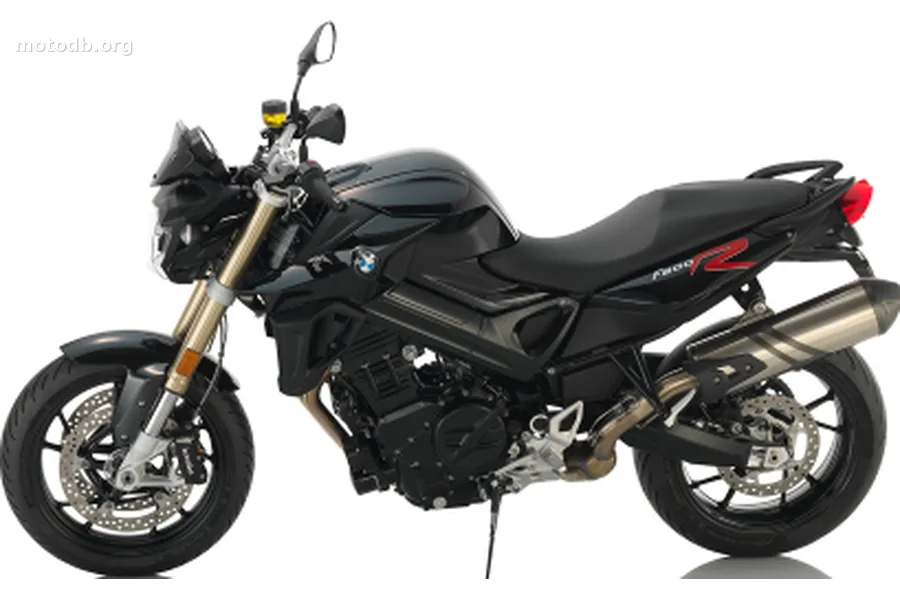
The 2017 Euro4 update is not cosmetic. The most tangible gain comes from the adoption of ride-by-wire, this electronic throttle control that transforms the relationship between the right hand and the 798 cm3 engine. The concrete result: three riding modes are integrated as standard, Road and Rain, with Dynamic available as an option. On the 2017 BMW F 800 R, this is a real step forward compared to previous generations like the 2015 or 2016 BMW F 800 R, which did not have this tool. The 90 horsepower remains at 8000 rpm, the torque of 86 Nm arrives early at 5800 rpm, and the two short first gears provide brisk acceleration out of corners. This engine is not the most aggressive in the segment; a Yamaha MT-09 or a Kawasaki Z900 will more willingly play elbows in the power escalation, but it delivers a character honesty that driving enthusiasts appreciate daily.
The chassis deserves attention. The aluminum bridge frame houses an inverted fork at the front, a choice that contrasts with the simplicity applied to previous generations. Front calipers with radial four-piston mounting bite onto floating discs with precision that mid-size competitors do not always offer as standard. At the rear, a mono-shock with continuous hydraulic preload and adjustable rebound damping. ESA electronic suspension remains an option, which is slightly frustrating when you know the richness of the BMW F 800 R accessory catalog. ABS is delivered as standard. For 203 kg fully fueled and a wheelbase of 1520 mm, the machine proves quite agile in the city and sufficiently stable on national roads. The seat at 790 mm, lowered by 10 mm compared to the previous version, opens the circle of riders who can properly place their feet.
The BMW F 800 R A2 deserves special mention. Restricted to 35 kW, or 48 horsepower, it targets A2 license holders with reduced torque of 70 Nm. It is a serious option for those who want to start with a motorcycle that will not become obsolete and that they can legally de-restrict after two years. On the BMW F 800 R used market, examples from the 2009 to 2014 years have aged consistently, the platform being solid. The 2012, 2013 and 2014 BMW F 800 R model years are particularly sought after for their value for money on the used market.
At €8500 in 2017, the BMW F 800 R price positions itself in the high range of 800 cm3 roadsters, aligned with its direct competitors. But the list of options is long, and it can make the bill climb. This is the reverse of the Bavarian economic model: the base is correct, but the fully equipped motorcycle costs noticeably more. Nevertheless, anyone looking for a versatile, reliable roadster, with a fairly marked character to not be boring and sufficiently moderate to be used every day by varied profiles, from urban to weekend touring, will find in this F 800 R a consistent proposal. It will not electrify the crowds, but it will not disappoint them either. That is already a lot.
Standard equipment
- Assistance au freinage : ABS de série
Practical info
- Véhicule accessible au permis A2 ou bridable à 47.5ch / 35 Kw
- La moto est accessible aux permis : A, A2
Indicators & positioning
Similar bikes
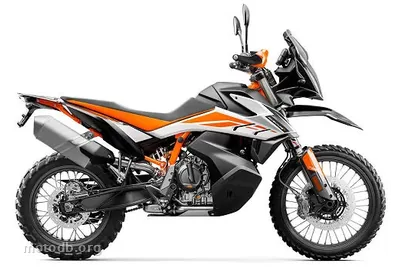
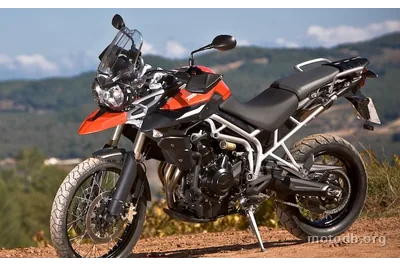
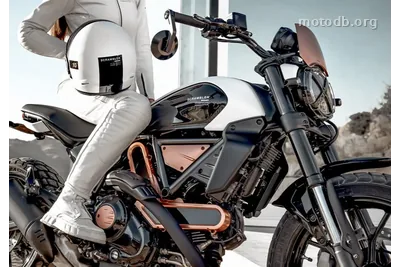
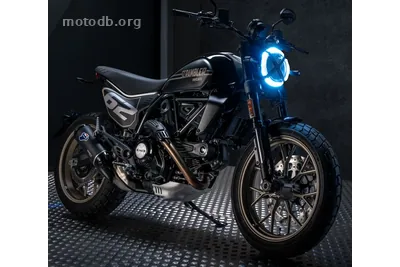
Scrambler 800 10° Anniversario Rizoma Edition
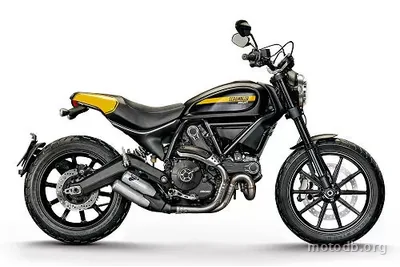
Scrambler 800 Full Throttle
Scrambler 800 Full Throttle
Reviews & comments
No reviews yet. Be the first to share your opinion!