Key performance
Technical specifications
Engine
- Displacement
- 420 cc
- Power
- 47.5 ch @ 8750 tr/min (34.9 kW)
- Torque
- 43.0 Nm @ 6750 tr/min
- Engine type
- Bicylindre en ligne, 4 temps
- Cooling
- liquide
- Compression ratio
- 13 : 1
- Bore × stroke
- 72 x 51.6 mm
- Valves/cylinder
- 4
- Camshafts
- 2 ACT
- Fuel system
- Injection Ø 38 mm
- Starter
- électrique
- Euro standard
- Euro 5+
Chassis
- Frame
- Structure en acier tubulaire
- Gearbox
- boîte à 6 rapports
- Final drive
- Chaîne
- Front suspension
- Fourche téléhydraulique inversée Ø 43 mm, déb : 180 mm
- Rear suspension
- Mono-amortisseur, déb : 180 mm
Brakes
- Front brakes
- Freinage 1 disque Brembo Ø 310 mm, fixation radiale, étrier 4 pistons
- Rear brakes
- Freinage 1 disque Ø 240 mm, étrier simple piston
- Front tyre
- 100/90-19
- Rear tyre
- 130/80-17
Dimensions
- Seat height
- 845.00 mm
- Seat type
- Selle biplaces
- Fuel capacity
- 14.00 L
- Weight
- 178.00 kg
- Dry weight
- 165.00 kg
- New price
- 7 500 €
Overview
For a very long time, a GS was the embodiment of a border-devouring motorcycle, a certain status, the perfect fusion of road and trail... and a serious dose of reliability. Except that there's a real scamp in the family: the F 450 GS. It's BMW's new entry-level model, the first level of incursion into the off-road family, and a model that is sure to make a splash.
It arrives with a swift kick to the G 310 GS. While the latter resembles a large 125, the new "small" GS presents itself as a fine 500. There are no surprises in its design, which is also quite successful, as the motorcycle has been teased for a good year. A slender line, cross-inspired styling, an incisive front end, marked cheeks… the motorcycle exudes style as it should.
One of the great qualities of BMW's marketing is their concept bikes. They are always very close to the future production version. This is impeccably the case with the F 450 GS. Since the concept appeared at the end of 2024, almost nothing has changed. Insignificant variations can be observed in the under-seat trim, slightly redesigned side casings, a larger front fender, and the disappearance of the Akrapovic exhaust (which still has a place in the options). The only element that has truly evolved is the headlight, with a less pronounced X-shaped signature but still present.
Briefly, minimal variations that do not diminish the appeal of this small trail bike. Its mini-R 1300 GS look is a huge asset. With its wasp-like stance, enduro profile, and much more athletic silhouette than the G 310 GS, the young Bavarian will quickly find its audience.
That audience is primarily young riders with A2 licenses. That’s who BMW is developing a brand-new engine for, with precisely the power limit of 35 kW, or almost 48 horsepower, which it reaches at 8,750 rpm. Its torque is in line with the displacement, at 43 Nm at 6,750 rpm.
It's a 420 cm3 twin, with modern and usual solutions such as liquid cooling, 4 valves per cylinder, injection, and double ACT. However, its 135° engine firing interval is unprecedented in motorcycle production. This irregular ignition interval will give this engine a new and unique character. Furthermore, the engine designers opted for very square bore and stroke dimensions of 70 mm bore and 51.6 mm stroke. This is more than the Japanese 500 parallel twins – it announces a sporty temperament. It also features a high compression ratio (13:1), a counter-rotating balance shaft to limit vibrations, and another unprecedented feature: an Easy Ride ERC clutch system.
An innovation available as an option (standard on the Trophy trim) to facilitate gear changes. The ERC system houses a centrifugal clutch engaged according to engine speed. The rider engages first gear, accelerates, and the motorcycle takes off without needing to touch the clutch lever. Since the quickshifter is installed on almost all versions (except the base model), you no longer need to touch the clutch with an F 450 GS. BMW adds extra comfort with Easy Ride, especially in the city, in tight turns, and off-road.
However, the left lever is still there; for standard use, to overcome an obstacle, or to manage the rear wheel in certain situations. A particularity of the ERC system is that it remains closed during deceleration to retain engine braking.
A new assistance, which joins the electronic package of our road shrew. Yes, yes… it’s mandatory and standard on a BMW to have plenty of riding aids. It’s the way things are, and it’s becoming the norm with other manufacturers (except Ural). The F 450 GS natively features traction control (DTC), engine braking management (MSR), cornering ABS, and three riding Modes. “Rain,” “Road,” and “Enduro,” which are the three missions that you will use with this machine. More experienced enthusiasts will choose the “Enduro Pro” mode in the options, to be able to deactivate the wheelie control and rear ABS, as well as customize the throttle response, the level of intervention of ABS and traction control.
Wait, the surprises aren't over. Heated grips are also standard. Surprising at this level of range from the German brand, when you think it took the 1300 to have these elements as standard on a large GS.
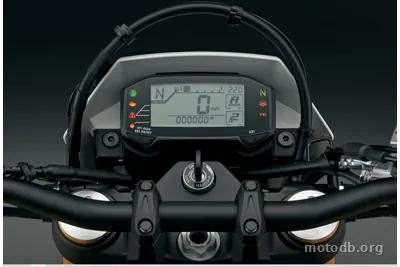
The on-board equipment also includes a USB-C socket, headlights, and LEDs everywhere, and the 6.5-inch color TFT screen, a BMW staple. Always pleasing, always rich in information, the screen can offer several display themes, smartphone control, music, and turn-by-turn navigation.
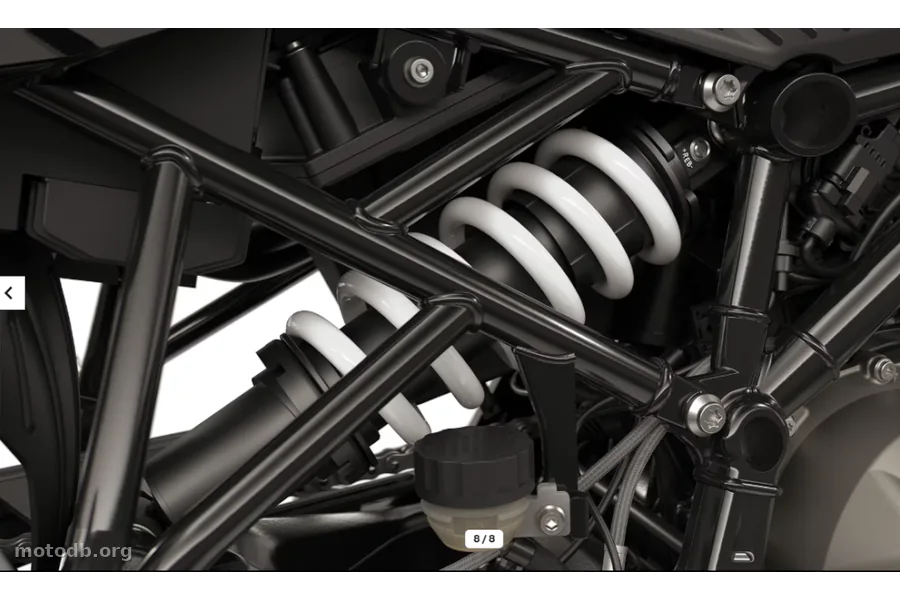
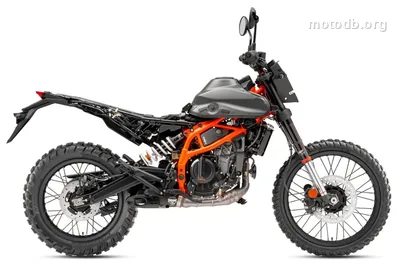
But where the F 450 GS is expected to shine is in its ability to navigate trails. It is equipped with a new steel tubular frame, where the engine plays a load-bearing role. This provides the rigidity and robustness needed to absorb bumps and shocks. The swingarm is made of aluminum. Serious, the inverted fork is a generous 43 mm in diameter, while the shock absorber is placed semi-horizontally. These Kayaba elements slide on 180 mm; a generous stroke but with a more trail than enduro focus. The tire fit continues in this direction with a 19-inch front wheel and narrow dimensions without being totally off-road (AV: 100/90 / AR: 130/70). This narrowness will play a major role in the agility of this machine.
It's clear: the F 450 GS wants to venture off the road but without going too far into difficulty. The base version and its spoked rims show a limited commitment from the outset. Spoked-wheel models will clearly be more suitable if you really want to taunt the stone and the dirt.
This desire not to "extreme" the F 450 GS also helps to limit its seat height. 845 mm is a bit high but not excessive. Just like the weight of the motorcycle. 178 kg plus the approximately 14 liters of fuel place it in the upper middle of the category. The single front brake will have no trouble stopping it with its 310 mm diameter and Brembo 4-piston caliper. And for the rear? There’s a single piston to bite a 240 mm disc.
Attractive looks, unprecedented engine with plenty of resources, affirmed technology - the new F 450 GS also brings a compelling argument: its price of €7,500. A decidedly accessible value for a BMW, allowing it to compete directly with a KLE 500 SE, a 390 Adventure X, or the NX 500. With a trump card: the white and blue badge always has an impact before you even start.
M.B. - Photos manufacturer
A small anecdote: imagine that almost 50 years later, the F 450 GS produces only 2 fewer horsepower and weighs almost the same as the R 80 G/S, the very first in the lineage.
Standard equipment
- Assistance au freinage : ABS
- Nombre de mode de conduite : 3
- Taille de l'écran TFT couleur : 16,51 cm / 6.5 pouces
- ABS Cornering
- Indicateur de vitesse engagée
- Bluetooth
- Contrôle du frein moteur
- Contrôle de traction
- Prise USB
- Poignées chauffantes
Practical info
- La moto est accessible aux permis : A, A2
- Pays de fabrication : Inde
Reviews & comments
No reviews yet. Be the first to share your opinion!