Key performance
Technical specifications
Engine
- Displacement
- 398 cc
- Power
- 38.0 ch @ 8000 tr/min (27.9 kW)
- Torque
- 37.0 Nm @ 6500 tr/min
- Engine type
- Monocylindre, 4 temps
- Cooling
- liquide
- Compression ratio
- 11.1 : 1
- Bore × stroke
- 90 x 62.6 mm
- Valves/cylinder
- 4
- Camshafts
- 2 ACT
- Fuel system
- Injection Ø 42 mm
- Starter
- électrique
- Euro standard
- Euro 5+
Chassis
- Frame
- double longeron + simple berceau dédoublé en acier
- Gearbox
- boîte à 5 rapports
- Final drive
- Chaîne
- Front suspension
- Fourche téléhydraulique inversée Ø nc, déb : 280 mm
- Rear suspension
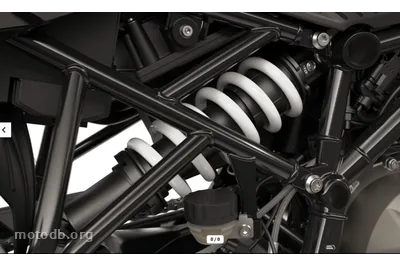
- Mono-amortisseur, déb : 296 mm
Brakes
- Front brakes
- Freinage 1 disque Nissin Ø 270 mm, étrier 2 pistons
- Rear brakes
- Freinage 1 disque Nissin Ø 240 mm, étrier simple piston
- Front tyre
- 80/100-21
- Rear tyre
- 120/80-18
Dimensions
- Seat height
- 920.00 mm
- Seat type
- Selle biplaces
- Fuel capacity
- 8.70 L
- Weight
- 151.00 kg
- New price
- 8 999 €
Overview
That’s quite a comeback. After disappearing from the French market for over 20 years, the DR 400 is back with force in the lightweight trail and off-road sector. While it has continued its career elsewhere, it remained unchanged until this overhaul. And what an overhaul! A machine that previously lacked modern technology is now packed with electronic modules. To mark the occasion, it changes its name to the DR-Z4S.
This new DR immediately embodies the spirit of the Hamamatsu family, with a distinctly… Suzuki “mono-globular” look. While the previous model felt like the 1990s, the new one instantly catches up with taut lines, angled effects, and a sense of lightness. A false impression, as it has gained 7 kilos. But with a dry weight of 151 kilos, it remains a playful machine that can be flicked around in an instant.
What remains of the old DR-Z400S? The original concept, the cylinder, the dry-sump lubrication system, the tire size, and that’s it. Suzuki has virtually overhauled the entire machine for this new version, starting with the engine itself. It had to move from Euro2 to Euro5b – I’ll leave you to imagine the work involved. Without going into the 38 pages of explanation, let’s capture the overall rejuvenation:
Okay, Suzuki has done a major job. It was necessary to save the vitality of the single-cylinder engine. The major shift in regulations could have severely hampered it, but it manages to produce 38 horsepower at a maximum speed of 8,000 rpm. That’s 2 horsepower less than the DR-Z400S/SM. Not a huge loss. Maximum torque is identical, at 3.9 mkg. Young riders and enthusiasts of small, playful machines will quickly smile if this engine has managed to retain the spirit of its predecessor.
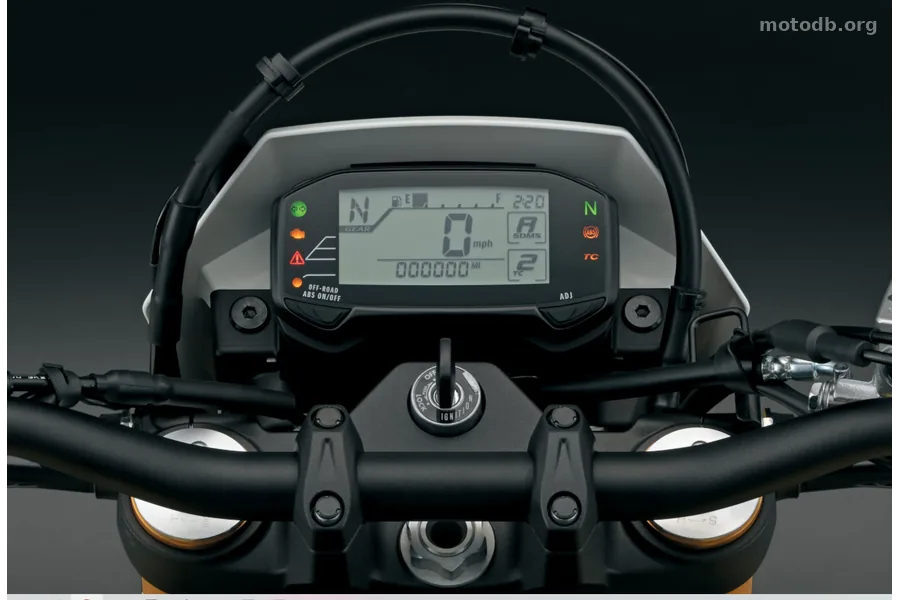
Except this time, it has three new features. Suzuki has really gone all out on the DR, perfusing it with a surprising level of electronics for a machine of this caliber. Consider this: it receives a SDMS with three engine maps to modulate power delivery (Mode A: aggressive / Mode B: linear / Mode C: supple), four-level traction control (Mode 1: road / Mode 2: wet surfaces / Mode Gravel: offroad / disabled), an ABS that can be turned off either at the rear or completely, and the Easy Start system for starting with a simple press of the starter button. Wow! We’ve gone from an electronic desert to an oasis! But does the DR-Z4S really need all this?
It’s hard to believe that all this equipment is hidden within its frame and behind its simple (too), digital, almost complete, not very sexy dashboard, which lacks a tachometer but allows you to get to the essentials at a glance. All lighting is LED.
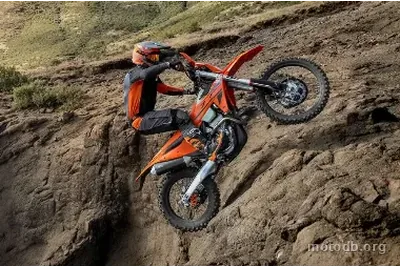
Suzuki could have stopped there. But driven by a passionate desire to enhance its DR, the brand also puts the entire chassis on the operating table. The steel frame is new, with a largely modified structure: the central beam is replaced by two longerons, connected to a simple cradle that doubles under the engine. Stiffness should increase by a notch, but the primary objective is to improve handling. The subframe (bolted) and the swingarm are redesigned, and still made of aluminum. The change is more striking at the front, with the arrival of an inverted fork. Visually, you immediately notice the important suspension travel and you understand that the DR-Z4S has a serious predisposition to roam everywhere, especially if it’s beaten up. However, fork travel has decreased to 280 mm, while the DR-Z400S offered 295. This remains serious, and close to a true enduro. The rear shock is even more generous with 296 mm. Ground clearance reaches 30 cm.
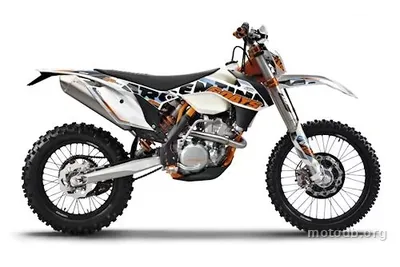
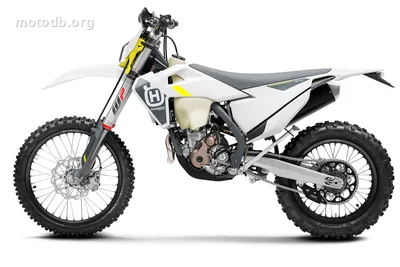
The two Kayaba elements are adjustable in compression and rebound. As for the wheels, the DR has exactly what it needs with 21-inch front and 18-inch rear spoked rims; shod with very fine block tires (8 cm front / 12 cm rear). With this equipment, the bike will not shy away from any escapade - except in truly challenging terrain, where the enthusiast would naturally choose an EXC or a warrior of this kind.
A shame, it lacks a proper engine guard instead of the small aluminum plate (it’s better than nothing). As well as the small tool kit that could be found previously behind the passenger seat.
The brake discs have grown. By 20 mm each. The DR-Z4S is equipped with standard Nissin hardware without fuss with a 270 mm disc at the front pinched by a 2-piston caliper while the rear 240 mm is accompanied by a single piston.
As you approach, you can almost feel the mounds of dirt. But being able to go almost everywhere does not make this DR a universal tool. Far from it. You will quickly realize that the bike is type-specific. Highways, trips, arsouilles, that’s not its thing. It will prefer the mountains, weave through the city like a hurried trekker in Chamonix, play with the paths and surprise in all corners. Furthermore, the important suspension travel will oblige you to be quite supple given the seat height. 920 mm, that’s a lot to straddle.
For a more “rogue” use, Suzuki has planned a more daring supermotard version, with 17-inch rims, sport tires, larger (a little) brakes and different electronic calibration.
It’s good to see a little DR again. This new version has some real assets, with sufficient specs to have fun. Its main drawback is being reasonable in a world where the successful trail is the one heavily loaded with everything - and a price that is difficult to digest.
M.B - photos manufacturer
Standard equipment
- Assistance au freinage : ABS
- Nombre de mode de conduite : 3
- Jantes à rayon
- Indicateur de vitesse engagée
- Aide au démarrage
- Contrôle de traction
- ABS déconnectable
- Embrayage anti-dribble
Practical info
- La moto est accessible aux permis : A, A2
- Pays de fabrication : Japon
Reviews & comments
No reviews yet. Be the first to share your opinion!