Key performance
Technical specifications
Engine
- Displacement
- 996 cc
- Power
- 142.0 ch @ 9750 tr/min (104.4 kW)
- Torque
- 98.1 Nm @ 8750 tr/min
- Engine type
- Bicylindre en L à 90°, 4 temps
- Cooling
- liquide
- Compression ratio
- 11.3 : 1
- Bore × stroke
- 98 x 66 mm
- Valves/cylinder
- 4
- Camshafts
- 2 ACT
- Fuel system
- Injection Ø 59 mm
Chassis
- Frame
- double longeron en alu et carbone, bâti arrière carbone
- Gearbox
- boîte à 6 rapports
- Final drive
- Chaîne
- Front suspension
- Fourche téléhydraulique inversée Öhlins Ø 43 mm, déb : 120 mm
- Rear suspension
- Mono-amortisseur, déb : 130 mm
Brakes
- Front brakes
- Freinage
- Rear brakes
- Freinage 1 disque
- Front tyre
- 120/70-17
- Front tyre pressure
- 2.50 bar
- Rear tyre
- 180/55-17
- Rear tyre pressure
- 2.90 bar
Dimensions
- Fuel capacity
- 20.00 L
- Weight
- 190.00 kg
- Dry weight
- 176.00 kg
- New price
- 36 980 €
Overview
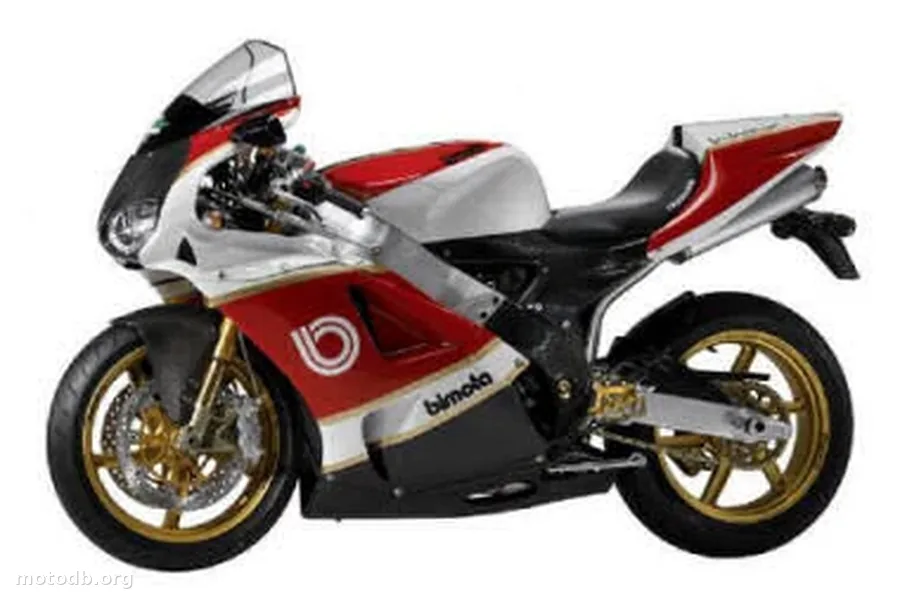
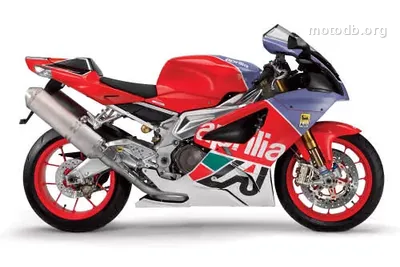
Thirty-seven thousand euros. Take a moment to think about it. For that price, you leave Bimota with 142 horsepower extracted from a 996 cc L-twin borrowed from Suzuki, revised, remapped, pushed well beyond its TL1000R origins. The base Japanese engine, already a solid unit, produced around 135 horsepower in the Hamamatsu sportbike. Here, it climbs to 9,750 rpm to deliver its peak power, while the 98.1 Nm of torque arrives at 8,750 rpm. Bimota didn't reinvent the mechanicals — it refined them with the obsession of a Swiss watchmaker working on a foreign movement.
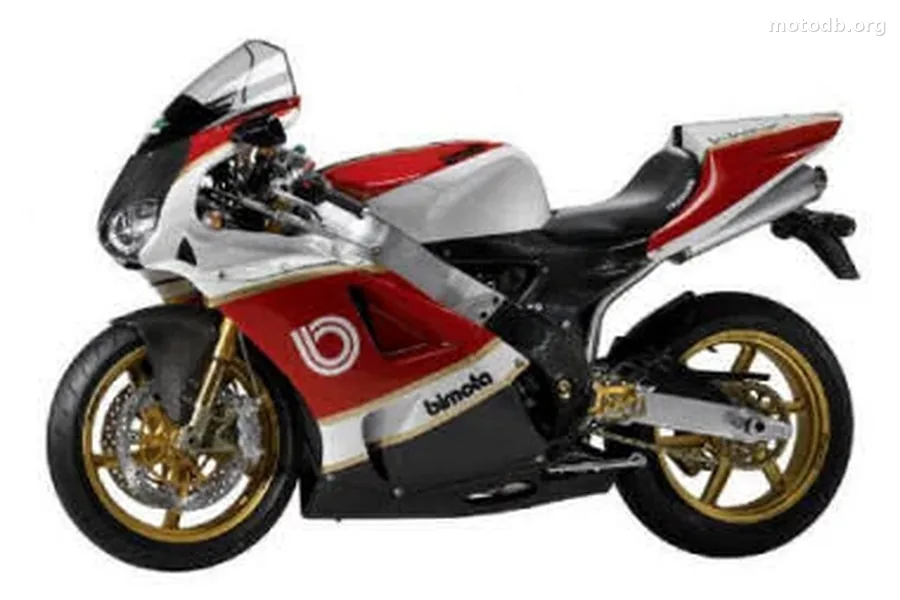
What justifies the bill is everything that surrounds that engine. The twin-spar aluminum frame is reinforced with carbon fiber elements. The swingarm? Carbon. The self-supporting seat unit? Carbon. The fenders, fairing, and hugger? You guessed it. The result: 176 kg dry, 190 kg fully fueled with its 20-liter tank aboard. This is where the comparison with a contemporary GSX-R 1000 lands squarely: the stock Japanese sportbike offered more horsepower at a lower weight. On paper, the Bimota loses the contest. On the road, it plays in an entirely different league.
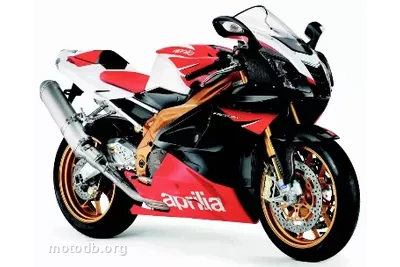
The Santa Monica edition represents the pinnacle of the SB8K range. Compared to the Gobert version, it receives a 43 mm Öhlins inverted fork, radial brake calipers, a 15 mm longer wheelbase, a taller screen for better high-speed rider protection, and gold OZ Racing wheels that immediately signal its standing. The claimed top speed of 250 km/h seems credible given the fairing's aerodynamics and the power-to-weight ratio. This performance premium comes at approximately €4,000 more than the Gobert, bringing the total to that stratospheric level.
Who is a machine like this aimed at? Certainly not the novice, nor even the ordinary rider looking to chase lap times on a circuit. The SB8K Santa Monica edition is a collector's motorcycle accessible to the rare few capable of exploiting its potential without fear of damaging it. The intended buyer has already worked through several high-end sportbikes, knows their limits, and is looking for something the major manufacturers cannot produce: Italian artisanal exclusivity paired with the reliability of a proven Japanese engine. A six-speed gearbox transmits power via chain — conventional, without unnecessary sophistication.
Against the Ducati 999 or Honda RC51 of the era, the SB8K makes no claim to being the fastest on a stopwatch. It embraces its positioning as a rare object, a motorcycle built in small numbers in Rimini by people who regard their work as an act of faith toward engineering. The main drawback remains its prohibitive price and accessibility reserved for a select few. But criticizing a Bimota for its cost is like faulting a Bugatti for being impractical for grocery runs.
Practical info
- La moto est accessible aux permis : A
Reviews & comments
No reviews yet. Be the first to share your opinion!