Key performance
Technical specifications
- New price
- 25 990 € → 23 390 €
Engine
- Displacement
- 1198 cc
- Power
- 170.0 ch @ 9750 tr/min (125.0 kW)
- Torque
- 131.4 Nm @ 8000 tr/min
- Engine type
- Bicylindre en L à 90°, 4 temps
- Cooling
- liquide
- Compression ratio
- 12.7 : 1
- Bore × stroke
- 106 x 67.9 mm
- Valves/cylinder
- 4
- Camshafts
- 2 ACT
- Fuel system
- Injection
Chassis
- Frame
- Treillis tubulaire en acier + platines latérales en alu
- Gearbox
- boîte à 6 rapports
- Final drive
- Chaîne
- Front suspension
- Fourche téléhydraulique inversée Ø 43 mm, déb : 120 mm
- Rear suspension
- Mono-amortisseur Extreme Tech, déb : 120 mm
Brakes
- Front brakes
- Freinage Brembo
- Rear brakes
- Freinage 1 disque Brembo
- Front tyre
- 120/70-17
- Rear tyre
- 190/55-17
Dimensions
- Fuel capacity
- 16.00 L
- Dry weight
- 171.00 kg
- New price
- 23 390 €
Overview
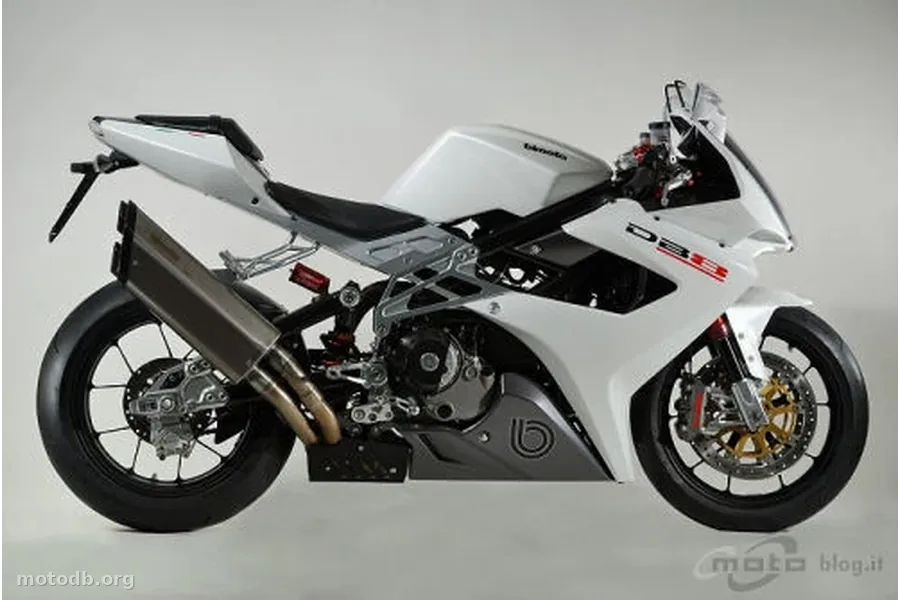
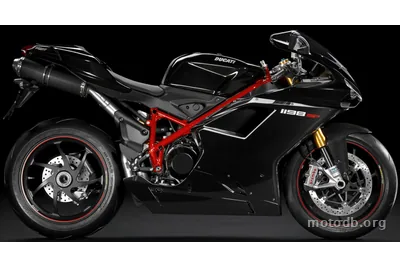
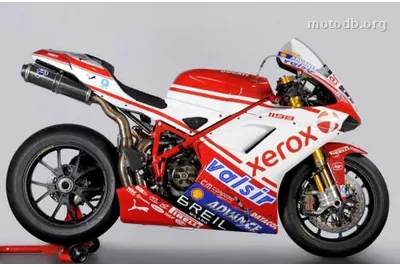
When Ducati released the 1198 and left the DB7's L-twin in the dust, Bimota had only one option: play the game. The small Rimini manufacturer, already eight times married to a Bolognese engine, wasn't about to be intimidated. It responded with the DB8, eighth in the Ducati-Bimota lineage, and the response is as direct as the character of the 1198cc unit bolted into its steel tubular trellis frame.
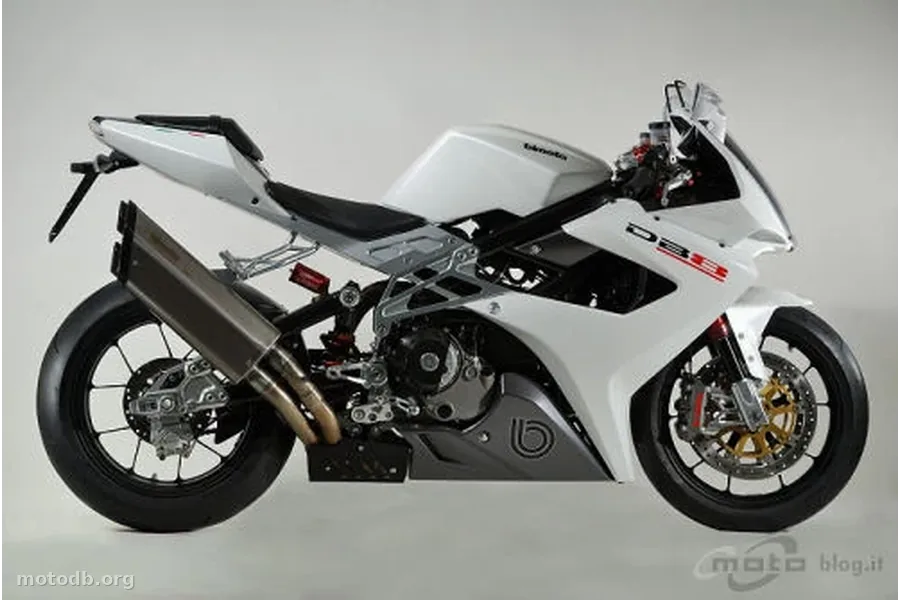
Don't look for a stylistic revolution here. The DB8 resembles its predecessor like a younger sister resembles the elder: same taut silhouette, same breathtaking Italian aesthetic — only a more subdued color scheme, a new exhaust, and the number 8 painted in red beneath the air intakes betray the novelty. What changes is beneath the skin. The 90-degree V-twin of 1198cc, with a 106mm bore and 67.9mm stroke, compression ratio at 12.7:1, has been reworked in its mapping by Rimini's technicians to give it an even sharper, more biting temperament. The result: 170 horsepower at 9,750 rpm and 131.4 Nm at 8,000 rpm, enough to push 171 kg of dry motorcycle to 290 km/h. The weight figure is particularly telling: strictly identical to the standard Ducati 1198, but in a hand-built chassis, with billet-machined aluminum side plates and an attention to detail that Borgo Panigale cannot afford at mass-production scale.
Bimota also wanted to broaden the appeal. The reinforced rear frame now accommodates a passenger, and the price was trimmed to €23,390, compared to significantly more stratospheric figures in the past. This repositioning comes with a tangible cost: carbon fiber bodywork has given way to plastic, and the suspension, while still appealing, steps down a notch in terms of outright performance. The 43mm inverted fork remains Marzocchi-sourced, the Extreme Tech monoshock still handles the rear with 120mm of travel on each side, and the four-piston radial monobloc Brembo calipers continue to bite the discs with unequivocal conviction. Nobody will complain about the braking.
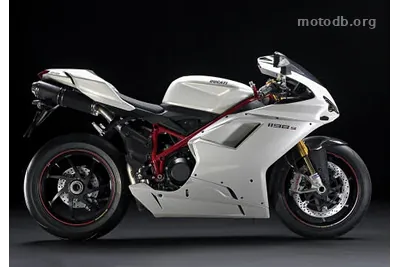
The problem is that €23,390 in 2010 places the DB8 squarely in the crosshairs of the Ducati 1198 S Corse — the one with factory Öhlins. Same engine, same weight, but a price differential that forces the question. Bimota's answer has been the same for forty years: it is not the same thing to have a serial number engraved in the aluminum of a part machined in Rimini and to ride a sportbike that rolled off an industrial production line. The DB8 targets the enthusiast who wants a machine usable on a daily basis, capable of carrying a passenger on weekends, while retaining the exclusivity of a rare object. It is not the radical track weapon the DB7 was in the minds of purists — it is a sporting machine with character that accepts life outside a racetrack. For some, that's a concession. For others, it's exactly what needed to be done.
Practical info
- La moto est accessible aux permis : A
Reviews & comments
No reviews yet. Be the first to share your opinion!