Key performance
Technical specifications
Engine
- Displacement
- 1131 cc
- Power
- 158.0 ch @ 10200 tr/min (116.2 kW)
- Torque
- 119.6 Nm @ 8400 tr/min
- Cooling
- liquide
- Compression ratio
- 12.5 : 1
- Bore × stroke
- 88 x 62 mm
- Valves/cylinder
- 4
- Camshafts
- 2 ACT
- Fuel system
- Injection Ø 53 mm
Chassis
- Frame
- Tubulaire périmétrique relié à des platines en alu
- Gearbox
- boîte à 6 rapports
- Final drive
- Chaîne
- Front suspension
- Fourche téléhydraulique inversée Ø 50 mm, déb : 120 mm
- Rear suspension
- Mono-amortisseur, déb : 120 mm
Brakes
- Front brakes
- Freinage 2 disques en pétale Ø 320 mm, fixation radiale, étrier 4 pistons
- Rear brakes
- Freinage 1 disque en pétale Ø 240 mm, étrier 2 pistons
- Front tyre
- 120/70-17
- Front tyre pressure
- 2.50 bar
- Rear tyre
- 190/50-17
- Rear tyre pressure
- 2.50 bar
Dimensions
- Seat height
- 820.00 mm
- Fuel capacity
- 16.00 L
- Weight
- 225.00 kg
- Dry weight
- 208.00 kg
- New price
- 14 895 €
Overview
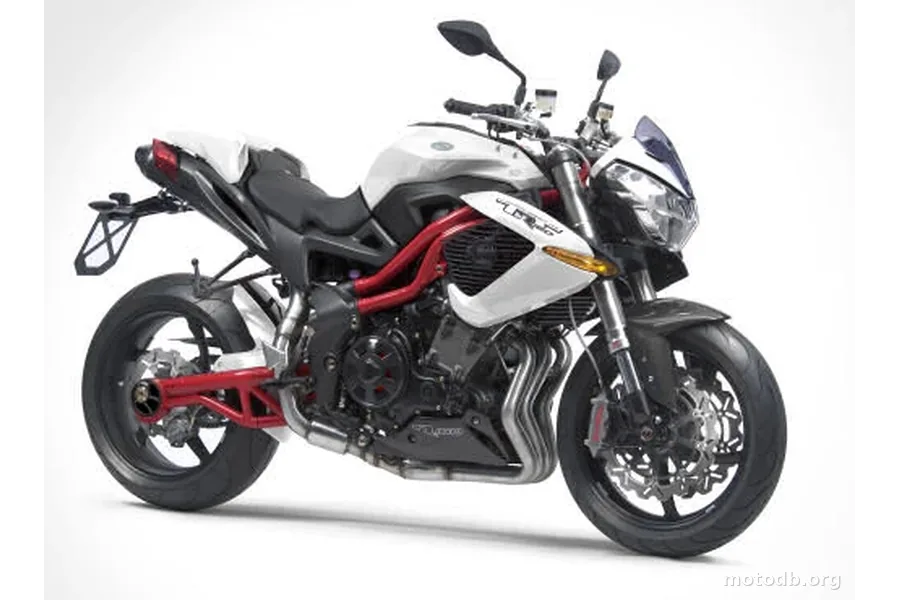
When Benelli decides to take the gloves off with its TNT, the result is anything but reasonable. The 1130 R 160 is not a simple cosmetic evolution: it's the Pesaro triple pushed to its absolute limit, 158 horsepower extracted from 1131 cc without touching the displacement, simply by wringing out every last compromise. Twenty more horsepower than the standard TNT, achieved at 10,200 rpm, with 119.6 Nm of torque arriving at 8,400 rpm. On paper, these figures place it squarely in the same league as the Ducati Streetfighter, an Italian rival that demands roughly the same disposable income and composure to be tamed.
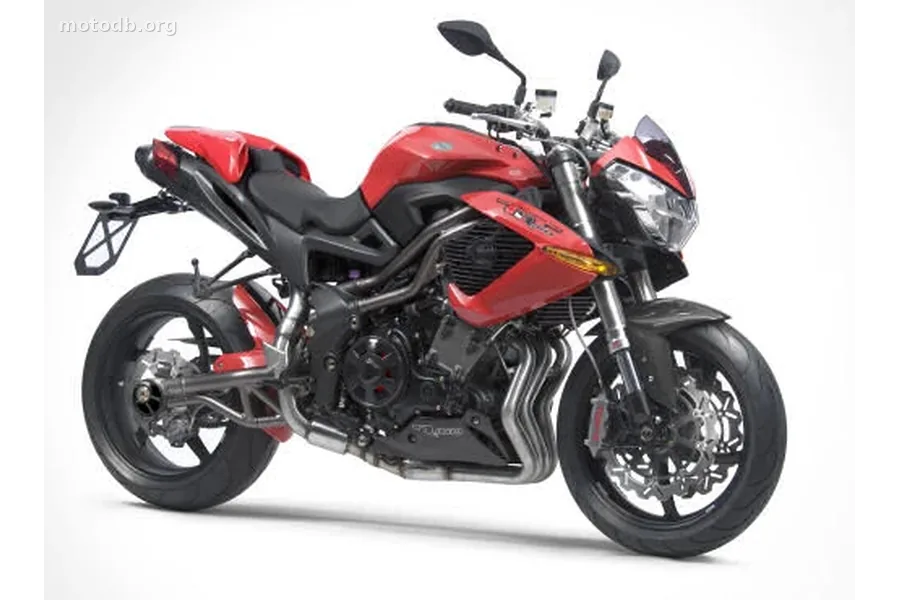
What strikes you first is the coherence of the project. Pesaro didn't slap on a red sticker and claim to have built a special edition. The machine wears red on every available surface, and the list of carbon fiber components sets the tone: the exhaust, the perforated alternator cover, the belly pan, the airbox side covers. Petal discs on both wheels complete a silhouette that needs little help looking aggressive. The TNT has always had that streetfighter face that doesn't try to please everyone, and the 1130 R owns that identity through and through.
The suspension deserves a closer look. The 50 mm Marzocchi inverted fork, anodized grey with 120 mm of travel, works in concert with a Sachs ZF rear shock offering the same travel. The tubular perimeter frame connected to aluminum plates retains a philosophy close to track machines, without sacrificing all versatility. Up front, two 320 mm petal discs gripped by four-piston radial calipers; at the rear, a 240 mm disc with a two-piston caliper. On 225 kg fully fueled, that's the bare minimum you'd want when trying to stop cleanly after brushing the claimed 250 km/h.
The 820 mm seat height positions this machine clearly. Riders of average build will find their bearings; shorter ones will have to make do with a 16-liter tank that already limits range. The six-speed gearbox driven by chain offers acceptable shifts, but it's the character of the triple that truly defines the experience. This engine has a sound all its own, somewhere between the brutality of a twin and the smoothness of a four-cylinder, and at €14,895, you have to commit to that identity in the face of German or Japanese rivals that sometimes offer more refinement for the same money.
The 2012 model year improves build quality over the earliest versions, which was necessary. Benelli long suffered from a reputation for approximate fit and finish that undermined otherwise technically solid motorcycles. The 1130 R 160 benefits from those corrections and gains overall coherence. It targets an experienced rider, likely already seasoned on other sporty roadsters, who wants something less common than an Aprilia Tuono or a Kawasaki Z1000. Scarcity is also a form of positioning. This Benelli will never be the most rational motorcycle in its segment, but rationality has never been its selling point.
Practical info
- La moto est accessible aux permis : A
Indicators & positioning
Similar bikes
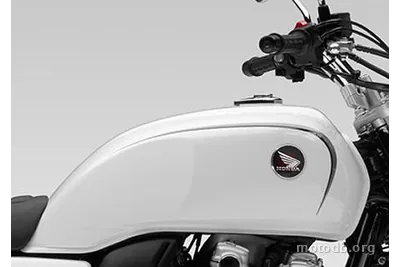
CB 1100 RS Swiss Limited Edition
Reviews & comments
No reviews yet. Be the first to share your opinion!