Key performance
Technical specifications
Engine
- Displacement
- 124 cc
- Power
- 15.0 ch @ 9000 tr/min (11.0 kW)
- Torque
- 12.3 Nm @ 8000 tr/min
- Engine type
- Monocylindre, 4 temps
- Cooling
- liquide
- Compression ratio
- 11.2 : 1
- Bore × stroke
- 52 x 58.6 mm
- Valves/cylinder
- 4
- Camshafts
- 1 ACT
- Fuel system
- Injection
Chassis
- Frame
- type Deltabox en acier
- Gearbox
- boîte à 6 rapports
- Final drive
- Chaîne
- Front suspension
- Fourche téléhydraulique Ø 33 mm, déb : 130 mm
- Rear suspension
- Mono-amortisseur, déb : 125 mm
Brakes
- Front brakes
- Freinage 1 disque Ø 292 mm, étrier 2 pistons
- Rear brakes
- Freinage 1 disque Ø 230 mm, étrier simple piston
- Front tyre
- 100/80-17
- Front tyre pressure
- 1.80 bar
- Rear tyre
- 130/70-17
- Rear tyre pressure
- 2.00 bar
Dimensions
- Seat height
- 818.00 mm
- Fuel capacity
- 13.80 L
- Weight
- 138.00 kg
- Dry weight
- 127.00 kg
- New price
- 4 429 €
Overview
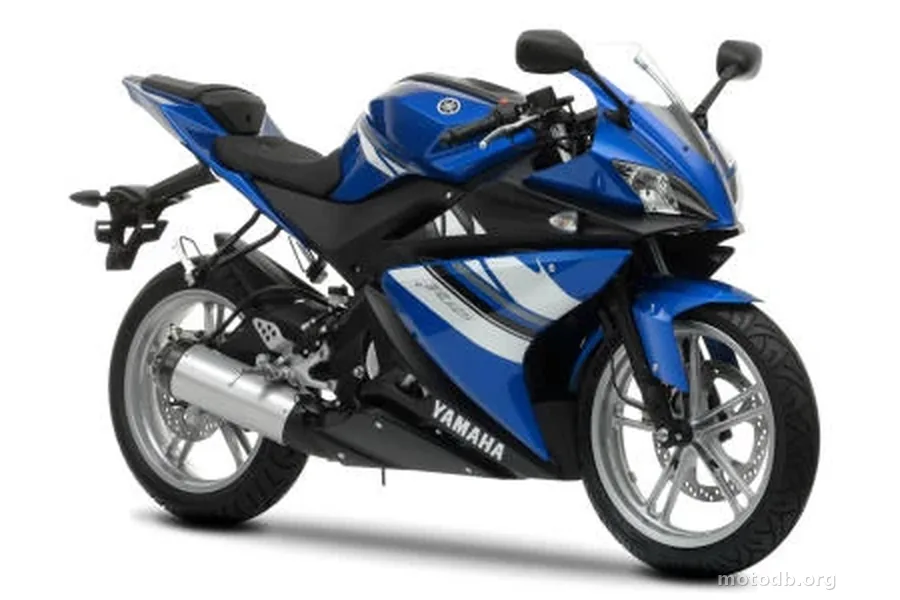
Do you remember your first real motorcycle passion? The one that made you dream in front of Rossi posters hanging in the garage, imagining the sound of a four-cylinder engine in the hell of Mugello. Yamaha, in 2009, cleverly packaged this dream for the younger or less experienced riders with this YZF-R 125 Team Race Replica. This is far from a simple sticker on a mundane fairing. Instead, it's a genuine livery in the colors of the Doctor’s M1, with the icy blue, the white, and even the logos of sponsors from the time like FIAT or Packard Bell. The discreet little number 46 above the left headlight is the stroke of genius that transforms this machine into an absolute object of desire for any fan.
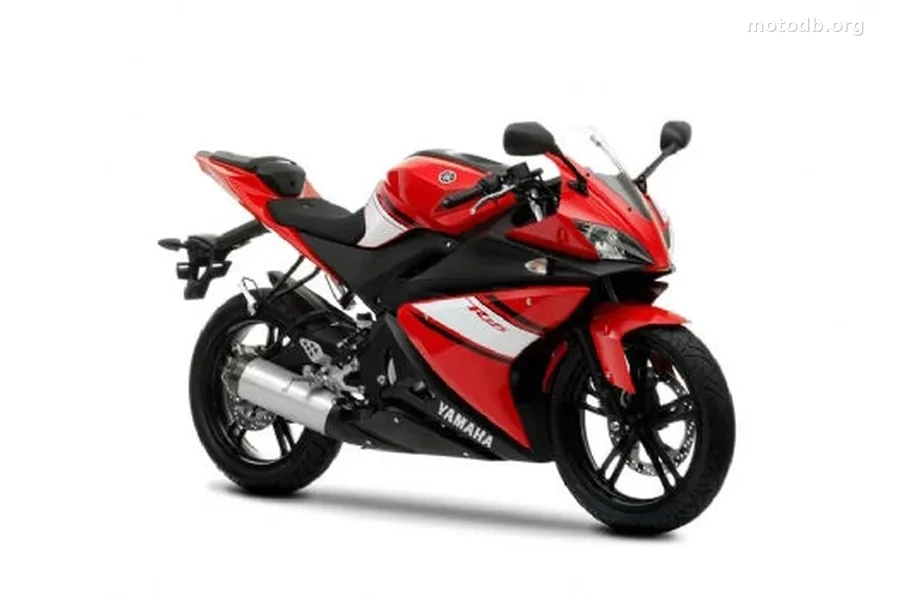
Underneath this hero disguise, you find the very serious base of the YZF-R 125, a sportbike that never joked around with the genre. Its 124 cc single-cylinder engine breathes through four valves to produce 15 horsepower, a respectable value that allows it to approach 124 km/h at top speed. The Deltabox steel frame, an aggressive geometry, and a 818 mm seat give it the posture of a real track bike. This is a machine that you learn, that you earn, not a scooter in disguise. The front braking system with a 292 mm disc bites well, and the 33 mm fork ensures precise guidance. At 138 kg fully fueled, it is lively, nervous, and demanding for a beginner. That's the whole point: it trains more than it transports.
Of course, at 4429 euros at the time, the entry ticket made people’s teeth grind. Nearly 4500 euros for a 125, even dressed up as a MotoGP bike, remains a significant budget. But Yamaha was playing on pure emotional fiber. For 230 euros more than the standard version, you bought a piece of a dream, the right to feel, for the duration of a ride, like the number 46 rider warming up his tires on the grid. It was a brilliant marketing argument, directly targeting the young public or the newcomer wanting to display their passion without compromise.
Compared to its competitors at the time, such as the Aprilia RS4 125 or the KTM RC 125, the Yamaha positioned itself as a more "racy" alternative in spirit, more faithful to the sporting heritage of the brand. It was not necessarily the most powerful or the most technologically advanced, but it was probably the most charismatic. Its flaw? This price justified almost solely by the decoration, and an engine sometimes a little tight in the city against faster two-strokes. Its quality? To have offered a genuine Grand Prix aesthetics, with the aura that goes with it, on a machine accessible with an A1 license.
Ultimately, this Replica wasn't a motorcycle, it was a Rossi poster on wheels. A stroke of genius to ignite hearts, make teenagers dream, and perhaps create lifelong brand loyalty. It proved that a 125 could be an intense object of desire, far beyond its simple technical specifications. A collector's item on two wheels, smelling of castor oil and the glory of the 2000s.
Practical info
- La moto est accessible aux permis : A
Reviews & comments
No reviews yet. Be the first to share your opinion!