Key performance
Technical specifications
Engine
- Displacement
- 889 cc
- Power
- 119.0 ch @ 10000 tr/min (87.5 kW)
- Torque
- 93.2 Nm @ 7000 tr/min
- Cooling
- liquide
- Compression ratio
- 11.5 : 1
- Bore × stroke
- 78 x 62.1 mm
- Valves/cylinder
- 4
- Camshafts
- 2 ACT
- Fuel system
- Injection
- Starter
- électrique
- Euro standard
- Euro 5+
Chassis
- Frame
- périmétrique en aluminium
- Gearbox
- boîte à 6 rapports
- Final drive
- Chaîne
- Front suspension
- Fourche téléhydraulique inversée Ø 41 mm, déb : 130 mm
- Rear suspension
- Mono-amortisseur, déb : 131 mm
Brakes
- Front brakes
- Freinage 2 disques Ø 298 mm, fixation radiale, étrier 4 pistons
- Rear brakes
- Freinage 1 disque Ø 245 mm, étrier simple piston
- Front tyre
- 120/70-17
- Front tyre pressure
- 2.50 bar
- Rear tyre
- 180/55-17
- Rear tyre pressure
- 2.90 bar
Dimensions
- Seat height
- 835.00 mm
- Seat type
- Selle biplaces
- Fuel capacity
- 14.00 L
- Weight
- 200.00 kg
- New price
- 13 199 €
Overview
After generating considerable excitement tinged with a good dose of nostalgia, the XSR 900 GP continues to stir the retro-sport spirit with a marked tribute to Kenny Roberts. "King" Kenny, the first American to win a GP, a legendary figure with 3 world titles to his name who raced for Yamaha for 13 years.
After being introduced to the market with Wayne Rayney’s colors, the sportbike is presented in 2026 with the magnificent "Legend Yellow" color scheme and its iconic "Speedblocks" – a design that the manufacturer likes to use during its celebrations, as seen on the Yamaha R1 60th, as well as the 50th anniversary model, and the large wave of models in the 2016 range (SR 400/XJR 1300/XSR 700/XSR 900/XJR 1300 Racer/YZ 450 F/YZ 250 F/XV 950 Racer).
"What did they do there?! They took a YZR 500, cut the lower fairing, and mixed it with an XSR until a hybrid, time-traveling creature emerged growling?!?" To a certain extent, yes, that's essentially what happened. The surprising XSR 900 GP brings back the 80-90s era of Yamaha Grand Prix bikes.
The feel! It’s another sportbike of a different caliber, with a very different temperament than an R1 or an R7 (what opposites!). At first glance, it looks like a Yard Built custom. With its vintage and racing face, almost without a headlight, the bike stands out before any explanation is needed. As if a fairing found at the bottom of a barn had fallen in love with a sleeping XSR 900 near the workshop. More aerodynamic, the XSR 900 GP would thus offer a better top speed.
The color choice continues to assault the retina. Again, Yamaha likes to delve into its past. After the XSR 900 in the style of a Gauloises packet, this machine has the colors of King Roberts or those with a Marlboro feel; with large yellow number plates. To preserve the prototype racing appearance as much as possible, its face hides a compact lens module between its teeth.
Beyond its design spanning half a century, the XSR 900 GP also pays other nods to machines from other eras. Its frame is not black but metal color (except on the Roberts model), as on all sportbikes with perimeter frames from the last century, before the YZF-R7 750 and YZF-R1 1000 brought black into fashion. The seat is thicker; because yes, a long time ago, the seat was comfortable on sportbikes. Also worth noting is the tubular fork brace that rests on the front of the tank; and Zeus-style fasteners to hold the body panels under the seat. Already present on the standard XSR 900, ideal for quick removal and completely useless for a road bike. However, the seat cowl will be more judiciously removed to reveal the entire seat and carry a passenger. The rear hoop has been reinforced here.
The past breathes fully with this XSR 900 GP, while the engine sweats its horsepower under completely current technology. The CP3 3-cylinder continues to deliver happiness to its users; it will do so here, with its generous torque, its 119 horsepower, and its 9.5 mkg of torque. A growl and a power that perfectly match this type of cafe racer. Like on the XSR 900 "roadster," the GP version features fully adjustable Kayaba suspension, SpinForged lightweight wheels, a Brembo radial master cylinder, an Up&Down shifter (but of the 3rd generation), five riding Modes (3 preprogrammed + 2 customisable), traction control, slip control, engine braking control, and wheelie control, an IMU influencing the riding aids, a cruise control, and cornering ABS. A good portion of what you find on a Superbike for sale.
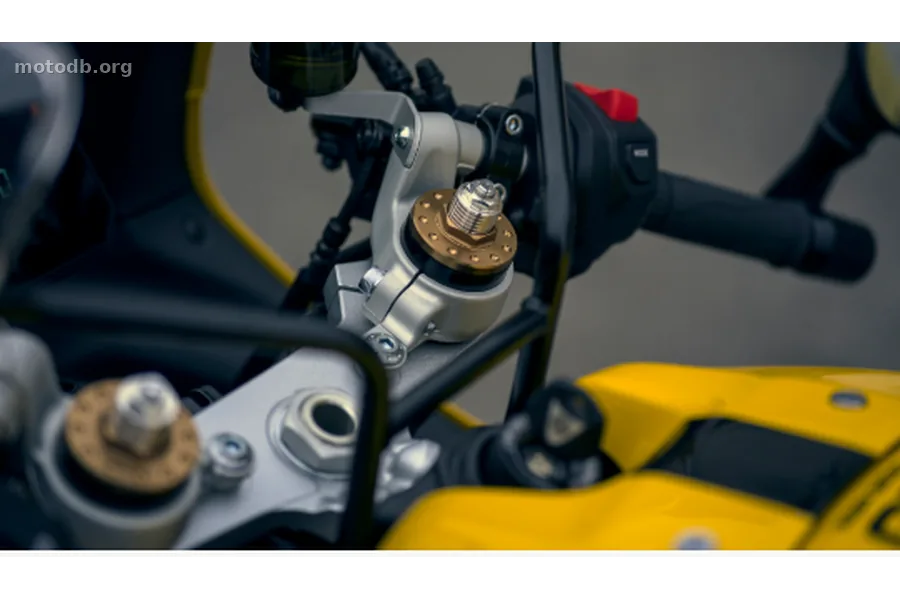
However, it takes care of its rider differently to plunge them into the action. Yamaha installs more recessed and height-adjustable aluminum footpegs and low-placed clip-on handlebars. Perfect for loading the front end, which really needs it given the engine’s power. Low but not too low, so as not to make the riding unlivable like on a radical racetrack bike. They are therefore anchored just above the fork tube. The riding promises great moments, especially since the XSR 900 GP is originally supplied with the new Bridgestone S23 tires. The Deltabox frame is unchanged but the elements surrounding it have been stiffened to support more weight on the front (the rider’s load) and offer more stability in corners. Notably, the XSR 900 GP is the only CP3 model equipped with an aluminum steering stem. The four-piston radial brake calipers benefit from optimized brake hoses.
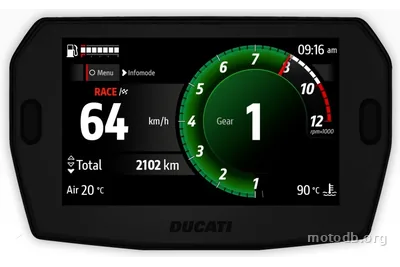
The cockpit also gains quality. The small color TFT screen gives way to a larger 5-inch model. This screen offers 4 display themes, including a sympathetic dial with a granular background tachometer. A USB-C port is present, as well as smartphone connectivity. Thanks to the MyRide app, it is possible to parameterize your own riding Modes from the (bulletproof?) phone. Also to see calls, listen to music and follow the integrated Garmin StreetCross turn-by-turn navigation system.
With all this, the GP inevitably increases in price. And in weight. Seven kilos more – a pichenette that the engine will quickly make you forget. It also introduces new switchgear and automatic activation of hazard lights (ESS) in the event of emergency braking.
Yamaha had warned us. A prototype named DB40 was shown at the Festival of Speed in Goodwood in mid-2023. Everything was already there, ready to roll. Only the exhaust and mirrors have changed to arrive at the production version. The previous XSR 900 had already had its sporty derivative when the Abarth version was released in 2017. The XSR family is steeped in nostalgia; sometimes beyond appearances. With this XSR GP, the manufacturer of Iwata (sort of) brings back the TRX 850 with today's technology.
M.B - Photos manufacturer
Standard equipment
- Assistance au freinage : ABS
- Nombre de mode de conduite : 5
- Taille de l'écran TFT couleur : 12,70 cm / 5 pouces
- Shifter
- Indicateur de vitesse engagée
- Régulateur de vitesse
- Bluetooth
- Prise USB
- Contrôle de traction
- Contrôle anti wheeling
- Jantes forgées
- Contrôle de glisse
- Embrayage anti-dribble
- Repose-pieds réglables
- Contrôle du frein moteur
Practical info
- Véhicule accessible au permis A2 ou bridable à 47.5ch / 35 Kw
- La moto est accessible aux permis : A, A2
Reviews & comments
No reviews yet. Be the first to share your opinion!