Key performance
Technical specifications
Engine
- Displacement
- 125 cc
- Power
- 15.0 ch @ 10000 tr/min (11.0 kW)
- Torque
- 11.5 Nm @ 8000 tr/min
- Engine type
- Monocylindre, 4 temps
- Cooling
- liquide
- Compression ratio
- 11.2 : 1
- Bore × stroke
- 52 x 58.6 mm
- Valves/cylinder
- 4
- Camshafts
- 1 ACT
- Fuel system
- Injection
- Starter
- électrique
- Euro standard
- Euro 5+
Chassis
- Frame
- type Deltabox en acier
- Gearbox
- boîte à 6 rapports
- Final drive
- Chaîne
- Front suspension
- Fourche téléhydraulique inversée Ø 37 mm, déb : 130 mm
- Rear suspension
- Mono-amortisseur, déb : 110 mm
Brakes
- Front brakes
- Freinage 1 disque Ø 267 mm, étrier 2 pistons
- Rear brakes
- Freinage 1 disque Ø 220 mm, étrier simple piston
- Front tyre
- 110/70-17
- Front tyre pressure
- 1.80 bar
- Rear tyre
- 140/70-17
- Rear tyre pressure
- 2.25 bar
Dimensions
- Seat height
- 815.00 mm
- Seat type
- Selle biplaces
- Fuel capacity
- 11.00 L
- Weight
- 140.00 kg
- New price
- 5 199 €
Overview
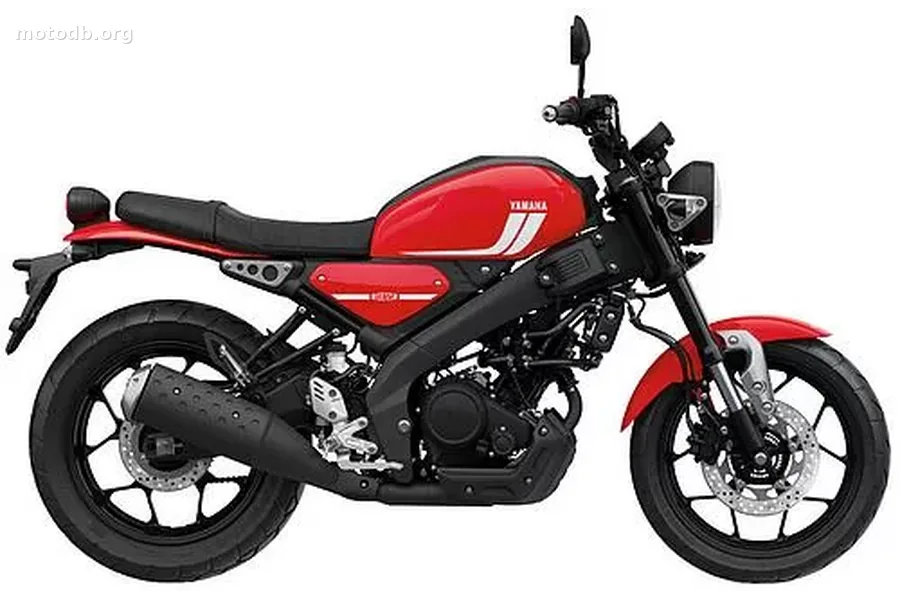
The youngest of the XSR models underwent Euro5+ updates in 2025, accompanied by new color schemes. This charming little machine (see the motorcycle review) intends to continue capitalizing on its appeal. With its XSR models, Yamaha introduced two new ideas to its range. First, the “Faster Sons” family, its nostalgico-authentic label for neo-retro models. Second, a glimpse of a gateway to customization, with the extravagant Yard Built as examples.
Unlike Kawasaki and its Z900 RS, Triumph and its Bonneville, or Suzuki with the Katana, Yamaha didn’t want a “revival,” letting the past have only an infusion of influence. At Iwata, they preferred inspiration rather than reinterpretation. This resulted in the XSR 700 for enthusiasts in the mid-range, and the XSR 900 for the more experienced. But what did we have in the small displacement category to experience the “Faster Son”? Nothing, until the arrival of this XSR 125.
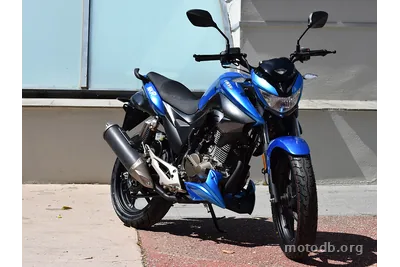
It’s working on its appearance, this mini-XSR. With its round (LED) headlights, simplified lines on the fuel tank, panels under the seat, and small perforated aluminum inserts, the transfer of attributes from the 900 is blatant to be flattering. The little one even recovered the boxes with a very questionable placement on the sides of the frame. It emphasizes the vintage side with a “Tuck & Roll” stepped seat, acidic or dark colors, and tires with large knobs giving it a touch of “city trail and urban beach.” Quite the opposite of an MT-125, which is much more angular and sharp. It’s difficult to establish a family resemblance – yet, the XSR is essentially based on the MT, as are the larger models.
To create it, Yamaha has therefore applied a specific bodywork to the youngest of the Masters of Torque. The motorcycle is thus composed of the same perimeter steel frame, as well as the same chassis assembly, swingarm, wheels and engine. With a few small differences less obvious than the design. An inverted fork for each model, but the XSR’s is less thick (37 mm instead of 41 mm). The handlebar is higher for a more relaxed riding position, the front tire is wider (+ 10 mm), the front brake disc is smaller (267 mm instead of 292 mm), and the machine weighs 2 kilos less. So, what engine do we have to push these 140 kilos? The large XSR has a 3-cylinder engine; the mid-size has a 2-cylinder engine; the 125 is equipped with a single-cylinder engine. A certain mechanical hierarchy has naturally emerged, along with the level of displacement and performance. The engine doesn’t have the age of the XS models whose Faster Sons echo, since it comes directly from the MT-125 and YZF-R 125. It is equipped with 4 valves, injection, liquid cooling, sends its 15 horsepower at 10,000 rpm and distinguishes itself from the competition by its variable VVA valve timing. It optimizes the position of the valves according to the engine speed to favor torque. Due to its displacement, there’s just a little over 1 mkg. But it is better distributed with the VVA.
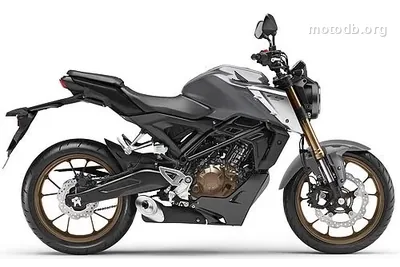
Temporal charm, presence, for a pose very different from that of manga motorcycles. The Yamaha XSR 125 also has aluminum supports for the front mudguard to stand out, a chrome badge with its name in the headlight and a round instrument panel with a digital display. Apparently minimalist but covering the essentials. You constantly have in view the engine speed, the speed, the gear engaged, the fuel level and the average consumption. This is a serious competitor to the Honda CB 125 R. Especially since the 1/8-liter range of Yam covers 3 favorites: sport - vindictive urban - vintage-style. This nod to Yamaha’s history directly targets the city and its classic-style pop culture.
M.B - Photos manufacturer
Standard equipment
- Assistance au freinage : ABS
- Indicateur de vitesse engagée
Practical info
- La moto est accessible aux permis : A, A1, A2
- Pays de fabrication : France
Reviews & comments
No reviews yet. Be the first to share your opinion!