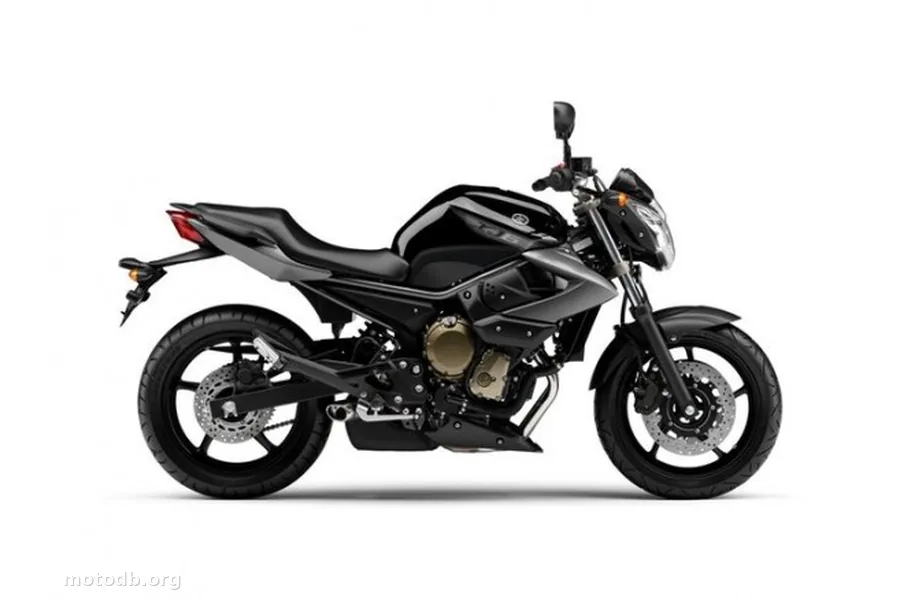
Key performance
Technical specifications
Engine
- Displacement
- 600 cc
- Power
- 78.0 ch @ 10000 tr/min (55.8 kW)
- Torque
- 59.7 Nm @ 6100 tr/min
- Engine type
- In-line four, four-stroke
- Cooling
- Liquid
- Compression ratio
- 12.2:1
- Bore × stroke
- 65.5 x 44.5 mm (2.6 x 1.8 inches)
- Valves/cylinder
- 4
- Camshafts
- 2 ACT
- Fuel system
- Injection
- Valve timing
- Double Overhead Cams/Twin Cam (DOHC)
- Lubrication
- Wet sump
- Ignition
- TCI
- Starter
- Electric
Chassis
- Frame
- Steel, diamond shaped
- Gearbox
- 6-speed
- Final drive
- Chain (final drive)
- Clutch
- Wet, multiple-disc
- Front suspension
- Telescopic fork
- Rear suspension
- Swingarm (monocross)
- Front wheel travel
- 130 mm (5.1 inches)
- Rear wheel travel
- 130 mm (5.1 inches)
Brakes
- Front brakes
- Double disc
- Rear brakes
- Single disc
- Front tyre
- 120/70-ZR17
- Front tyre pressure
- 2.25 bar
- Rear tyre
- 160/60-ZR17
- Rear tyre pressure
- 2.50 bar
Dimensions
- Seat height
- 785.00 mm
- Wheelbase
- 1440.00 mm
- Ground clearance
- 140.00 mm
- Length
- 2120.00 mm
- Width
- 770.00 mm
- Height
- 1085.00 mm
- Fuel capacity
- 17.30 L
- Weight
- 205.00 kg
- New price
- 5 999 €
Overview
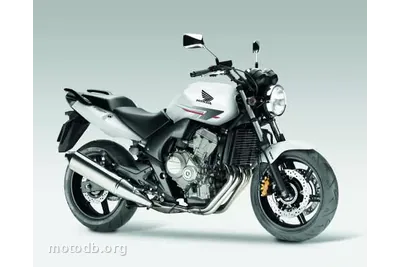
Is the return of a legend always good news? Yamaha resurrected the name XJ6 in 2009 after seven years of absence, and this return sparked as much nostalgia as skepticism. This is a motorcycle that wants to fill a very specific niche, that of an accessible and versatile naked bike, a segment where competition with the Honda CBF 600 or the Kawasaki ER-6n is fierce. The question was simple: could this new Yamaha XJ6 capture the spirit of the old XJs without simply being a modern clone?
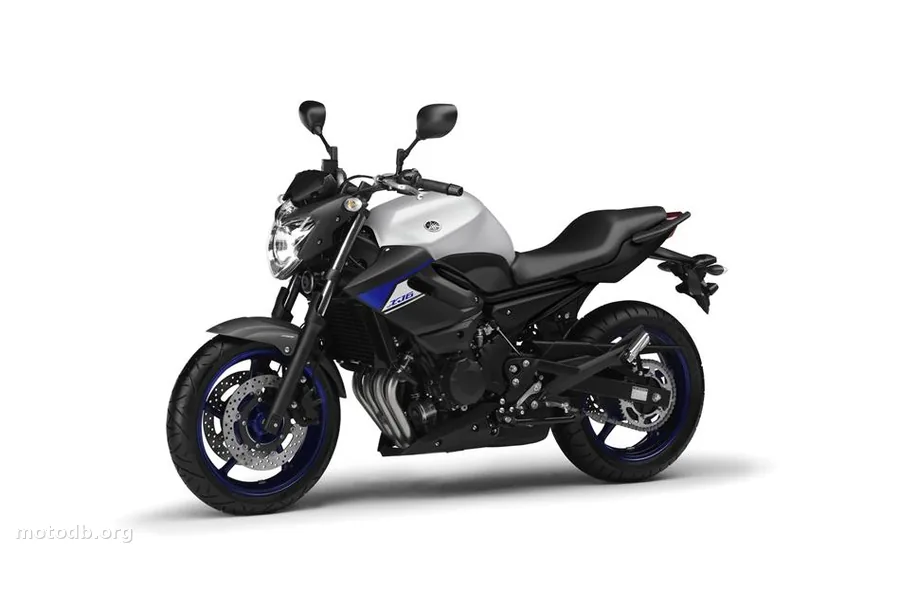
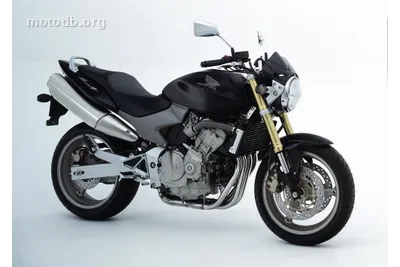
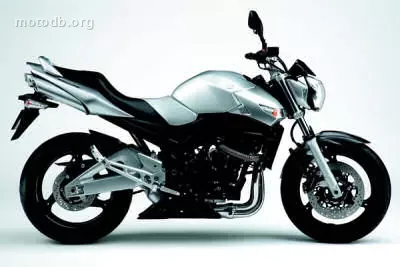
The design immediately stands out. Yamaha injected a dose of stylistic aggressiveness into a fundamentally utilitarian philosophy. The headlight inspired by the FZ1, the assertive fairings, and especially this streamlined rear, with the exhaust discreetly hidden under the engine, give it a more incisive stance than its rivals. It doesn't seek the extreme slenderness of the ER-6n nor the quiet classicism of the CBF. It presents itself as a muscular and serious machine, which is a risky bet for a motorcycle often destined for new riders. The visual aspect of the Yamaha XJ6 2010 is therefore its first argument, a way of saying that it is not just a tool.
Technically, it's a mix of innovation and pragmatism. The engine is the centerpiece. This 600 cc inline four-cylinder engine, derived from the FZ6 unit, has been deeply reworked for the XJ6 mission. Yamaha sought flexibility and availability rather than peak performance. The 78 horsepower at 10,000 rpm and the torque of 59.7 Nm at 6100 rpm speak of an engine that wants to be lively without being nervous, a considerable evolution compared to the 61 horsepower of the old two-valve XJ. It is a mechanical system that aims to be versatile, capable of responding in the city and on the road without requiring constant gear management. The diamond-type steel frame, the conventional fork, and the simple but effective braking (double disc at the front) confirm this approach. There is no high-performance chassis here, but a base designed for stability and ease. The wheelbase of 1440 mm and the seat at 785 mm contribute to a welcoming geometry.
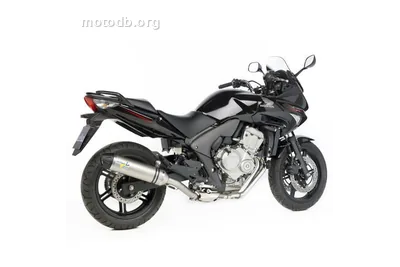
So, who is the rider of this Yamaha XJ6? It is clearly the motorcyclist in the learning or returning-to-practice phase, the one who is looking for an honest, reliable machine capable of doing everything without drama. The new price, around 6000 euros at launch, was a massive argument against the competition. It positioned itself as a visually more "substantial" alternative than the ER-6n, and more mechanically modern than the CBF. For those who found the naked too exposed, Yamaha offered the Diversion F version with fairing, but the naked XJ6 remained the heart of the concept.
Its potential flaw? Just this desire to be too sensible. In a market where even entry-level machines want to have character, the XJ6 could sometimes be perceived as a little too polished, its engine perhaps lacking the immediate punch of a twin-cylinder. But that is also its strength: it is predictable, easy to live with, and incredibly robust. It is a motorcycle that can be bought used with little risk, a reliable platform for years of miles. Tire pressure, maintenance, everything is simple. It doesn't promise you shivers with every acceleration, but it guarantees to always be there, ready for the daily commute or the Sunday ride. In short, the Yamaha XJ6 2010 is not an extraordinary motorcycle, but it is extraordinarily fair for what it promises: to be a solid motorcycle companion, without frills or surprises, in a trim that finally has style.
Standard equipment
- Assistance au freinage : ABS en option
Practical info
- La moto est accessible aux permis : A
Reviews & comments
No reviews yet. Be the first to share your opinion!