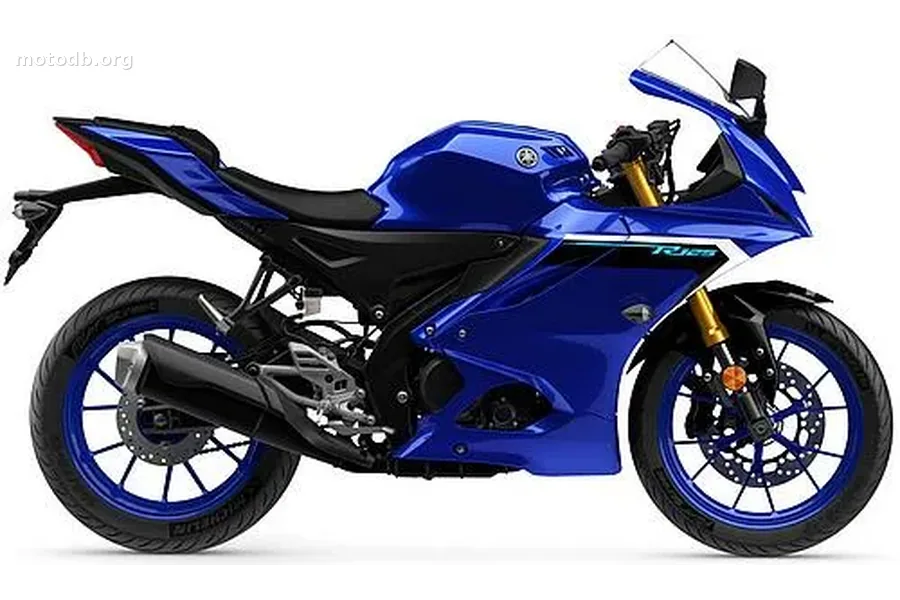
Key performance
Technical specifications
- Displacement
- 124 cc → 125 cc
- Power
- — → 15.0 ch @ 10000 tr/min (11.0 kW)
- Torque
- — → 11.4 Nm @ 8000 tr/min
- Engine type
- Single cylinder, four-stroke → Monocylindre, 4 temps
- Cooling
- Air → liquide
- Compression ratio
- 10.0:1 → 11.2 : 1
- Bore × stroke
- 54.0 x 54.0 mm (2.1 x 2.1 inches) → 52 x 58.6 mm
- Valves/cylinder
- 2 → 4
- Camshafts
- — → 1 ACT
- Fuel system
- Carburettor. Mikuni VM20 → Injection
- Valve timing
- Single Overhead Cams (SOHC) → —
- Ignition
- CDI → —
- Starter
- Electric → —
- Frame
- Steel, diamond-type. Aluminum box-section swingarm. → type Deltabox en acier
- Gearbox
- 5-speed → boîte à 6 rapports
- Final drive
- Chain (final drive) → Chaîne
- Clutch
- Multiplate wet clutch → —
- Front suspension
- 31mm Telescopic fork, adjustable preload → Fourche téléhydraulique inversée Ø 41 mm, déb : 130 mm
- Rear suspension
- Single shock, adjustable compression and rebound → Mono-amortisseur, déb : 110 mm
- Front wheel travel
- 180 mm (7.1 inches) → —
- Rear wheel travel
- 168 mm (6.6 inches) → —
- Front brakes
- Single disc → Freinage 1 disque Ø 292 mm, fixation radiale, étrier 2 pistons
- Rear brakes
- Expanding brake (drum brake) → Freinage 1 disque Ø 230 mm, étrier simple piston
- Front tyre
- 70/100-19 → 100/80-17
- Rear tyre
- 90/100-16 → 140/70-17
- Seat height
- 805.00 mm → 825.00 mm
- Wheelbase
- 1270.00 mm → —
- Ground clearance
- 295.00 mm → —
- Length
- 1885.00 mm → —
- Width
- 795.00 mm → —
- Height
- 1085.00 mm → —
- Fuel capacity
- 6.06 L → 11.00 L
- Weight
- 89.80 kg → 141.00 kg
- New price
- — → 5 700 €
Engine
- Displacement
- 125 cc
- Power
- 15.0 ch @ 10000 tr/min (11.0 kW)
- Torque
- 11.4 Nm @ 8000 tr/min
- Engine type
- Monocylindre, 4 temps
- Cooling
- liquide
- Compression ratio
- 11.2 : 1
- Bore × stroke
- 52 x 58.6 mm
- Valves/cylinder
- 4
- Camshafts
- 1 ACT
- Fuel system
- Injection
Chassis
- Frame
- type Deltabox en acier
- Gearbox
- boîte à 6 rapports
- Final drive
- Chaîne
- Front suspension
- Fourche téléhydraulique inversée Ø 41 mm, déb : 130 mm
- Rear suspension
- Mono-amortisseur, déb : 110 mm
Brakes
- Front brakes
- Freinage 1 disque Ø 292 mm, fixation radiale, étrier 2 pistons
- Rear brakes
- Freinage 1 disque Ø 230 mm, étrier simple piston
- Front tyre
- 100/80-17
- Rear tyre
- 140/70-17
Dimensions
- Seat height
- 825.00 mm
- Fuel capacity
- 11.00 L
- Weight
- 141.00 kg
- New price
- 5 700 €
Overview
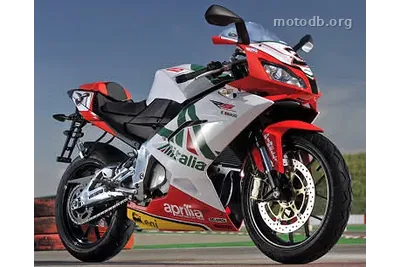
Who would have thought a 125 could one day come equipped with traction control, a 5-inch color TFT display, and pre-wiring for a quickshifter? The 2025 Yamaha R125 pushes the equipment bar so high you have to wonder if Iwata mixed up the spec sheet with that of a mid-displacement sportbike. This is the fourth generation of the little YZF which, since its birth in 2008, has never stopped mimicking its elder siblings. The Yamaha R125 YZF first won over A1 license holders with its track-ready looks. Today, it also wants to convince them with its electronic package. The price of that ambition: €5,700. That's steep for a 124.7 cc single-cylinder capped at 15 horsepower and a Yamaha R125 top speed of 125 km/h. Up against an Aprilia RS 125 or a KTM RC 125 playing in the same price bracket, Yamaha is banking on onboard technology to set itself apart.
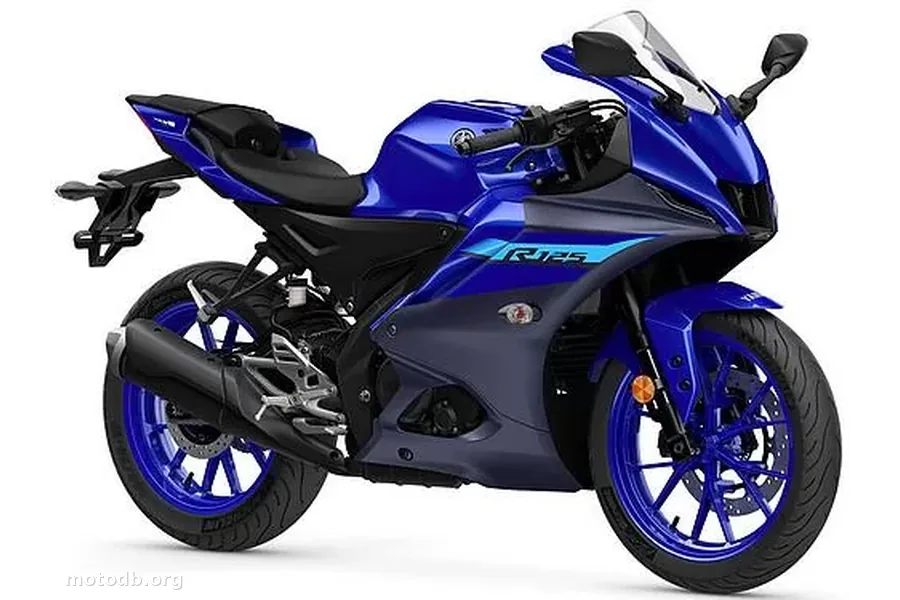
Style-wise, the 2025 Yamaha R125 has undergone a complete facelift. Only the wheels survive the generational changeover. Redesigned fairings with less angular lines, slimmed-down headlights reminiscent of the R7 rather than the late R6, a reworked tail section, and a reshaped 11-liter tank. The result is coherent and quite successful. You immediately recognize the DNA of the R family, which remains the main selling point for the target audience: young riders who dream of supersports before they have the license to ride a real one. The Yamaha R125 in black should continue to rank among the most popular colorways, true to the understated tradition of the range.
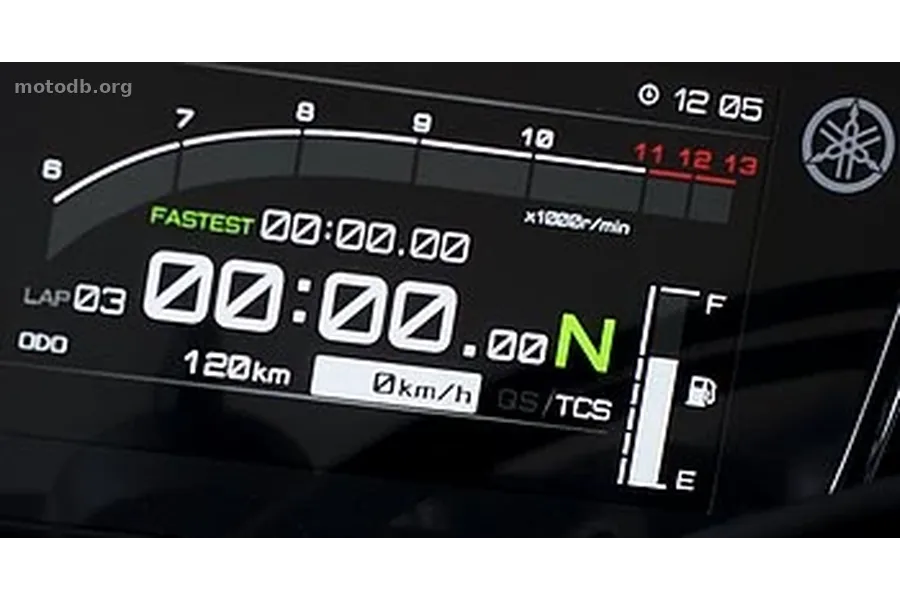
The dashboard deserves a closer look. The 5-inch TFT screen is actually larger than the R1's, which is not without irony. Connected via Bluetooth through the Yamaha app, it offers two display modes: a Street mode that's easy to read in daily use and a Track mode with a lap timer, configurable bar graph, and memory for 25 laps. For a machine designed to take its first laps at a riding school, it's a genuine educational asset. The switchgear is borrowed directly from the R1, giving the cockpit serious credibility. It's hard to find better-equipped machinery in the segment, whether you look at the Yamaha R125 2024, the Yamaha R125 2021, or even earlier generations like the Yamaha R125 2018 or the Yamaha R125 2019.
Let's talk mechanicals. The four-stroke single produces its 15 hp at 10,000 rpm and 11.4 Nm of torque at 8,000 rpm, delivered through a 6-speed gearbox and chain final drive. The VVA variable intake system remains one of the most refined on the market in this displacement class. The 11.2:1 compression ratio and four valves per cylinder reflect careful engineering. Let's be honest: traction control on 15 horsepower is more about marketing than necessity. Shod with Michelin Pilot Street tires in 100/80-17 and 140/70-17, the machine has virtually no chance of triggering the traction control under normal conditions. It's a gimmick, but a gimmick that reassures parents and looks good on the Yamaha R125 spec sheet.
The chassis, for its part, has nothing to be ashamed of. The Deltabox steel frame and 41 mm inverted fork do a clean job. Braking relies on a 292 mm front disc with a radial two-piston caliper and a 230 mm rear disc. The wheelbase, shortened by 30 mm compared to the previous generation, promises a gain in agility. The seat perched at 825 mm and the 141 kg wet weight place this sportbike in the middle of its class. A slipper clutch and aluminum swingarm round out a serious technical package. One small regret: the brake lever guard has disappeared, a detail that recalled competition and will be missed by purists. For those looking at a used Yamaha R125 or deciding between the Yamaha R125 2015, the Yamaha R125 2016, or this new iteration, the technological leap clearly justifies stepping up to the 2025 model. The competition has been warned.
Standard equipment
- Assistance au freinage : ABS
- Taille de l'écran TFT couleur : 12,70 cm / 5 pouces
- Indicateur de vitesse engagée
- Bluetooth
- Contrôle de traction
- Embrayage anti-dribble
Practical info
- La moto est accessible aux permis : A
Reviews & comments
No reviews yet. Be the first to share your opinion!