Key performance
Technical specifications
Engine
- Displacement
- 998 cc
- Power
- 143.0 ch @ 10000 tr/min (104.4 kW)
- Torque
- 106.0 Nm @ 7500 tr/min
- Engine type
- In-line four, four-stroke
- Cooling
- liquide
- Compression ratio
- 11.4:1
- Bore × stroke
- 74.0 x 58.0 mm (2.9 x 2.3 inches)
- Valves/cylinder
- 5
- Camshafts
- 2 ACT
- Fuel system
- Carburettor
Chassis
- Frame
- double berceau tubulaire en acier
- Gearbox
- 6-speed
- Final drive
- Chain (final drive)
- Front suspension
- fourche téléhydraulique Ø 43 mm, déb : 140 mm
- Rear suspension
- Mono-amortisseur, déb : 135 mm
Brakes
- Front brakes
- Dual disc
- Rear brakes
- Single disc
- Front tyre
- 120/70-ZR17
- Front tyre pressure
- 2.50 bar
- Rear tyre
- 180/55-ZR17
- Rear tyre pressure
- 2.70 bar
Dimensions
- Seat height
- 810.00 mm
- Wheelbase
- 1450.00 mm
- Fuel capacity
- 21.00 L
- Weight
- 236.00 kg
- Dry weight
- 208.00 kg
- New price
- 9 290 €
Overview
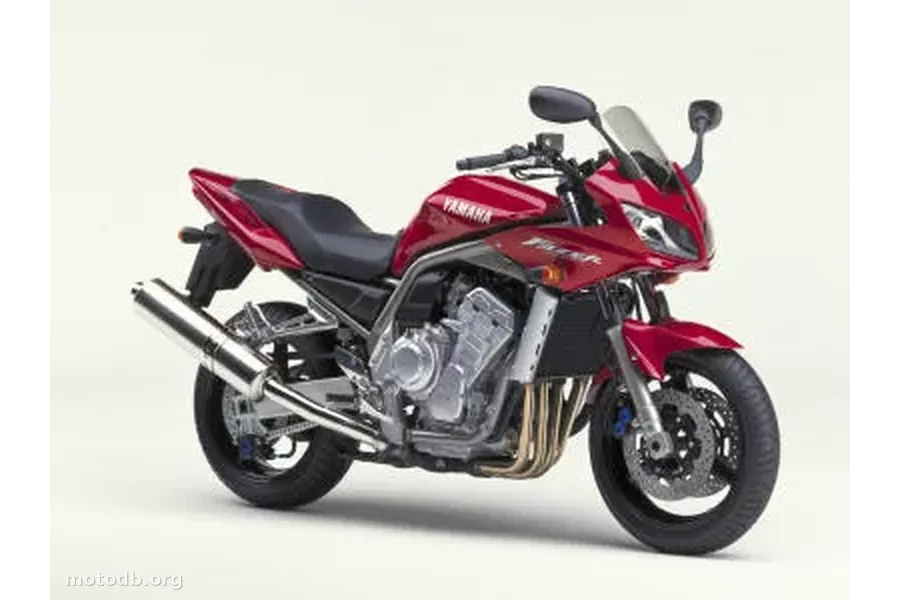
What do you get when you graft a R1's four-cylinder engine into a chassis built for daily riding? The Yamaha FZS 1000 Fazer, of course. Launched in 2001, this naked bike takes the recipe that made the 600 Fazer such a success — that ideal companion for the rider who wants to do everything on a single motorcycle — and pushes the displacement up to 998 cc. The gamble is straightforward: deliver the thrills of a big inline-four without forcing you into the tortured riding position of a fully faired sportbike. On paper, the Yamaha FZS 1000 Fazer's spec sheet is dizzying. On the road, the story is more nuanced, and that's precisely what makes it interesting.
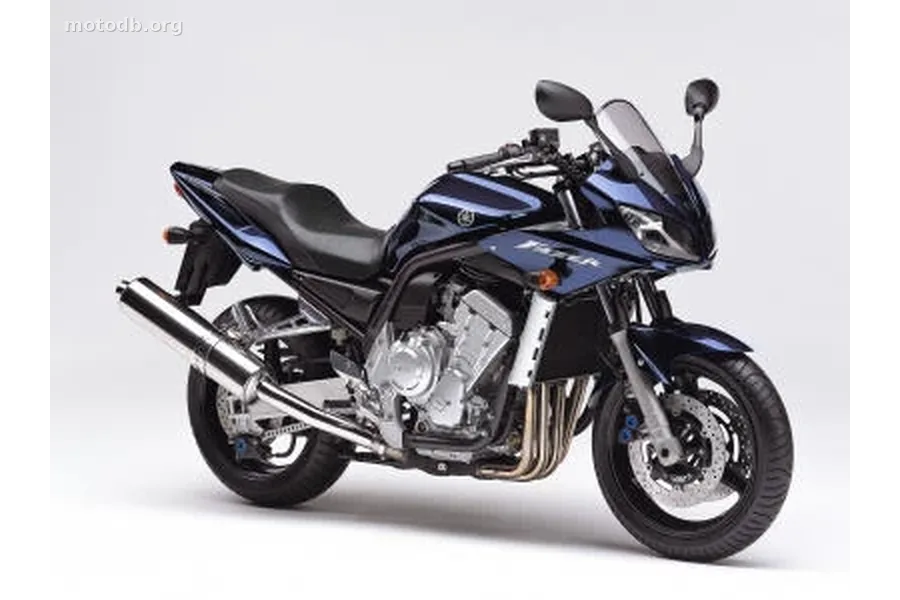
The engine, then. An inline four-cylinder inherited from the R1, extensively reworked to suit road use. Redesigned intake ports, adapted carburetors, a heavier crankshaft, modified clutch and transmission. The result: 143 hp at 10,000 rpm and, more importantly, 106 Nm of torque at 7,500 rpm. The figures are still hefty, but the power delivery has changed character entirely. Forget the brutality of the track weapon. Here, the horses build progressively, with a generous surge kicking in around 3,500 rpm and turning seriously muscular above 5,000. Fuel consumption on the Yamaha FZS 1000 Fazer remains reasonable for an engine of this displacement, provided you're not wringing every gear for all it's worth. The mechanicals radiate good health and prove perfectly usable on a daily basis, which is a radical shift compared to a pure sportbike.
On the chassis side, the tubular steel double-cradle frame handles the 236 kg wet weight with composure. The 43 mm hydraulic fork and rear monoshock, both adjustable, strike a solid compromise between comfort and precision. The Fazer turns with ease, threads through sequences of bends and inspires confidence in tight corners. The braking system, lifted straight from the R1 with its twin front discs, bites hard and offers excellent feel. The 1,450 mm wheelbase ensures reassuring stability at high speed, with the machine capable of reaching 260 km/h. For anyone considering buying a Yamaha FZS 1000 Fazer, this is a compelling advantage over rivals like the Bandit 1200 or the Honda CB1300: the dynamic handling is a cut above.
The riding position, slightly tilted forward, is perfectly suited to mixed-use commuting and touring. Seat height sits at 810 mm, with a 21-liter tank providing decent range. But it's not all sunshine. The seat, as it happens, proves firm over long distances. The windscreen is little more than a prop — cute, but about as protective as a paper partition. The tank is wide, splaying your thighs apart, and becomes uncomfortable after a few hundred kilometers. It's a recurring flaw of the FZS line, and Yamaha never truly addressed it, even on later model years like the Yamaha FZS 1000 Fazer 2002 or 2003. Maintenance on the Yamaha FZS 1000 Fazer is standard fare for a Japanese bike of this era, with a six-speed chain drive that demands regular attention. The battery on the Yamaha FZS 1000 Fazer also deserves particular care on aging examples. As for fit and finish, Yamaha clearly focused its budget on the engine and running gear. The rest feels a bit cobbled together in places.
Who is this motorcycle made for? The versatile rider who wants character without breaking the bank. Priced at 9,290 euros at launch, the FZS 1000 now trades at very affordable prices on the used market. Reviews of the Yamaha FZS 1000 Fazer converge on one point: it's an endearing machine, generous in thrills, with room for improvement in comfort. The Yamaha FZS 1000 Fazer GT version even attempted to address the shortcomings with panniers and better wind protection. Whether you're looking for a muscular tourer to devour miles or a punchy naked for weekend blasts, the Fazer 1000 remains a safe bet — as long as you accept its few rough edges.
Practical info
- La moto est accessible aux permis : A
Reviews & comments
No reviews yet. Be the first to share your opinion!