Key performance
Technical specifications
Engine
- Displacement
- 779 cc
- Power
- 106.0 ch @ 10000 tr/min (76.4 kW)
- Torque
- 82.0 Nm @ 8000 tr/min
- Engine type
- In-line four, four-stroke
- Cooling
- Liquid
- Compression ratio
- 12.0:1
- Bore × stroke
- 68.0 x 53.6 mm (2.7 x 2.1 inches)
- Valves/cylinder
- 4
- Camshafts
- 2 ACT
- Fuel system
- Injection
- Valve timing
- Double Overhead Cams/Twin Cam (DOHC)
- Ignition
- Digital TCI: Transistor Controlled Ignition with 32-bit ECU
- Starter
- Electric
Chassis
- Frame
- Cast aluminum frame and Controlled-Fill aluminum die-cast swingarm
- Gearbox
- 6-speed
- Final drive
- Chain (final drive)
- Front suspension
- Telescopic fork, adjustable compression and rebound, 5.1-in travel
- Rear suspension
- Single shock, adjustable preload and rebound damping, 5.1-in travel
- Front wheel travel
- 130 mm (5.1 inches)
- Rear wheel travel
- 130 mm (5.1 inches)
Brakes
- Front brakes
- Double disc. Hydraulic.
- Rear brakes
- Single disc
- Front tyre
- 120/70-ZR17
- Front tyre pressure
- 2.50 bar
- Rear tyre
- 180/55-ZR17
- Rear tyre pressure
- 2.90 bar
Dimensions
- Seat height
- 815.00 mm
- Wheelbase
- 1461.00 mm
- Ground clearance
- 140.00 mm
- Length
- 2141.00 mm
- Width
- 770.00 mm
- Height
- 1064.00 mm
- Fuel capacity
- 17.03 L
- Weight
- 211.80 kg
- New price
- 8 999 €
Overview
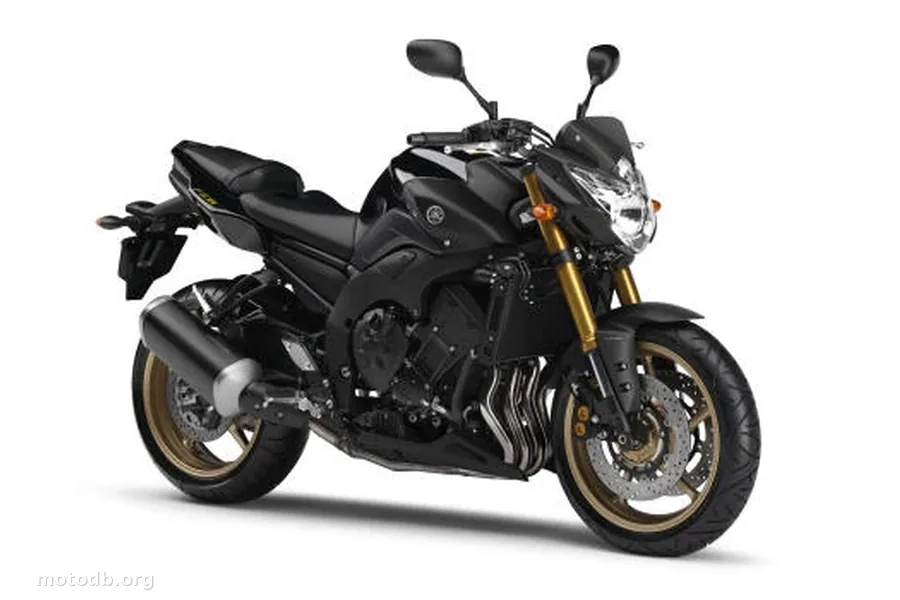
When Kawasaki draws the Z800 and Suzuki pushes its GSR750, the Yamaha FZ8 can hardly afford to sit idle. Not to mention the Street Triple, sharper and nearly 30 kg lighter. Facing this pack of challengers, Yamaha had to respond, and the 2013 model year finally delivers the fixes riders had been demanding since launch. The big change is the suspension. The 43 mm inverted fork now features compression and rebound adjustments on the right leg, and preload on the left. The rear shock swaps its original spring for a firmer unit, going from 78.4 to 83.4 N/m, with an accessible rebound adjuster knob. For a machine weighing 211 kg wet, this had become essential. The early versions, too soft, wallowed through fast corners like an ocean liner in heavy swell. On the styling front, Yamaha takes advantage of the update to fit a redesigned silencer. The unsightly canister gives way to a more compact, cleaner exhaust. No one will miss the old one.
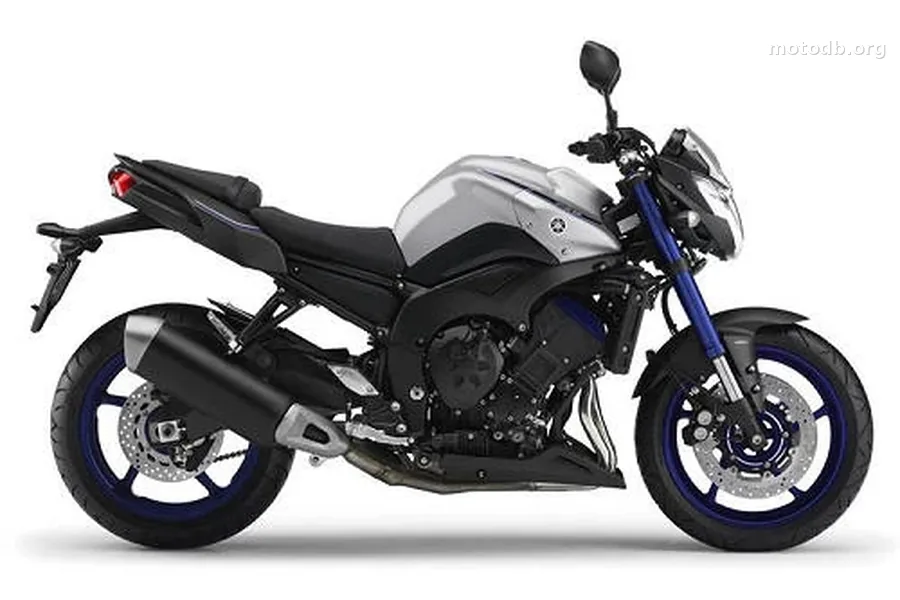
Beneath the diamond-type aluminum frame, the 779 cc inline four-cylinder produces 106 horsepower at 10,000 rpm and, more importantly, 82 Nm of torque from 8,000 rpm. This engine is a direct downsized version of the FZ1's 1,000 cc unit, itself a close relative of the R1's motor. The stroke remains identical at 53.6 mm, with only the bore reduced to 68 mm. This engineering choice prioritizes mid-range torque availability over the pursuit of peak power at the top of the rev range. Yamaha compensated for the absence of the EXUP system with intake funnels of different lengths: 125 mm for the outer cylinders, 150 mm for the inner ones. The interplay of pressure waves optimizes cylinder filling across all rev ranges. The result is a smooth, creamy engine in the mid-range that pulls hard out of corners without needing to wring the throttle. Compared to the older FZ6, the torque gains are substantial. The six-speed gearbox with final chain drive shifts without a hitch, even if the selection occasionally lacks precision on aggressive downshifts.
The Yamaha FZ8's spec sheet mirrors the FZ1's almost point for point. A wheelbase of 1,461 mm, a seat height of 815 mm, and a 17-liter tank allowing decent range despite fuel consumption of 6 liters per 100 km. The 120/70 front and 180/55 rear tires on 17-inch rims offer a solid compromise between grip and longevity. The Yamaha FZ8's tire pressures deserve regular attention to maintain predictable handling, especially at the rear which absorbs the engine's 82 Nm. Braking duties are handled by twin front discs with four-piston calipers and a single rear disc, delivering strong and progressive stopping power. The lack of radial-mount calipers goes unnoticed in road use. For those looking for Yamaha FZ8 parts or a top case mount, the aftermarket remains well stocked, including passenger grab handles and replacement batteries.
Then there's the question of positioning. The Yamaha FZ8's new price came in at 8,999 euros, placing it in the soft middle of the sport-naked market. On the used market, a 2010 or 2011 Yamaha FZ8 now trades at very reasonable prices, making it an attractive entry point. The Yamaha FZ8 Fazer, the faired version, adds welcome highway comfort for touring riders. The Yamaha FZ8 S and the Yamaha FZ8 SPR round out the range with varying levels of equipment. Note, however, that the FZ8 does not qualify for the A2 license: its 106 horsepower exceeds the limit, even when restricted. Yamaha eventually replaced it in that role with the MT-07, lighter and eligible for homologation. The FZ8's niche is the rider who wants a versatile naked bike, capable of eating up highway miles in the morning and carving through twisties in the afternoon, without draining the bank account. A solid, predictable, well-bred Japanese inline four. Not the most exciting of the bunch, but reliable as clockwork and pleasant for everyday riding.
Standard equipment
- Assistance au freinage : ABS de série
Practical info
- La moto est accessible aux permis : A
Indicators & positioning
Similar bikes
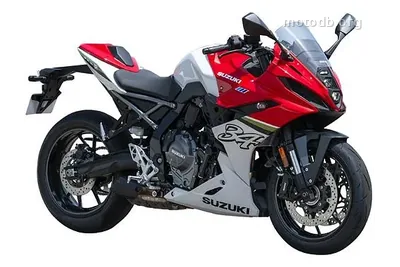
800 GSX-8R Legend Edition

Reviews & comments
No reviews yet. Be the first to share your opinion!