Key performance
Technical specifications
Engine
- Displacement
- 125 cc
- Power
- 14.5 ch (10.6 kW)
- Engine type
- Single cylinder, four-stroke
- Compression ratio
- 10.0:1
- Bore × stroke
- 54.0 x 54.0 mm (2.1 x 2.1 inches)
- Valves/cylinder
- 2
- Fuel system
- Carburettor. MIKUNI VM 20 SS
- Lubrication
- Mixture of gasoline and oil to 2%
Chassis
- Frame
- Perimetral chassis, steel.
- Gearbox
- 5-speed
- Front suspension
- Paioli
- Rear suspension
- Paioli
Brakes
- Front brakes
- Single disc
- Rear brakes
- Single disc
- Front tyre
- 90/90-21
- Rear tyre
- 120/80-18
Dimensions
- Wheelbase
- 1332.00 mm
- Length
- 2050.00 mm
- Width
- 800.00 mm
- Height
- 1170.00 mm
- Fuel capacity
- 8.40 L
Overview
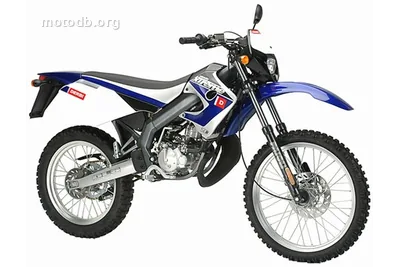
In 2005, the Rieju MRX 4T arrived on a 125 enduro market dominated by two-stroke engines. It was a gamble, a statement of intent for the Spanish brand: to prove that a single-cylinder four-stroke could hold its own in the dirt without needing to scream at 13,000 RPM. With its perfect square engine architecture, a bore and stroke of 54 mm, it aimed for something other than pure performance, a certain form of rustic efficiency.
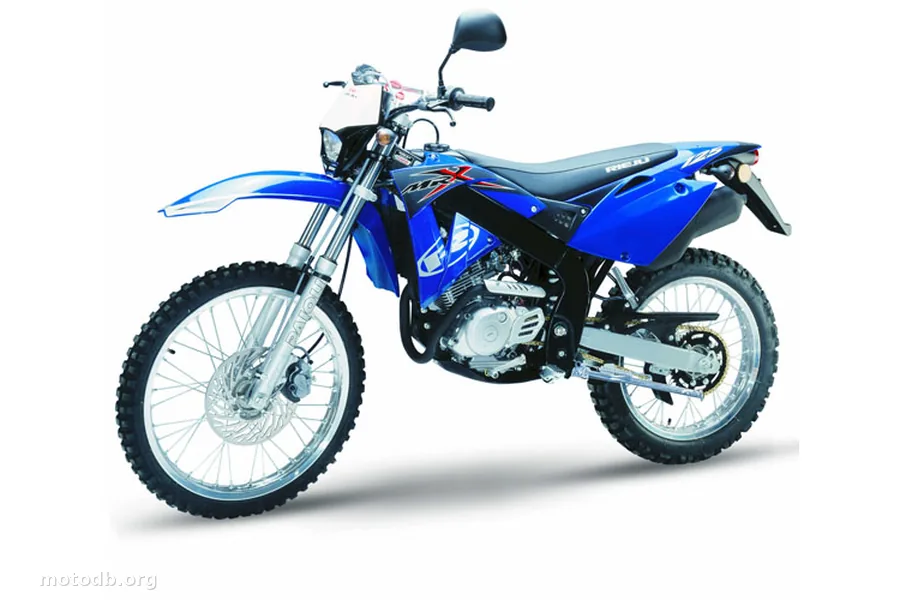
This 125 cm³ single-cylinder engine, fueled by a Mikuni VM 20 carburetor, won’t rip your arms off. The 14.5 horsepower are delivered with politeness that contrasts with the hysteria of the two-strokes of the time, such as the Yamaha WR125 or the KTM 125 EXC. The modest compression ratio of 10:1 and the two valves speak of an engine designed for regularity and tolerance, not for power-to-liter records. It is a mechanical system that prefers a tenacious rumble to a piercing cry, ideal for learning to pull at low RPM without stalling in the roots.
The perimeter steel frame and a wheelbase of 1332 mm offer reassuring stability on fast trails. Paioli suspension, a serious brand in the industry, provides honest work without claiming to rival the fine-tuning of high-end machines. The single disc brakes, front and rear, are perfectly suited to the dimensions and available power. With 90/90-21 tires at the front and 120/80-18 tires at the rear, it adopts the standards of the genre for predictable grip on all terrains.
The 8.4-liter fuel tank may seem modest, but it is consistent with the contained weight and natural frugality of a four-stroke engine of this displacement. This MRX was clearly not a machine for transcontinental raids, but rather for local outings, forest initiations, or technical hikes where its ease of handling became a major asset. Its five-speed gearbox allowed for juggling between steep trails and road sections to reach the riding spot.
The Rieju MRX 4T targeted a specific audience: the young rider looking for a first enduro machine less demanding to maintain than a two-stroke, or the leisure practitioner who prioritizes flexibility and robustness over a burst of power. It wasn’t looking to impress on the chronos, but to last. Today, it represents a sensible option on the used market for those who want to experience off-road without breaking the bank or spending their weekends disassembling a race engine. It is a lesson in mechanical simplicity in a world that is often too complex.

Reviews & comments
No reviews yet. Be the first to share your opinion!