Key performance
Technical specifications
Engine
- Displacement
- 249 cc
- Engine type
- Single cylinder, two-stroke
- Cooling
- Liquid
- Bore × stroke
- 66.4 x 72.0 mm (2.6 x 2.8 inches)
- Fuel system
- Carburettor
- Lubrication
- Mixture oil lubrication
- Ignition
- Contactless, controlled, fully electronic ignition system with digital ignition timing adjustment, type Kokusan
- Starter
- Electric
Chassis
- Frame
- Perimeter steel-aluminium composite frame.
- Gearbox
- 6-speed
- Final drive
- Chain (final drive)
- Clutch
- Wet, CSS multi-disc clutch, Formula hydraulics
- Front suspension
- WP upside-down Ø 43 mm
- Rear suspension
- WP PDS shock absorber
- Front wheel travel
- 250 mm (9.8 inches)
- Rear wheel travel
- 260 mm (10.2 inches)
Brakes
- Front brakes
- Single disc. Four-piston calipers. Radially mounted.
- Rear brakes
- Single disc. Two-piston calipers. Radially mounted.
- Front tyre
- 2.75-21
- Rear tyre
- 4.00-18
Dimensions
- Seat height
- 915.00 mm
- Wheelbase
- 1418.00 mm
- Ground clearance
- 380.00 mm
- Fuel capacity
- 7.00 L
- Dry weight
- 92.50 kg
Overview
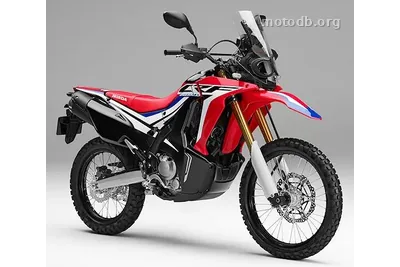
Motorcycle: KTM Freeride 250 R (2017)
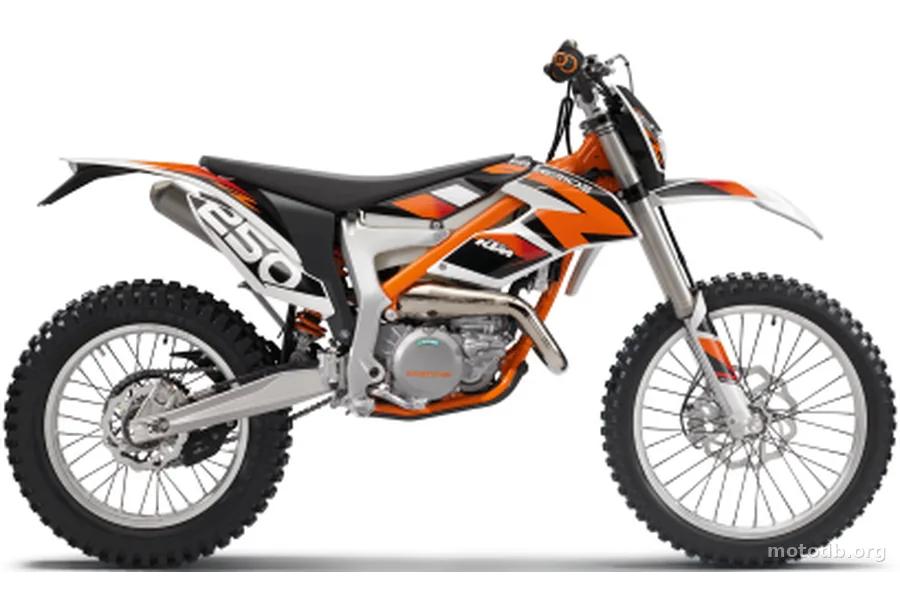
Hearing a two-stroke spit and sputter in the undergrowth is a religion in itself. KTM understood this better than anyone, and after declining the Freeride range with the 350 cc single-cylinder four-stroke, the Austrian brand logically succumbed to the allure of the two-stroke engine. The KTM Freeride 250 R responds to a specific demand: that of riders who want the sharp temperament of a two-stroke, but without the extreme aggression of a competition EXC. A deliberate compromise, which deserves closer examination.
The engine is the centerpiece of the operation. KTM started with the base of the 250 EXC, then thoroughly revised it. The exhaust valve is gone, as on a trial bike. The result: a more linear torque curve, a more robust engine, and a piston that lasts longer. The announced power of 25 hp for 18.4 kW may seem modest on paper, especially compared to a 250 EXC that unleashes its claws without warning. But that is precisely KTM's choice: to prioritize low-end response over high-end power. For varied off-road use, it is often much more effective than a peak power output that is difficult to manage. The KTM Freeride 250 R’s technical specifications further confirm this philosophy through every component.
The steel-aluminum composite frame, identical in philosophy to that of the Freeride 350, benefits from a decisive advantage thanks to the two-stroke’s compact format: ground clearance increased to 380 mm, 60 mm more than the four-stroke version. On broken terrain, in muddy ruts, or in trial-like passages, this difference is not cosmetic. The wheelbase of 1418 mm remains short, the 43 mm WP inverted fork absorbs shocks without being overwhelmed, and the PDS rear shock is finely adjustable for low- and high-speed compression. All this for only 92.5 kg dry weight, which places the KTM Freeride 250 R in a category of its own. A Beta Xtrainer 300 or a Sherco Trial may eventually boast comparable agility, but the standard equipment at KTM remains difficult to beat at this weight.
The seat height of 915 mm deserves special mention. It’s lower than a classic competition enduro, but it’s not a bike intended for short riders either. The target audience is clearly an experienced rider seeking a versatile machine, road-homologated thanks to specific restrictions, and capable of squeezing through where a trail bike has no business being. The 7-liter, transparent fuel tank to monitor the level at a glance, limits range on the track, but the Freeride is not a long-distance touring bike. The Maxxis Trial-Maxx tires, a mix of trial and enduro, perfectly complement this positioning: grippy on hard ground, they break loose better than a pure trial tire on greasy terrain, without excessively damaging the undergrowth.
At 6690 euros, the KTM Freeride 250 R’s opinion clearly leans towards enthusiasts who know what they are looking for. It’s not the cheapest bike in the segment, and unlocking the KTM Freeride 250 R for purely off-road use is a logical step for those who want to fully exploit the engine. Used models of these years, especially the KTM Freeride 250 R 2014 and later, are snapped up on specialist forums precisely because the machine has aged without losing its relevance. KTM has built something rare here: a two-stroke bike that doesn't seek to intimidate, but rewards technique and commitment. For a confirmed rider who wants to rediscover the sensations of another era in a modern chassis, it’s a difficult proposition to ignore.
Reviews & comments
No reviews yet. Be the first to share your opinion!