Key performance
Technical specifications
No spec differences between these two model years.
Engine
- Displacement
- 1133 cc
- Power
- 95.0 ch @ 8100 tr/min (69.9 kW)
- Torque
- 97.1 Nm @ 5600 tr/min
- Engine type
- Bicylindre en V à 60°, 4 temps
- Cooling
- liquide
- Compression ratio
- 10.7 : 1
- Bore × stroke
- 73.6 x 99 mm
- Valves/cylinder
- 4
- Camshafts
- 2 ACT
- Fuel system
- Injection Ø 60 mm
Chassis
- Frame
- cadre moulé en aluminium
- Gearbox
- boîte à 6 rapports
- Final drive
- Courroie
- Front suspension
- Fourche téléhydraulique Ø 41 mm, déb : 120 mm
- Rear suspension
- 2 amortisseurs latéraux, déb : 76 mm
Brakes
- Front brakes
- Freinage 1 disque Ø 298 mm, étrier 2 pistons
- Rear brakes
- Freinage 1 disque Ø 298 mm, étrier simple piston
- Front tyre
- 130/90-16
- Front tyre pressure
- 2.48 bar
- Rear tyre
- 150/80-16
- Rear tyre pressure
- 2.76 bar
Dimensions
- Seat height
- 649.00 mm
- Fuel capacity
- 12.50 L
- Weight
- 256.00 kg
- Dry weight
- 247.00 kg
- New price
- 15 490 €
Overview
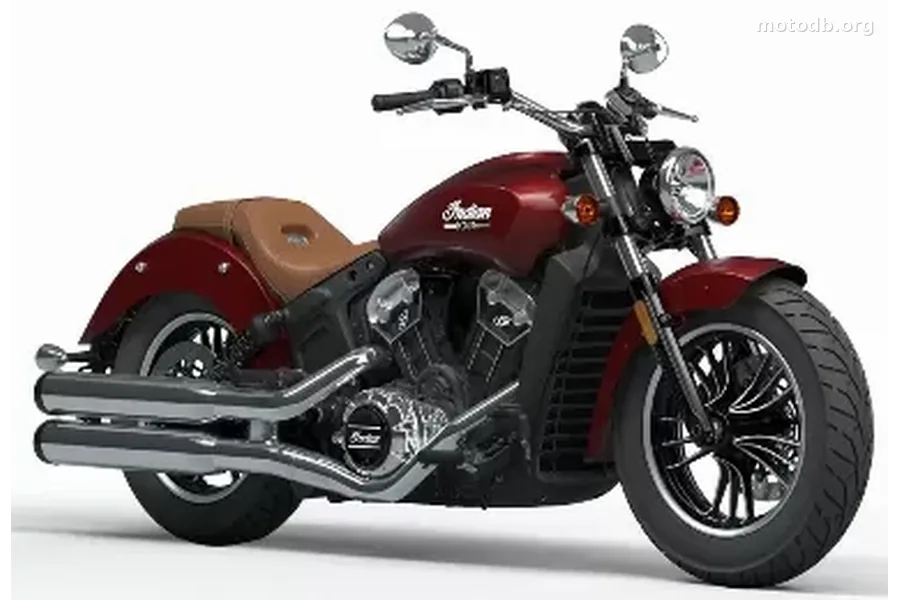
Each year, Indian introduces new color schemes and regular improvements. The last of these came in 2020, when the Scout received a new ignition lock, the Sport seat, passenger footrests, and improved braking: floating discs, a new master cylinder, and new calipers. In 2019, it was given a USB port, grafted near the speedometer. An almost indispensable feature today for powering GPS devices, smartphones, and other essential electronic gadgets.
In 2018, the Scout embraced sharing the ride. Passenger footrests and a passenger seat were installed as standard. An improvement to the chassis resulted in a new cartridge fork and Pirelli tire fitment. This continued the upward trend after the 2017 upgrade, when this Indian had already benefited from minor refinements appreciated in everyday use: revised rear shocks, better-integrated wiring to improve aesthetics, an improved steering lock, a set of covers for the swingarm axle, and revised exhaust systems for a better riding position. These small bonuses for this successful model and heir to Indian’s history. The Scout has also been available in A2 configuration since 2017; however, this required detuning the engine, which lost 6 horsepower. Penalizing? Little of the difference will be felt.
As the 20th century began to settle in, as the world experienced its first terrible war, and as the motorcycle industry thrived worldwide, Indian decided to invest in the mid-displacement market with what would become a huge success: the Scout.
Almost a century later, this model returns to the market. With conviction, style, and modernism. The Indian 1133 Scout, despite being the youngest in the lineup, is nonetheless the lightest, the most powerful, and the most surprising.
Regarding power? Let’s take a look... The Scout produces 95 horsepower, a good handful more than other models from the manufacturer. Yet, its twin-cylinder engine only displaces 1133 cm3 and risks looking pale in comparison to the large 1890 cm3 engines of the Chief, Springfield, Chieftain, and Roadmaster. Forget the numbers and look at this block. A ribbed, taut, modern piece, rather out of place for a nostalgic custom. V-twin, of course, appearing to have been laser-cut rather than forged in a Kansas foundry; no fins; a large radiator making no effort to hide. There’s no need to speculate: this engine is riddled with cooling fins. A first for Indian, another cultural shock. 15 years after Harley-Davidson, Indian also comes to liquid cooling for a production model. And 40 years after the Japanese adopted it...
The brand is thus seeking to appeal to a different segment of riders, with an engine halfway between a power-cruiser and a classic custom. Alongside its long, burly machines, the engine delivers 97 Nm of torque at 5,600 rpm. Fueled by a 60 mm injection system, it distributes power through a 6-speed gearbox. Equally (or perhaps more so), this block exudes a concern for finish: look at the recesses carved into the cylinder heads, like cavities in the skull of a cyborg; pay attention to the initials milled into it; feel the delicate milling of the metal. The beast wants to be beautiful.
Modern engine, chassis to match. The Scout is built on an aluminum frame fitted with a classic 41 mm fork and a pair of lateral rear shocks. With 130 and 150 tires, the tire fitment prioritizes agility over the muscular style of some productions. The braking appears light, with a 298 mm front brake disc pinched by a 2-piston caliper. The same diameter at the rear but the caliper is single-piston. The brand is not alarmed, specifying that the Scout, with only 247 kilograms dry weight, competes in the lightweight class. Hmm... Well, many American machines before it have met that challenge; and others will do so too. And then there’s ABS. It won’t increase power but will prevent crashes. The wheelbase is long at 1575 mm, the seat height is low (649 mm), the style is extended, and lean angles reach up to 31°. The pleasure it will provide seems to want to be shared only with the rider. The Scout originally features only one seat, and reserves a Havana aged leather saddle for it.
With its return, the Indian Scout adds to its CV the memory of its performances: the conquest of the "Wall of Death" in 1920, speed records with the famous Burt Monro in 1957, 1962, and 1967. The 1133 Scout is also a good splash of water thrown into the pool of competition. Especially considering the charm of originality and the pride of riding an Indian will largely tip the balance.
M.B - Photos and video from the manufacturer
* Note that the Scout is the close cousin of the former Victory 1200 Octane.
Standard equipment
- Assistance au freinage : ABS de série
- Prise USB
Practical info
- Véhicule accessible au permis A2 ou bridable à 47.5ch / 35 Kw
- La moto est accessible aux permis : A, A2
Indicators & positioning
Similar bikes
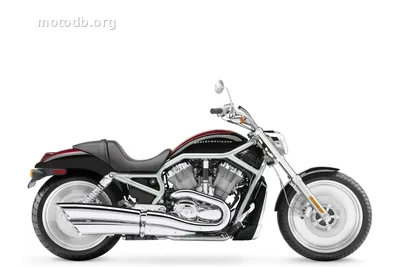
VRSCB V-Rod
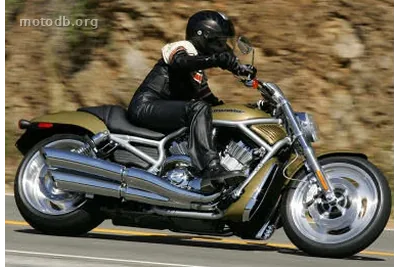
VRSCA V-Rod
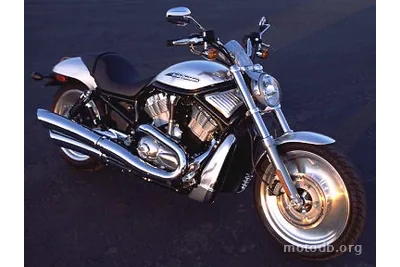
1131 V-ROD Black VRSCB
1130 STREET-ROD VRSCR
Reviews & comments
No reviews yet. Be the first to share your opinion!