Key performance
Technical specifications
Engine
- Displacement
- 1721 cc
- Power
- 71.0 ch @ 4500 tr/min (52.2 kW)
- Torque
- 135.3 Nm @ 2400 tr/min
- Engine type
- Bicylindre en V à 45°, 4 temps
- Cooling
- par air
- Compression ratio
- 9 : 1
- Bore × stroke
- 100,73 x 107.95 mm
- Valves/cylinder
- 2
- Fuel system
- Injection
Chassis
- Frame
- simple berceau tubulaire en acier
- Gearbox
- boîte à 6 rapports
- Final drive
- Courroie
- Front suspension
- Fourche téléhydraulique Ø 41 mm, déb : 108 mm
- Rear suspension
- Mono-amortisseur, déb : 73 mm
Brakes
- Front brakes
- Freinage 2 disques Ø 292 mm, étrier 4 pistons
- Rear brakes
- Freinage 1 disque Ø 292 mm, étrier 2 pistons
- Front tyre
- 130/90-16
- Rear tyre
- 150/80-16
Dimensions
- Seat height
- 708.00 mm
- Fuel capacity
- 21.00 L
- Dry weight
- 330.20 kg
- New price
- 30 000 €
Overview
When Indian resurfaced after decades of silence, many scoffed. The Springfield brand had preceded Harley-Davidson on American roads, before fading away in the 1950s, brought down by its own contradictions. The return of the Chief models in 2011 was therefore no minor event. It was a resurrection, with all the symbolism and expectation that word carries.
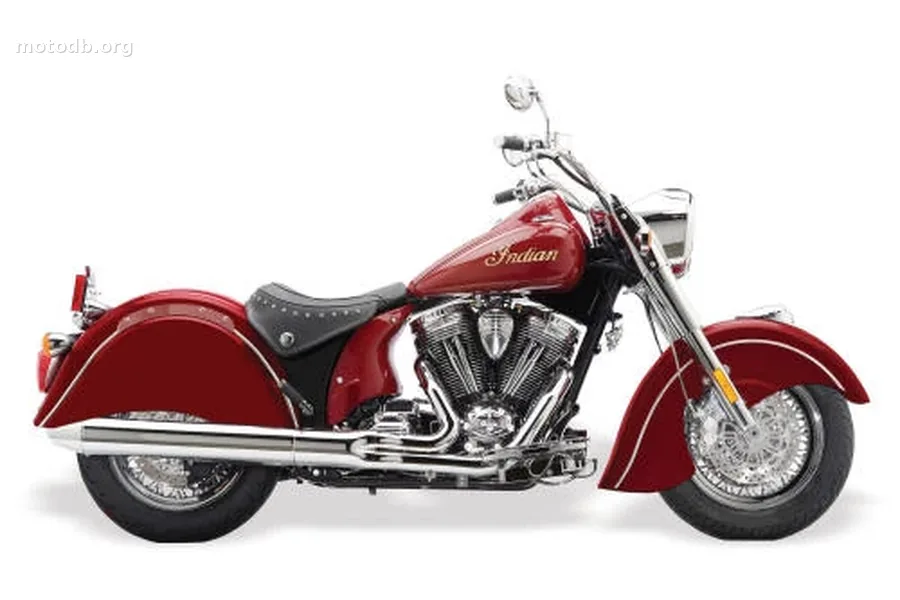
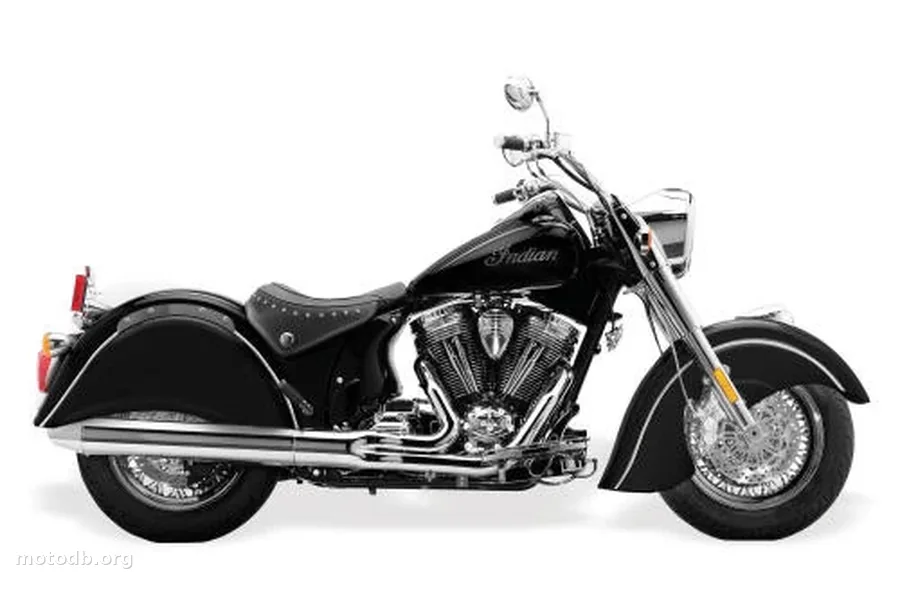
The Classic presents itself as the entry-level model in the Chief family, but that label is misleading. 330 kilograms on the scale, a seat height of 708 mm, a silhouette that stretches out without apology: nothing here does subtle. This is a custom in the fullest sense of the word, built to own the road rather than devour it. The rider settles in with a low riding position, arms reaching toward handlebars that invite complete relaxation. You're not chasing adrenaline here — you're cultivating presence.
The real spectacle is the 1720 cc 45-degree V-twin that sits enthroned between your legs. The Powerplus produces 71 horsepower at 4,500 rpm — a modest figure relative to the displacement — but that's missing the point entirely. The torque is what tells the story: a massive 135 Nm available from 2,400 rpm. The cooling fins, exposed pushrods, worked chrome: compared to this old-school sculpted powerplant, a modern liquid-cooled twin, regardless of manufacturer, feels functional and impersonal. The 6-speed gearbox transmits everything via belt drive, in relative quietness and with no maintenance constraints.
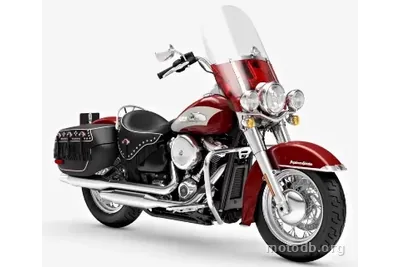
The direct competition is obviously Harley-Davidson. The Softail Deluxe and Heritage operate in the same price and styling waters, with careful finishing and an unmatched dealer network. Against them, Indian plays the rarity card and the rediscovered myth — which either resonates or leaves you cold, depending on your sensibilities. Technically, the two camps are roughly equivalent, with similar philosophies: air-cooled engine, steel tubular single-cradle frame, telescopic hydraulic forks up front, single rear shock, dual 292 mm disc brakes at the front. Nothing revolutionary.
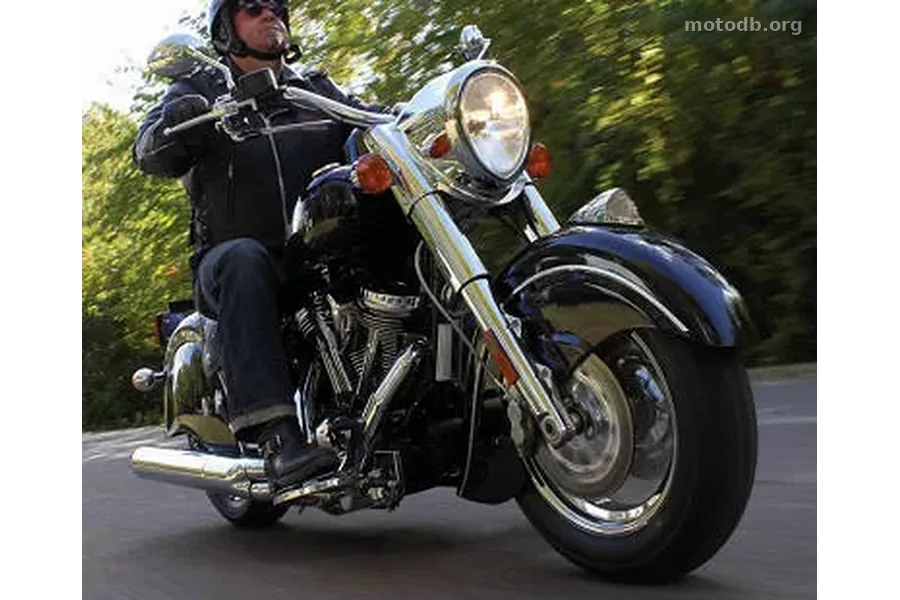
The sting comes when you open your wallet. Thirty thousand euros for the base version of the Chief lineup is a positioning that demands justification. The finish is good, the assembly serious, and the bodywork merits a closer look. But at that price, you're entitled to expect an extra level of care, particularly on the smaller components and detail finishing. The Chief Classic targets an audience of enthusiasts passionate about the brand's history, willing to pay the myth premium. For them, the question barely arises. For everyone else, some serious reflection is in order.
Practical info
- La moto est accessible aux permis : A
Reviews & comments
No reviews yet. Be the first to share your opinion!