Key performance
Technical specifications
Engine
- Displacement
- 650 cc
- Power
- 80.0 ch @ 9000 tr/min (58.8 kW)
- Torque
- 67.7 Nm @ 7500 tr/min
- Engine type
- Bicylindre en L à 90°, 4 temps
- Cooling
- liquide
- Compression ratio
- 11.4 : 1
- Bore × stroke
- 81.5 x 62 mm
- Valves/cylinder
- 4
- Camshafts
- 2 ACT
Chassis
- Frame
- treillis tubulaire en aluminium
- Gearbox
- boîte à 6 rapports
- Final drive
- Chaîne
- Front suspension
- Fourche téléhydraulique inversée Ø 41 mm, déb : 120 mm
- Rear suspension
- Mono-amortisseur, déb : 110 mm
Brakes
- Front brakes
- Freinage
- Rear brakes
- Freinage 1 disque
- Front tyre
- 120/60-17
- Rear tyre
- 160/60-17
Dimensions
- Fuel capacity
- 17.00 L
- Dry weight
- 180.00 kg
- New price
- 5 890 €
Overview
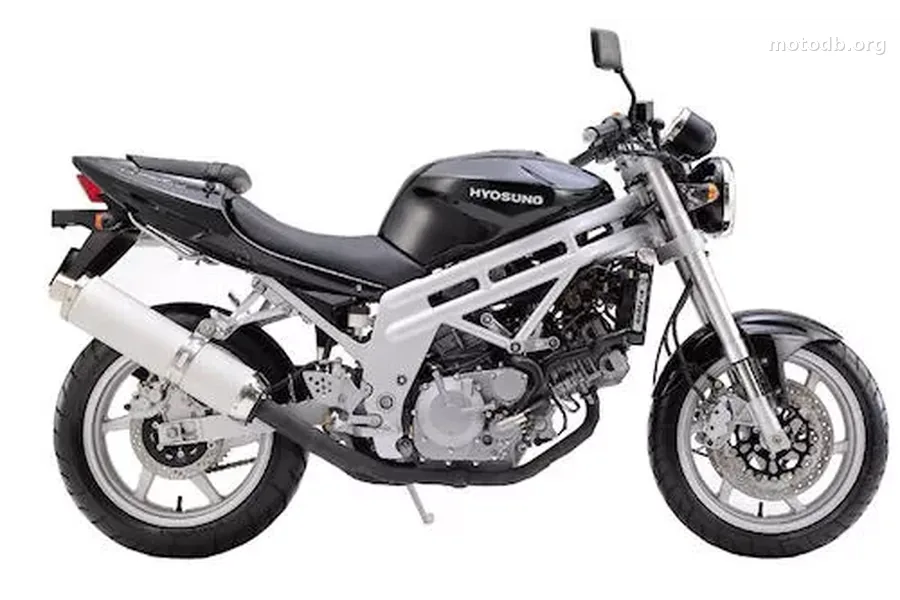
Cover the logo on the tank, retract the inverted fork, and ask any paddock passerby: nine out of ten will answer "Suzuki." Hyosung didn't try to reinvent the wheel when building its Comet 650. The 90-degree V-twin, the tubular trellis frame, the bare and muscular silhouette – everything strongly recalls the Hamamatsu SV 650. The lineage is assumed, almost claimed. The question is therefore not whether the Korean is original; she isn't, but whether she delivers on her promises compared to her model.
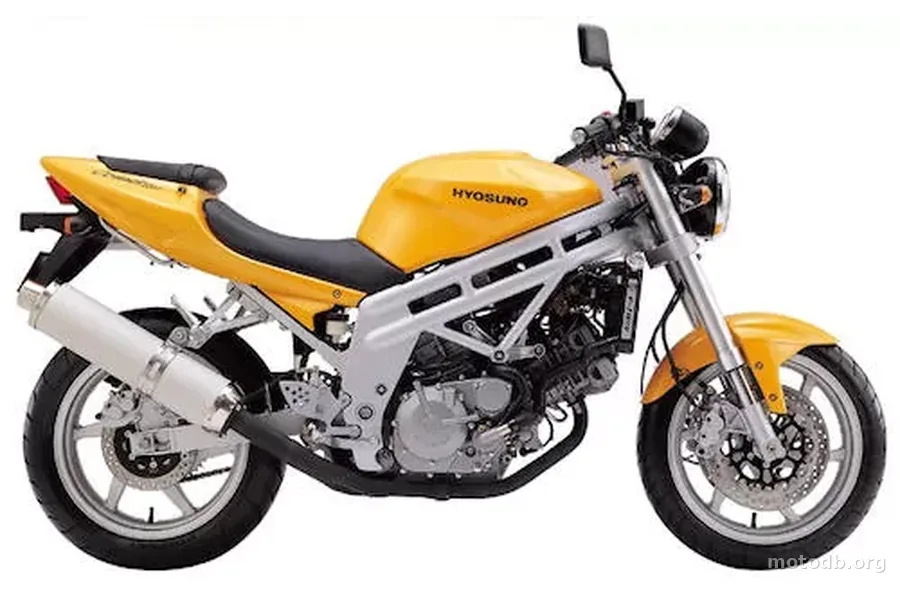
On paper, the technical argument holds up. The V-twin claims 80 horsepower at 9000 rpm and 67.7 Nm of torque at 7500 rpm, that's a dozen horses more than the early SVs. For 180 kg dry weight and a 17-liter tank, the power-to-weight ratio is honest. The front end plays in a higher category: 41 mm inverted fork, generous discs, Pirelli Diablo as original equipment. At the rear, the swingarm, on the other hand, seems a little thin for an engine that promises so much. The seat, lower than the SV's by about twenty millimeters, opens recruitment to less imposing builds, and the plunging position imposed by the handlebar is consistent with the roadster spirit.
The dashboard plunges twenty years back in time, to the era of the first Bandit: analog meters, a single trip meter, zero digital frippery. Some will cry regression, others will appreciate this straightforward readability, without information overload. The finish, however, does not invite severity: careful paint, clean assembly, nothing of the rushed work that is sometimes feared on an unknown brand. The Comet makes you want to believe in it.
Once in motion, reservations creep in. At low speed, the steering exhibits a penalizing heaviness in urban environments, where the SV remains light and playful. The 6-speed gearbox lacks the precise meshing of the Japanese one, with sometimes approximate shifts. The engine, on the other hand, deserves better than its reputation as an ersatz: less incisive than the Suzuki between 5500 and 6500 rpm, it genuinely wakes up afterwards and exceeds the promise of the announced 210 km/h with a nice regularity. In curves, the stability is surprisingly positive, better than the SV in sustained-paced sequences. The braking, powerful and progressive, also deserves a good point.
Remains the main unknown: reliability over time and the solidity of the network. Hyosung arrives in Europe without a history, without the trust accumulated by decades of service. This is its real deficit, not technical but cultural. And yet, at 5890 euros, that's 700 euros less than its direct inspiration, the Comet 650 poses an embarrassing question for Suzuki sellers. For a motorcyclist looking for a versatile and accessible roadster, capable of covering roads as well as animating a sporty weekend, the price argument is difficult to ignore. If the Korean brand confirms its reliability over time, this Comet could well cease to be an anecdote to become a serious option.
Practical info
- La moto est accessible aux permis : A
Indicators & positioning
Similar bikes
VERSYS 650 Special Edition TOURER
Versys 650 Special Edition
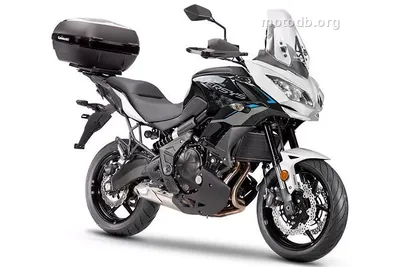
VERSYS 650 Mobility
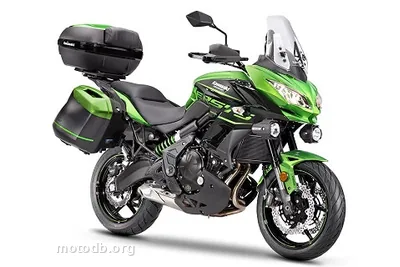
VERSYS 650 Special Edition GRAND TOURER
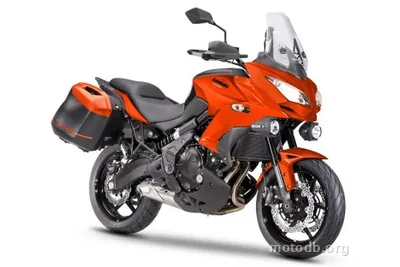
VERSYS 650 Special Edition TOURER Plus
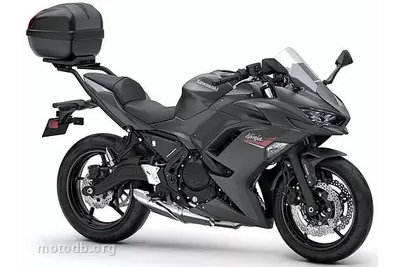
Reviews & comments
No reviews yet. Be the first to share your opinion!