Key performance
Technical specifications
Engine
- Displacement
- 125 cc
- Power
- 15.0 ch @ 10500 tr/min (11.0 kW)
- Torque
- 9.8 Nm @ 10000 tr/min
- Engine type
- Bicylindre en V à 75°, 4 temps
- Cooling
- combiné air / huile
- Bore × stroke
- 44 x 41 mm
- Valves/cylinder
- 4
- Camshafts
- 2 ACT
Chassis
- Frame
- double longeron en acier
- Gearbox
- boîte à 5 rapports
- Final drive
- Chaîne
- Front suspension
- Fourche téléhydraulique Ø 34 mm, déb : 130 mm
- Rear suspension
- Mono-amortisseur, déb : 100 mm
Brakes
- Front brakes
- Freinage
- Rear brakes
- Freinage 1 disque
- Front tyre
- 110/70-17
- Front tyre pressure
- 2.00 bar
- Rear tyre
- 150/70-17
- Rear tyre pressure
- 2.25 bar
Dimensions
- Fuel capacity
- 17.00 L
- Dry weight
- 150.00 kg
- New price
- 3 490 €
Overview
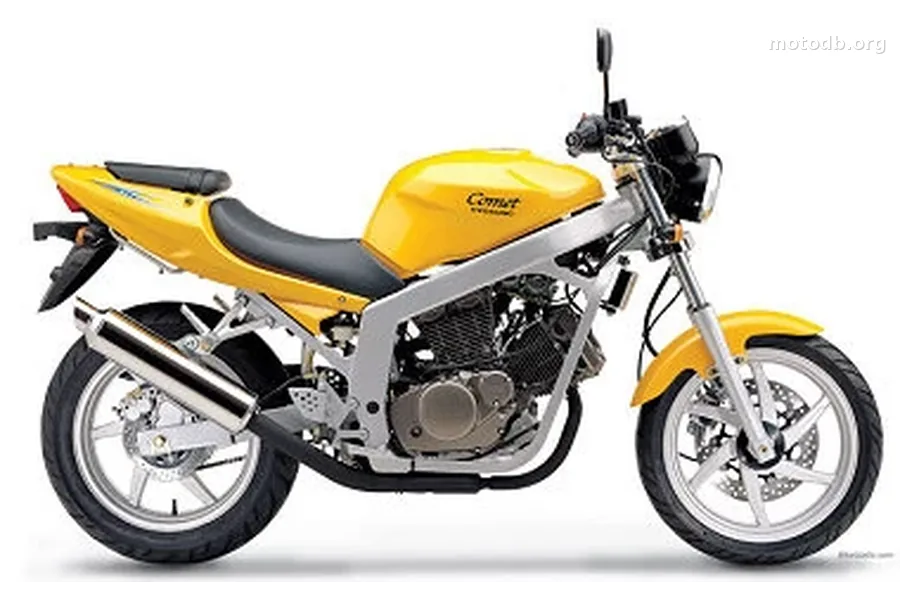
When Hyosung arrived on the European market with its Comet, many smiled. A Korean roadster with a V-twin engine had not been seen before. And yet, it was difficult to remain indifferent to a machine that, at first glance, clearly doesn’t look like a 125.
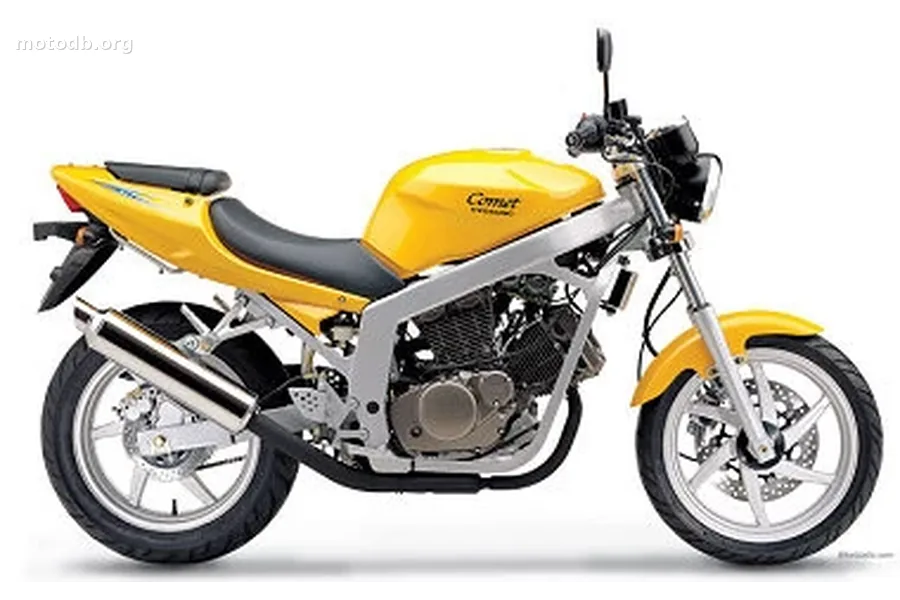
The Comet 125’s precise gamble was to play in the big leagues. Hyosung built this entry-level model on the same steel double-spar frame as the 250, and the resemblance to the 650 in the catalog is no coincidence. In 2004, the adoption of a larger diameter headlight further reinforced this impression of higher displacement. The result is a credible silhouette, with generous proportions — a 150/70-17 rear tire, a 17-liter tank — that sharply contrasts with the cheap plastics of many Asian competitors of the time.
Under the frame, the 75° V-twin of 124.70 cc, air and oil-cooled, develops 15 horsepower at 10,500 rpm for a torque of 9.80 Nm. The figures are honest on paper, but in practice, the engine reveals a real weakness below 7,000 rpm: it needs to be thoroughly warmed up before it consents to express itself. With 150 kg on the scale, this lack of vigor at the bottom of the rev range is felt. The 5-speed gearbox does the job, the top speed flirts with 120 km/h, but we remain in a register that requires anticipation rather than improvisation. The braking, on the other hand, is a real surprise: biting and progressive, it discredits many direct competitors in one fell swoop.
The flaws must be named frankly. The original rear tire lacks grip, a quick replacement is essential. The chrome, beautifully highlighted during sales, does not hold up well against humidity and ages poorly. Above all, the distribution network for spare parts was, at the time, a real source of frustration: the lead times could discourage even the most patient owners. This is the downside of a brand that was still building its logistics in Europe.
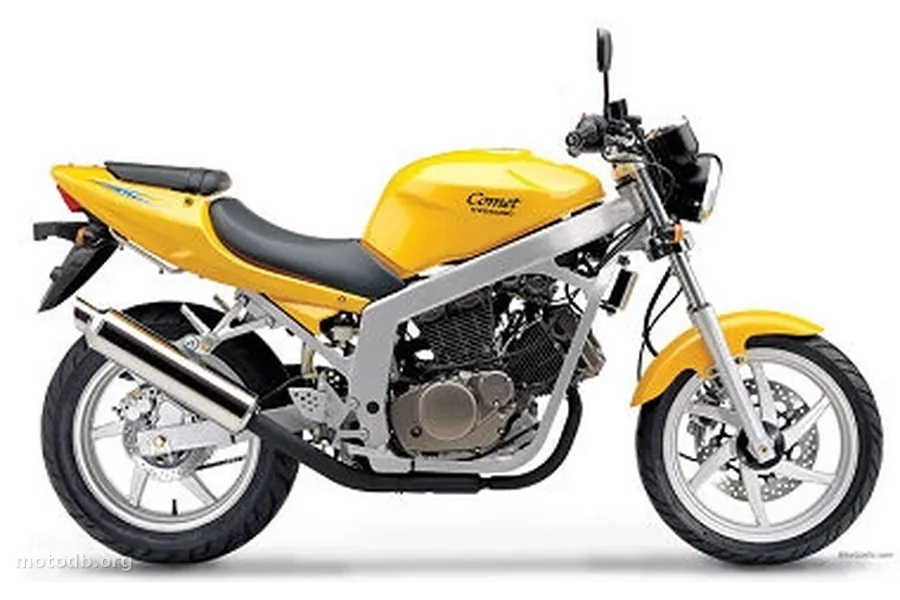
At €3,490, the Comet 125 targeted a young license audience attracted by the sporty look without going for a pure sportbike. It had what it took to visually seduce, and a sufficiently large tank for weekend outings. But between the weight, an engine that struggles to take everything with it, and uneven finish quality depending on the elements, it required a certain indulgence. For those who accepted this tacit contract, it offered a real presence on the road that the wiser Japanese 125s of the same era did not offer.
Practical info
- La moto est accessible aux permis : A
Reviews & comments
No reviews yet. Be the first to share your opinion!