Key performance
Technical specifications
Engine
- Displacement
- 125 cc
- Power
- 10.0 ch @ 8500 tr/min (7.3 kW)
- Engine type
- Single cylinder, two-stroke
- Cooling
- Liquid
- Compression ratio
- 15.5:1
- Bore × stroke
- 56.0 x 50.6 mm (2.2 x 2.0 inches)
- Valve timing
- Membrane & variable discharge openings
Chassis
- Gearbox
- 6-speed
- Final drive
- Chain (final drive)
Brakes
- Front brakes
- Single disc
- Rear brakes
- Expanding brake
- Front tyre
- 90/90-21
- Rear tyre
- 120/90-18
Dimensions
- Fuel capacity
- 8.00 L
- Weight
- 91.00 kg
Overview
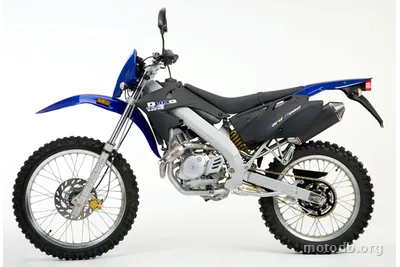
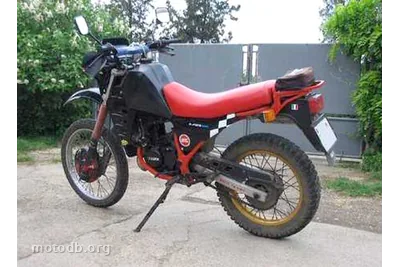
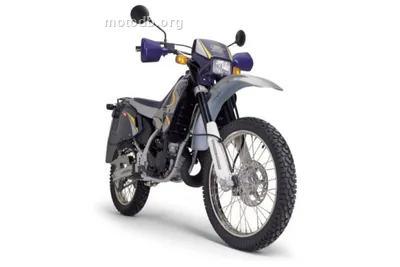
In the 1990s, small two-stroke enduros were ruthless training tools, and the 1992 Husqvarna 125 WR was the quintessential Swedish example. This motorcycle didn't lull you with illusions; it gave you a lesson in pure physics. With a 125 cc single-cylinder two-stroke engine and a claimed power output of 10 horsepower, it was nothing like a circus animal. You had to make it sing, keep it in the narrow zone where its liquid-cooled single cylinder delivered its meager potential. A compression ratio of 15.5:1 and bore and stroke dimensions typical of a bygone era spoke of an engine that demanded commitment, a kick, and perfect clutch control to extract speed. Its concise technical specifications listed the essentials: final chain transmission on a six-speed gearbox, a disc brake at the front and a drum brake at the rear, all for a wet weight of 91 kilograms. It was a lightweight, agile weapon designed to learn to ride before thinking about shining.
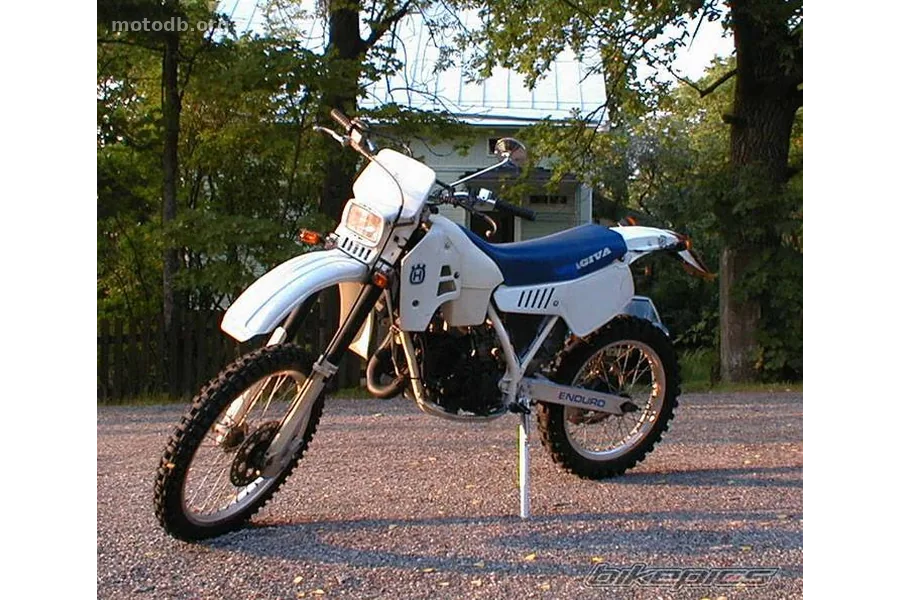
Its character was defined by this lack of compromise. Top speed, around 95 km/h, was not the point. The challenge was progression on trails, the ability to go everywhere thanks to its slender frame and generous tires, in 90/90-21 at the front and 120/90-18 at the rear. The 8-liter tank reminded you that sessions had to be short and intense, just like the motorcycle itself. You didn't get on a Husqvarna 125 WR to go for a leisurely ride; you got on it to toughen up. It was this pedagogy of challenge that forged its reputation and explains why, even today, enthusiasts are looking for opportunities or parts like a Husqvarna 125 WR kit déco, an original fairing, or a reliable ignition system to keep it alive. The search for a Husqvarna 125 WR cylinder or model-specific plastic kits from the 1999 or 2004 years is a testament to an attachment to an era when enduro was about raw sensations.
Compared to the Japanese machines of the time, often more docile, the Husqvarna had this European aura, a little rough, infinitely charismatic. It didn't make things easy, but it made every progress infinitely rewarding. Its longevity in production, with evolutions up to the 2005 models, proves that the formula found its audience. Some even tried the supermoto experience, transforming this thoroughbred of the trails into an urban machine, a conversion that required work but revealed the incredible potential of its chassis. Today, it is the darling of off-road collectors and nostalgic riders who want to rediscover the authentic taste of two-stroke power. Whether you are looking for a complete 1996 Husqvarna 125 WR or simply a replacement kick, you are diving into a chapter of green motorcycle history.
This Husqvarna 125 WR is for the purist, for those who see a motorcycle as a demanding learning tool or a collectible object to be restored with vintage parts. It is not a machine for timid beginners, but for the serious apprentice rider or the former rider who wants to reconnect with the fundamental sensations of riding. It reminds us, with a beautiful intransigence, that pleasure often lies in simplicity and effort. Riding a 125 WR means accepting the raw dialogue with the mechanics, and it is precisely in this dialogue that its soul resides.

Reviews & comments
No reviews yet. Be the first to share your opinion!