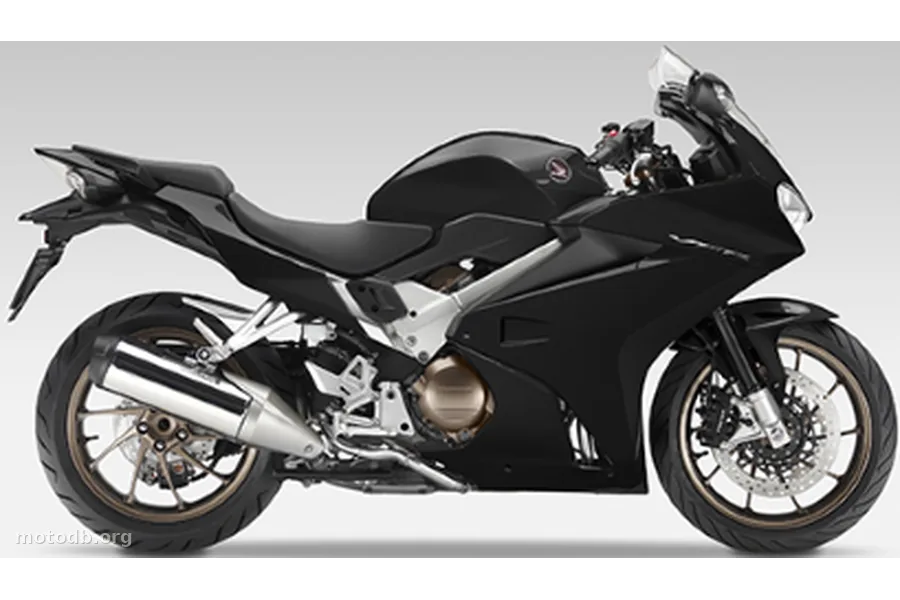
Key performance
Technical specifications
Engine
- Displacement
- 781 cc
- Power
- 106.0 ch @ 10500 tr/min (78.0 kW)
- Torque
- 78.5 Nm @ 8500 tr/min
- Engine type
- 4 cylindres en L à 90°, 4 temps
- Cooling
- liquide
- Compression ratio
- 11.6:1
- Bore × stroke
- 72 x 48 mm
- Valves/cylinder
- 4
- Camshafts
- 2 ACT
- Fuel system
- Injection PGM-FI
Chassis
- Frame
- double poutre en aluminium
- Gearbox
- boîte à 6 rapports
- Final drive
- Chaîne
- Front suspension
- Fourche téléhydraulique Ø 43 mm, déb : 109 mm
- Rear suspension
- Monobras oscillant Pro-Arm monoamortisseur, déb : 120 mm
Brakes
- Front brakes
- Freinage 2 disques Ø 296 mm, étrier 3 pistons
- Rear brakes
- Freinage 1 disque Ø 256 mm, étrier 3 pistons
- Front tyre
- 120/70-17
- Front tyre pressure
- 2.50 bar
- Rear tyre
- 180/55-17
- Rear tyre pressure
- 2.90 bar
Dimensions
- Seat height
- 805.00 mm
- Fuel capacity
- 22.00 L
- Weight
- 249.00 kg
- Dry weight
- 218.00 kg
- New price
- 12 490 €
Overview
First of all, it is necessary to recall this: Since its launch in 1986, the VFR evolves every 4 years, gently, confidently, always raising its level of perfection but never abruptly changing the public's expectations. And then, in 2002, it was a shock: a very angular design, more aggressive, the cascade of gears disappears, and a V-Tec whose effects are only moderately convincing. 4 years later, for 2006, we expected a new VFR - here it is. But this time, the shock is quite different: what has changed?
Visually, one wonders. Because apart from the white turn signal lenses, a gradually tinted bubble and the plate between the headlights that has changed color, the latest generation VFR is strictly the same as the previous version (we could make the same criticism for the new R1, except that here, the stylists had 4 years to work on it...). Apparently, Honda has not made much use of its design department. No changes to note either for the chassis. Indeed, there was no need. With its "Pivotless" aluminum frame, its dual-CBS braking system and its suspension setup, the VFR remains a delight in its preferred domain: sport-GT. Nothing to say on that side. The changes are to be found in the engine.
The most significant improvement is not that the VFR borrows its injectors from the CBR 1000 RR, or that it is now able to meet Euro 3 anti-pollution standards... No, it's the modification of the laws governing the V-Tec system. The engine speed at which it switches from 2 to 4 valves per cylinder is now set at 6,600 rpm, 200 rpm earlier than previously. The work has mainly focused on a smoother transition without altering the typical V4 V-Tec sound. On deceleration, the threshold for the engine to switch back to 2 valves is reduced to 6,100 rpm.
The VFR remains the VFR. That's perhaps why the public will always love it, but it is feared that Honda's approach to evolving its best-seller is too timid. The 2002-2005 version was not completely convincing; the 2006 evolutions will not succeed in putting the VFR back on track to success - also due to a market that has evolved considerably. From the 2007 model year, the VFR is only available in ABS version. Even if the 800 VFR no longer excites the crowds as it once did - 3 were sold per week in France in 2012 - Honda keeps it in the catalog.
M.B - photos manufacturer
Standard equipment
- Assistance au freinage : CBS y ABS de serie
Practical info
- La moto est accessible aux permis : A
Indicators & positioning
Similar bikes
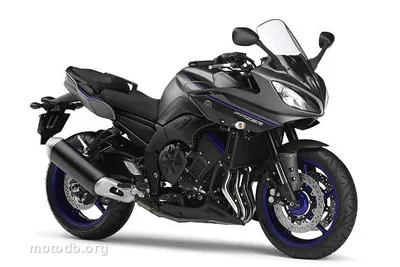
800 FAZER 8 Race Blu
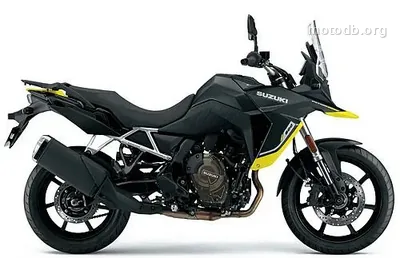
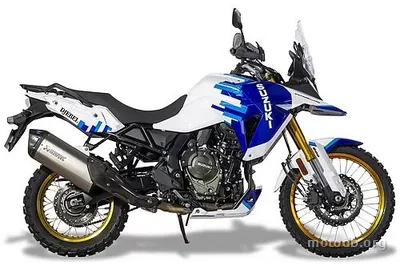
V-Strom 800SE
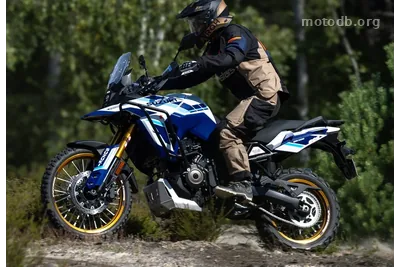
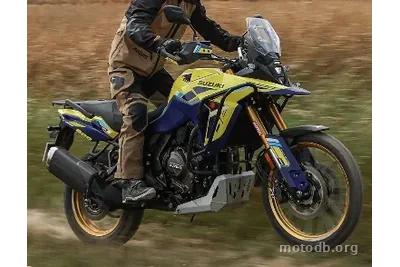
V-Strom 800DE Djebel
Reviews & comments
No reviews yet. Be the first to share your opinion!