Key performance
Technical specifications
Engine
- Displacement
- 1832 cc
- Power
- 118.0 ch @ 5500 tr/min (86.8 kW)
- Torque
- 166.7 Nm @ 4000 tr/min
- Cooling
- liquide
- Compression ratio
- 9.8:1
- Bore × stroke
- 74 x 71 mm
- Valves/cylinder
- 2
- Camshafts
- 2 ACT
- Fuel system
- Injection Ø 40 mm
Chassis
- Frame
- Double poutre alu, type Diamant
- Gearbox
- boîte à 5 rapports
- Final drive
- Cardan
- Front suspension
- Fourche téléhydraulique Ø 45 mm, déb : 140 mm
- Rear suspension
- monobras Pro-Arm mono-amortisseur Pro-link, déb : 105 mm
Brakes
- Front brakes
- Freinage 2 disques Ø 296 mm, étrier 3 pistons
- Rear brakes
- Freinage 1 disque Ø 316 mm, étrier 3 pistons
- Front tyre
- 130/70-18
- Front tyre pressure
- 2.50 bar
- Rear tyre
- 180/60-17
- Rear tyre pressure
- 2.80 bar
Dimensions
- Seat height
- 725.00 mm
- Fuel capacity
- 25.00 L
- Weight
- 392.00 kg
- New price
- 24 599 €
Overview
Forty years of reign over two-wheeled grand touring, and Honda decides to celebrate by stripping down its queen. The GL 1800 Goldwing F6B 40th anniversary edition is an exercise in deliberate contradiction: taking the most fully equipped motorcycle on the market and removing a good portion of its gear to turn it into an American-style bagger. Gone are the top case, the tall windshield, the passenger floorboards, the heated seat, and the optional GPS and airbag. The result is 28 kilos less on the scales and nearly 6,000 euros saved compared to the full Goldwing. A strict diet that suits it rather well, it must be said.
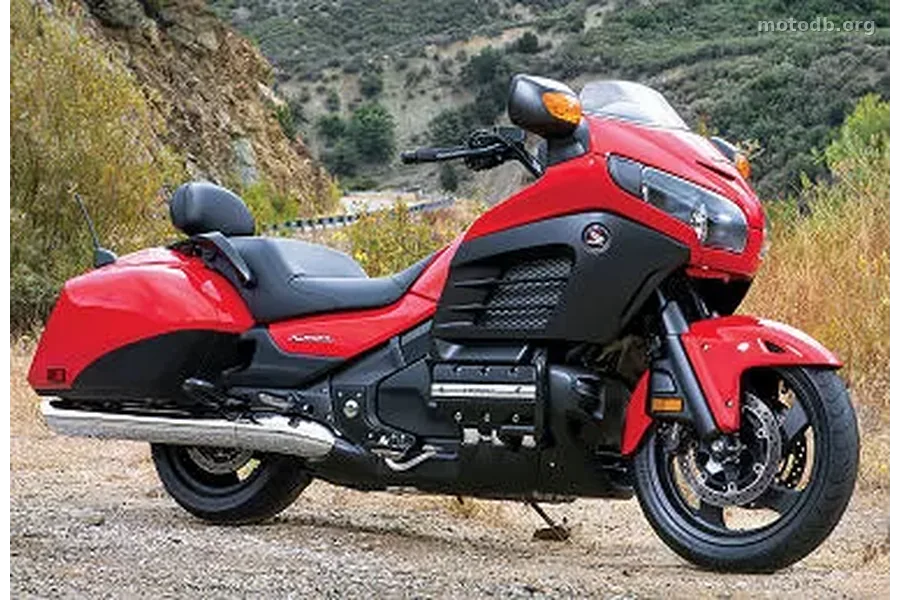
The heart of this machine remains untouched, and that's where all its charm lies. The 1832 cc flat six produces 118 horsepower at 5,500 rpm and, more importantly, 166.7 Nm of torque from just 4,000 rpm. On paper, the power seems modest against the BMW K 1600 and its 160 horsepower. But riding the F6B means embracing a different philosophy. This flat six doesn't chase raw performance. It banks on a mechanical smoothness that nobody else in this category can offer. Every twist of the throttle unfolds in a silky whisper, the engine hauling its 392 kg wet weight with an almost disconcerting ease. The five-speed gearbox, paired with shaft drive, reinforces this impression of perpetual refinement.
For this anniversary edition, Honda had the good sense to finally include electric reverse as standard. When you know what this machine weighs, you wonder why it wasn't there from day one. A button on the right switchgear, a small electric motor, and low-speed maneuvering stops being a workout. Cruise control also makes an appearance—a logical feature for a tourer sold at 24,599 euros. These additions, welcome as they are, should have appeared in the catalogue much sooner. On the aesthetic front, commemorative badges and a restrained livery—perhaps too restrained to celebrate four decades of history. Honda calls it understated elegance. We would have liked a bit more boldness to mark the occasion.
The chassis has nothing to envy from the best GTs on the market. The diamond-type aluminum twin-spar frame provides reassuring rigidity. The 45 mm telescopic hydraulic fork with its anti-dive system absorbs imperfections without flinching over 140 mm of travel. At the rear, the Pro-Arm single-sided swingarm paired with the Pro-Link shock works across 105 mm. The combined ABS braking system lines up two 296 mm discs at the front and a 316 mm disc at the rear, all clamped by three-piston calipers. The seat, perched at just 725 mm, lets almost anyone put both feet flat on the ground. A detail that matters when you're handling close to 400 kg at a standstill. The 25-litre tank allows for decent range between stops without turning every fuel station into a mandatory pit stop.
The F6B 40th anniversary is aimed at touring riders who find the classic Goldwing too imposing but refuse to sacrifice the prestige of six cylinders. It positions itself halfway between the pure bagger—territory of the Harley Street Glide and Indian Chieftain—and the full-dress grand tourer. Its flat six remains a unique selling point in this segment, an engine no competitor can replicate. Its shortcomings are well known: a weight that remains substantial despite the diet, a top speed of 200 km/h that is more than adequate but serves as a reminder that sportiness is not on the agenda, and a price that climbs quickly for a motorcycle whose architecture dates back to 2001. But for devouring kilometres in regal comfort with that utterly distinctive mechanical signature, nothing else sounds quite the same.
Standard equipment
- Assistance au freinage : Dual-CBS and ABS
Practical info
- La moto est accessible aux permis : A
Indicators & positioning
Similar bikes
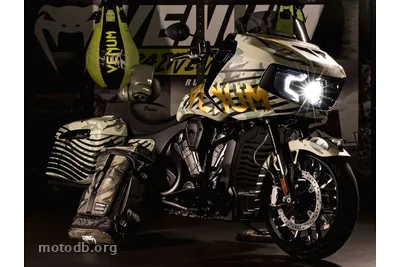
1830 Challenger Venum
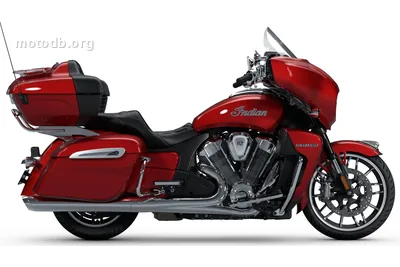
1830 Roadmaster Limited / Dark Horse
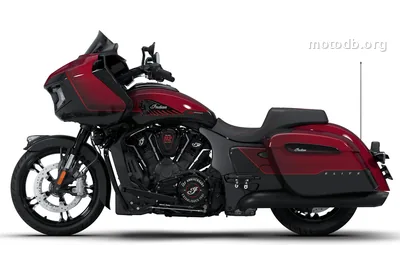
1830 Challenger 125th Anniversary Edition
Reviews & comments
No reviews yet. Be the first to share your opinion!