Key performance
Technical specifications
No spec differences between these two model years.
Engine
- Displacement
- 1449 cc
- Power
- 63.0 ch @ 5300 tr/min (46.3 kW)
- Torque
- 104.0 Nm @ 3200 tr/min
- Engine type
- Bicylindre en V à 45°, 4 temps
- Cooling
- par air
- Compression ratio
- 8.9 : 1
- Bore × stroke
- 95.3 x 101.6 mm
- Valves/cylinder
- 2
- Fuel system
- Injection
Chassis
- Frame
- Double berceau tubulaire en acier
- Gearbox
- boîte à 5 rapports
- Final drive
- Courroie
- Front suspension
- Fourche telescopique Ø 41 mm, déb : 142 mm
- Rear suspension
- 2 amortisseurs sous le moteur, déb : 103 mm
Brakes
- Front brakes
- Freinage 1 disque Ø 292 mm, étrier 4 pistons
- Rear brakes
- Freinage 1 disque Ø 292 mm, étrier 4 pistons
- Front tyre
- 130/90-16
- Front tyre pressure
- 2.48 bar
- Rear tyre
- 130/90-16
- Rear tyre pressure
- 2.90 bar
Dimensions
- Seat height
- 645.00 mm
- Fuel capacity
- 18.90 L
- Weight
- 319.00 kg
- Dry weight
- 302.00 kg
- New price
- 20 445 €
Overview
Who hasn't felt that thrill seeing this steel giant emerge from the flames, ridden by an impassive Terminator? The heads-up display in the film claimed to show a futuristic Harley-Davidson “Fat Boy,” but the reality was just as iconic. The machine ridden by Arnold Schwarzenegger was actually a 1991 Harley-Davidson FLSTF Fat Boy, a model already considered legendary that definitively cemented this silhouette in the collective imagination. Far from special effects, its physical presence is a statement.
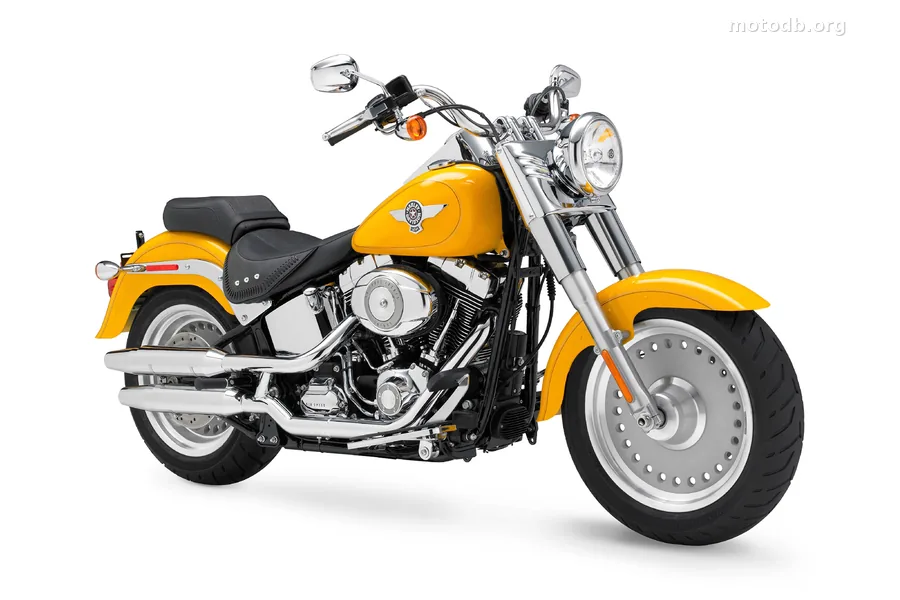
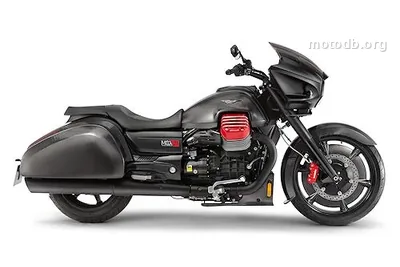
And what a presence. The FLSTF Fat Boy is first and foremost a posture. With its 319 kg when fully fueled and a seat 64.5 cm from the ground, it establishes itself in the landscape with the authority of an engine block. The full wheels, the single headlight, and this wide handlebar impose a retro style that proclaims its heritage. Beneath this typical Softail faux rigid frame beats the Twin Cam 88 of 1450 cm3. The figures? 63 horsepower at 5300 rpm and especially 104 Nm of torque available from 3200 rpm. That's where its soul lies: a heavy, constant surge, a wave of traction that seems inexhaustible, perfect for swallowing asphalt without rushing.
This 2004 version benefited from notable improvements compared to the early years. The balance shaft calmed the vibrations of the V-twin engine, making long journeys less exhausting. The rear suspension was reworked for better absorption, and the dual 292 mm disc brakes, although requiring a firm grip on the lever given the mass, offer a worthy stopping power. But don't be fooled, the Fat Boy is not a sportbike. Its lean angle is severely limited by its wide footpegs, which scrape at the slightest provocation. It is piloted with anticipation, by a calm master who dominates the road by presence more than by agility.
Who is it for? For the traveler who seeks appearance more than pure performance, for the aesthete for whom chrome and the “factory custom” style are a religion. At over 20,000 euros at the time, it was an investment in a piece of American legend. Compared to a more responsive and lighter Japanese cruiser, the Fat Boy seems slow and cumbersome. But that is precisely its strength. It is not made to scrape the knee, but to embody an idea, that of the endless road and the deep rumble that resonates in the chest. It is a machine of raw sensations, a rolling monument that, unlike what the Terminator’s display shows, needs no visual effect to leave a lasting impression.
Practical info
- La moto est accessible aux permis : A
Reviews & comments
No reviews yet. Be the first to share your opinion!