Key performance
Technical specifications
Engine
- Displacement
- 1745 cc
- Power
- 87.0 ch @ 5450 tr/min (64.0 kW)
- Torque
- 150.0 Nm @ 3250 tr/min
- Engine type
- Bicylindre en V à 45°, 4 temps
- Cooling
- par air
- Compression ratio
- 10.1 : 1
- Bore × stroke
- 100 x 111.1 mm
- Valves/cylinder
- 4
- Fuel system
- Injection
Chassis
- Frame
- Double berceau tubulaire en acier
- Gearbox
- boîte à 6 rapports
- Final drive
- Courroie
- Front suspension
- Fourche téléscopique Ø 49 mm
Brakes
- Front brakes
- Freinage 2 disques Ø 300 mm, étrier 4 pistons
- Rear brakes
- Freinage 1 disque
- Front tyre
- 130/60-19
- Rear tyre
- 205/65-15
Dimensions
- Seat height
- 700.00 mm
- Fuel capacity
- 22.70 L
- Weight
- 507.00 kg
- Dry weight
- 492.00 kg
- New price
- 29 850 €
Overview
Three wheels, two mindsets. That is the best summary of Milwaukee's strategy in the production trike segment. On one side, the Tri Glide Ultra plays the card of hushed grand touring, almost nautical in its approach to the road. On the other, the Freewheeler arrives with an entirely different philosophy: less flashy chrome, fewer kilos on the scale — 492 kg dry versus 549 for its bigger sibling — and nearly 7,000 euros less to spend at 29,850 euros on the catalogue. That is no minor detail. That is a positioning statement.
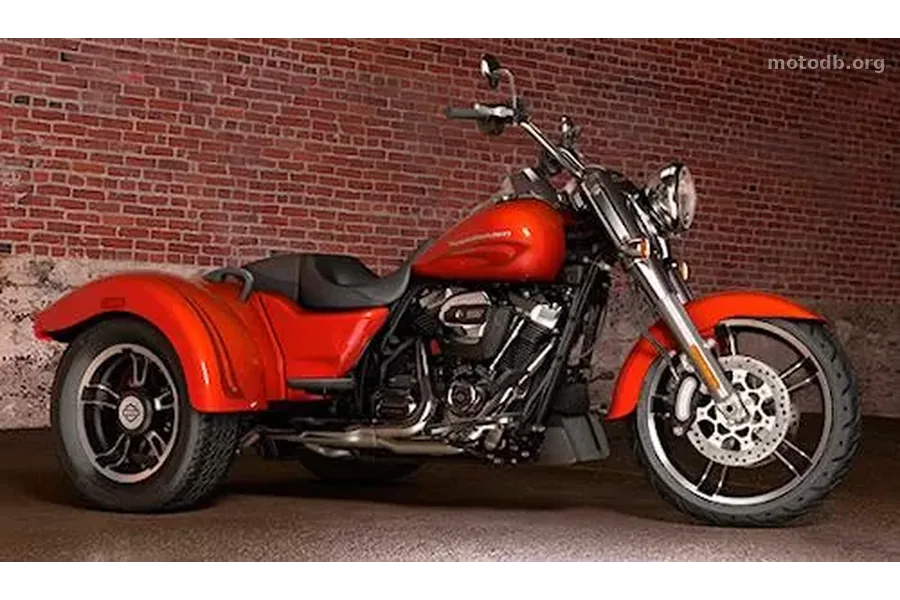
The Milwaukee Eight beating beneath the tubular double-cradle frame does not do things by halves. Its 1,745 cc 45° V-twin, with 4 valves and 2 spark plugs per cylinder, develops 87 horsepower at 5,450 rpm, but it is above all the torque that speaks first: 150 Nm available from 3,250 rpm. No liquid cooling for the cylinder heads — Harley commits to full air-cooling, and on a trike not destined for great alpine crossings, that is hardly a lapse in taste. The 6-speed gearbox and belt drive round out an assembly built for smoothness rather than numbers-driven performance. You do not ride a Freewheeler against the clock.
What truly changes the game compared to the other trikes in the range is the machine's overall tone. The Mini-Apehanger handlebar imposes a more upright, more rock'n'roll riding position, closer to the customs that populate rallies than a tourer wrapped in fairings. The low 700 mm seat height builds confidence quickly, and the front end with its 49 mm telescopic fork on a 19-inch wheel — 130/60 — gives a roadster stance you will not find on competing trikes in the market. Yamaha with its Niken follows a different logic entirely, leaning its three wheels like a conventional motorcycle. The Freewheeler does not lean — it corners flat — and that is precisely what makes it accessible to holders of a standard car licence only.
The rear trunk deserves a closer look. Far from merely decorative, it accepts two full-face helmets, which says a great deal about the machine's vocation: two-up riding, getaways, shared roads rather than solitary commutes. The 22.7-litre tank provides a decent range before hunting for a petrol station. The stated top speed of 170 km/h is sufficient for main roads without upsetting any speed limits. This is not a sports machine, and nobody is asking it to be one.
The Freewheeler targets a specific audience: the rider who wants the freedom of a Harley without a motorcycle licence, or the one who, after years in the saddle, seeks greater stability without giving up the raw aesthetics of an American custom. The 507 kg fully fuelled serves as a reminder that space and a degree of respect are required when stationary, but in motion, the mechanicals do the work. A trike that smells of hot asphalt and engine oil, not of a boat show.
Practical info
- La moto est accessible aux permis : A
Indicators & positioning
Similar bikes
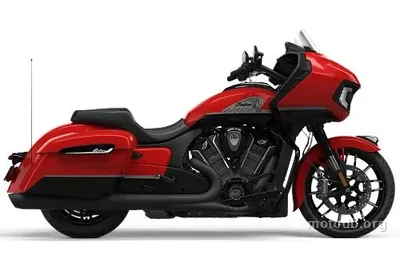
Challenger Dark Horse
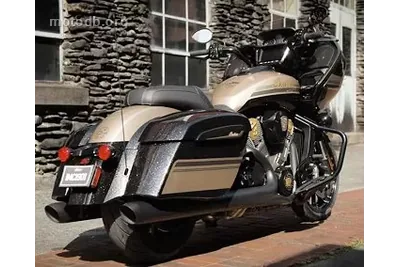
1770 Challenger Dark Horse Jack Daniel's
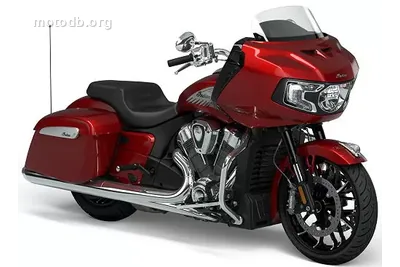
Challenger Limited
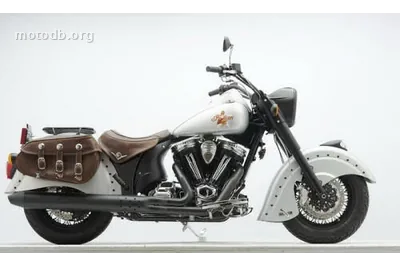
1720 CHIEF BOMBER
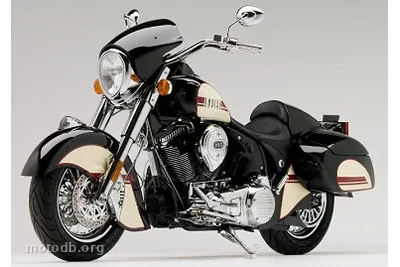
1720 CHIEF BLACKHAWK
Reviews & comments
No reviews yet. Be the first to share your opinion!