Key performance
Technical specifications
Engine
- Displacement
- 349 cc
- Power
- 26.0 ch @ 7000 tr/min (19.0 kW)
- Engine type
- Single cylinder, four-stroke
- Cooling
- Liquid
- Compression ratio
- 9.5:1
- Bore × stroke
- 80.0 x 69.4 mm (3.1 x 2.7 inches)
- Valves/cylinder
- 4
- Valve timing
- Double Overhead Cams/Twin Cam (DOHC)
Chassis
- Gearbox
- 5-speed
- Final drive
- Chain (final drive)
Brakes
- Front brakes
- Single disc
- Rear brakes
- Expanding brake
- Front tyre
- 90/90-21
- Rear tyre
- 4.60-17
Dimensions
- Fuel capacity
- 22.00 L
- Weight
- 181.00 kg
Overview
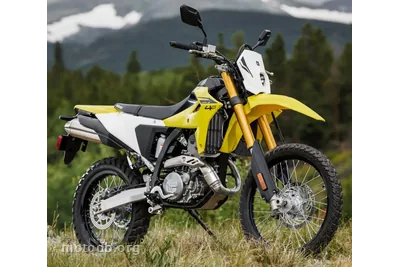
At the twilight of the 1980s, Gilera offered a singular compromise with its Dakota 350, a machine that navigated between country roads and dirt paths without truly committing to either domain. This four-stroke single-cylinder engine with a displacement of 349 cc, featuring a four-valve cylinder head and liquid cooling, produced 26 horsepower at 7000 rpm. Figures that promised neither thrills on asphalt nor exploits in hostile terrain, but rather a form of placid versatility.
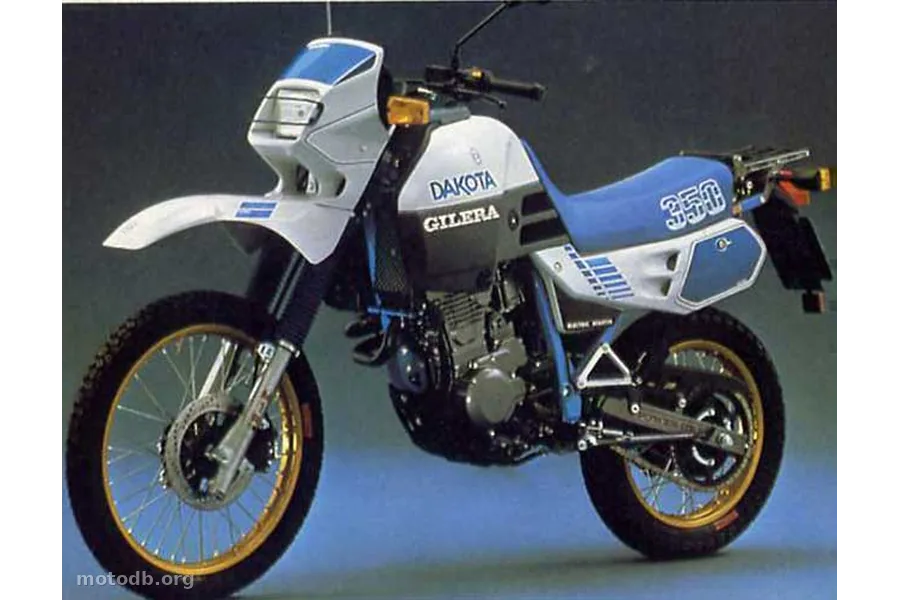
Its engine, with a generous bore of 80 mm and a relatively short stroke, could have aimed for a lively character. The modest compression ratio of 9.5:1 and the declared power suggest a docile temperament, built for regularity rather than pure performance. The five-speed gearbox and chain final drive were standard features of the enduro segment of the time, as was the 22-liter fuel tank, a capacity that betrayed ambitions of a long range, perfect for long crossings.
With an announced weight of 181 kg fully fueled, the Gilera Dakota 350 was not lightweight. This mass, combined with a top speed limited to 123 km/h, paints the portrait of a more touring than sporty motorcycle. The tires, a 90/90-21 at the front and a 4.60-17 at the rear, were typical equipment of the era's trail bikes, capable of biting into the dirt a little without offering the grip of a true off-road tire. The braking system, with a disc at the front and a drum at the rear, confirmed this intermediate position.
This Gilera was not seeking confrontation with specialized competitors, whether they were Honda XR or Yamaha Ténéré models. It rather targeted the tranquil traveler, one who appreciates a high seat, a generous ground clearance, and the mechanical assurance of a simple four-stroke, without pretension. It was a transitional machine, at a time when categories were beginning to be clearly defined. Today, it interests the nostalgic collector of these Italian motorcycles with a well-tempered character, who often preferred charm to absolute efficiency.
Reviews & comments
No reviews yet. Be the first to share your opinion!